Don't Be Mad, Mom – I'll Be Good Next Life: The Last Pair of Shoes

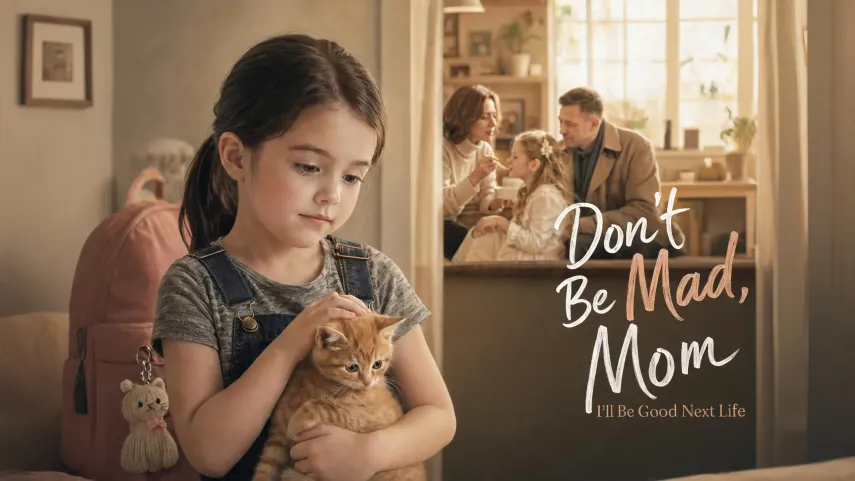
Don't Be Mad, Mom – I'll Be Good Next Life is available to stream in full on ShortMax. The drama follows Emma, a five-year-old girl whose family cannot see her — not the way a child needs to be seen, and not before it is far too late.
There is a specific kind of dread that comes from watching a story where you understand more than everyone inside it. You watch Emma's parents look past her. You watch her older sister Olivia stage a performance of suffering for an audience of exactly two people. And you feel the clock running. This drama does not operate on mystery or suspense. It operates on the slower, more suffocating register of watching a child be erased while the adults around her keep deciding not to look.
Why This Drama's Argument Is Darker Than Its Setup
The surface premise is sibling rivalry. Underneath it is something more specific: that parental attention, when treated as a finite and earnable resource, teaches children to compete for it by any means necessary. The drama's real thesis is not that Olivia is simply cruel. It is that the parents built the conditions in which cruelty could take root unchallenged.
By rewarding visible suffering and legible crisis, they created a household where Olivia's faked eating disorder registered as urgent, and Emma's quiet hunger registered as nothing. The system did not fail accidentally. It failed because no one inside it questioned what they were incentivizing.
The Weight Emma Carries
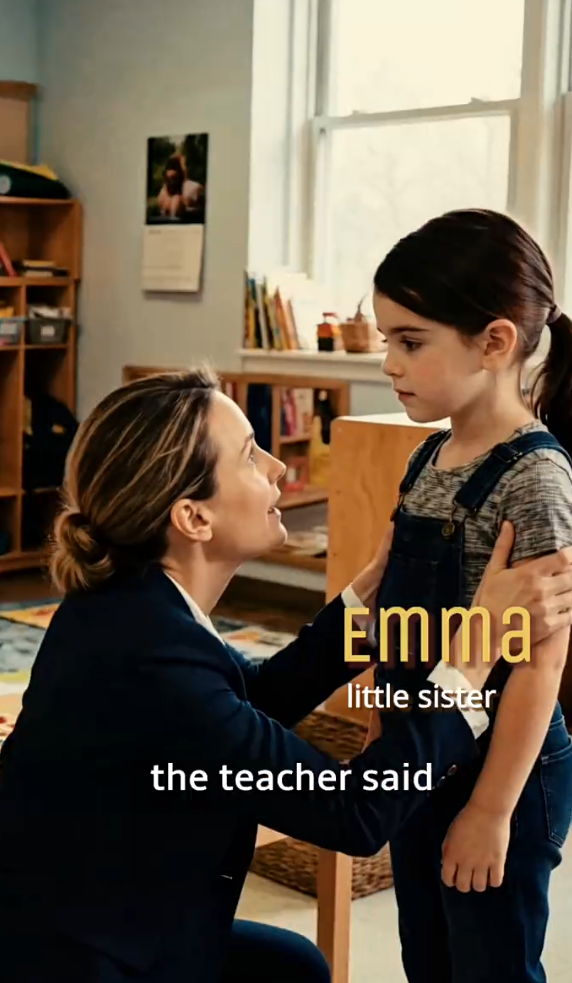
Emma is five years old. The summary tells us she is being force-fed by Olivia — which means the real hunger, the one her parents refuse to satisfy, is not for food at all. The force-feeding is the drama's central act of harm, and it is not incidental. It functions as the precise mechanism that exposes where power actually sits in this family.
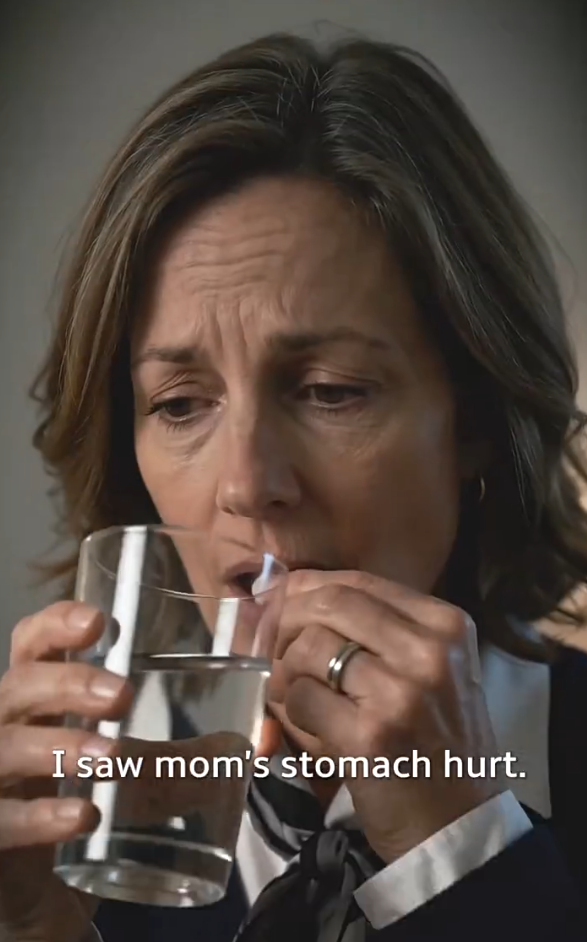
Olivia can harm Emma because no adult is watching. The parents have, through sustained inattention, handed authority over their youngest child to someone who uses it as a weapon. When Emma's stomach ruptures from being made to eat beyond any limit, the drama does not frame it as a sudden shock. It is the endpoint of a sequence the audience can trace backward, plate by plate, to the first moment the parents chose Olivia's performance over Emma's presence.
Olivia and the Architecture of the Deception
Olivia's role carries a structural irony that sharpens the longer you examine it. She fakes an eating disorder — a refusal of food — and then force-feeds her younger sister. The inversion is not accidental. She has turned the very illness she performs into a tool she uses against Emma. She starves herself in the story she tells her parents, and she makes Emma take too much in the story no one sees.
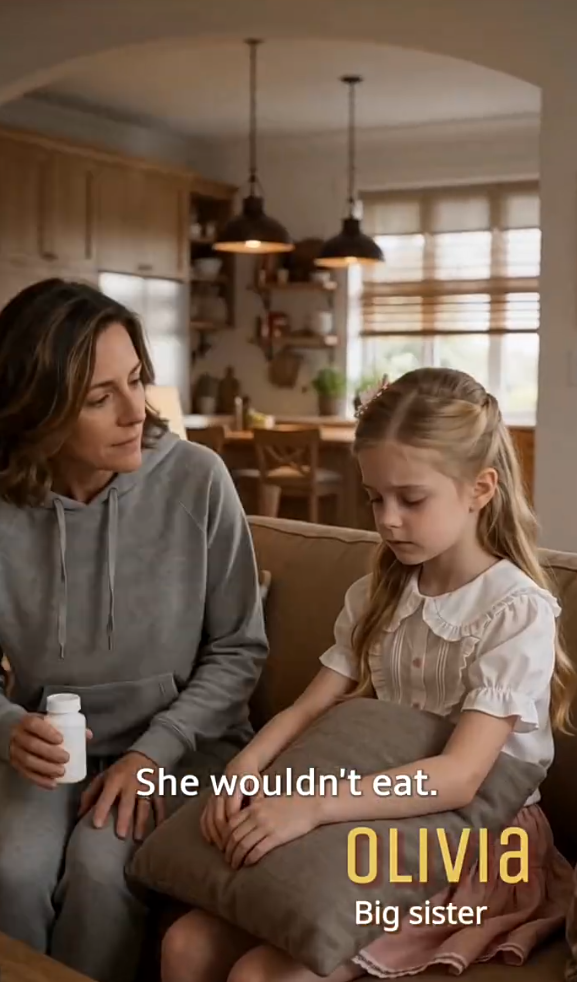
What the audience understands, even if Olivia does not, is that she is not creating her parents' favoritism. She is exploiting a tendency that already existed. She found the correct input and learned to repeat it. The drama does not excuse what she does. But it places her behavior inside a logic that the family's own structure produced.
What the Parents Reveal by Arriving at the Wrong Moment
The parents are defined entirely by timing. Their guilt arrives at Emma's grave. Their grief is real — but it is delivered to a headstone, not a living child. As a narrative element, they work by opposition: everything Emma needed while she was alive, her parents bring to the place where she no longer is.
The new leather shoes left at the grave are the summary's most quietly damaging image. They suggest the parents knew, on some level, that Emma was missing something. They just gave it to the dead version of her — the one who no longer had feet that needed covering. The shoes are small, new, and useless. That is the whole story in a single object.
The Counter-Consideration, and Why the Drama Holds Anyway
A reasonable objection to this drama's structure is that it stakes its emotional impact on a single catastrophic physical event. Death by stomach rupture is extreme as a plot mechanism, and a viewer could argue that such a graphic endpoint tips the story away from truth and toward provocation.
But the rupture is not a twist. It is a conclusion. The summary makes the cause-and-effect chain traceable: Olivia force-fed Emma not once, not accidentally, but as a sustained act in a house where supervision was absent. The physical horror is proportionate to the duration of the ordinary horror that produced it. The drama earns what it asks the audience to feel because it shows the work.
recos:

The leather shoes are what keep the ending from collapsing into pure sentiment. They are not a speech. They are not a confession. They are just shoes — quiet, material, and devastating precisely because they are so small.
Where to Watch Don't Be Mad, Mom – I'll Be Good Next Life
Don't Be Mad, Mom – I'll Be Good Next Life is available on ShortMax. If you are looking for where to watch the complete version, ShortMax is the confirmed platform for streaming this drama.


![[Dubbed Version] Fall in Love After the Wedding](https://v.melolo.com/b1265344voduse1318177724/60c566195145403705174537124/ojBAhVMaIzIA.webp!15491.webp!15491.webp)