Betrayed Bride: When Ten Minutes Are Enough to Destroy Everyone Who Wronged You


Betrayed Bride is a revenge-driven rebirth drama available in full episodes on ShortMax, following Isabella — a woman who is massacred and violated the night before her wedding and then returned to life ten minutes before it happens. The verdict on this series is worth stating plainly before anything else: it is one of the few stories in this format where every layer of betrayal is load-bearing, and the final reveal earns the devastation it builds toward.
Ten minutes. That is the entire window Isabella receives when she is reborn into the moments before her family is destroyed. The drama does not soften its premise. It opens with the full weight of what was lost — and then immediately asks two questions: who had the power to order that night, and who now has the power to stop it?
The answer to the second question is Isabella. The answer to the first is where things get genuinely dangerous.
The Architecture of a Power Shift
The central argument of Betrayed Bride is not that trauma can be reversed. It is that power, once seized from someone, leaves a trail — and if that person survives long enough to trace it, the entire structure that held them down can be dismantled from the inside.
Isabella's rebirth is the mechanism through which the drama redistributes every ounce of agency stripped from her in the first timeline. She does not return with weapons or allies already in place. She returns with information — the full map of what happens next — in a room where no one else has it. Working alongside her parents, she identifies and subdues the hidden murderer before the attack can unfold. The story is deliberate about making this a collective act. The family that was destroyed in her first life is the instrument of survival in her second. That reversal is not incidental. It is the drama's clearest statement about where power actually lives.

What the Fiancé and the Best Friend Reveal About Isabella's Old Life
The cheating fiancé and the hypocritical best friend are not simply obstacles to be cleared. Each one functions as a contrast figure — a character who defines Isabella's former position by showing what she was surrounded by without knowing it.
The fiancé represents the social architecture Isabella was about to enter permanently: a marriage built on concealment, structured to benefit someone whose loyalty was already elsewhere. Breaking that engagement is not a dramatic gesture. It is Isabella refusing, with full knowledge, to walk back into a power arrangement she knows is designed against her.
The best friend operates differently. Where the fiancé's betrayal is rooted in romantic deception, the best friend's hypocrisy is about the performance of closeness. A peer. A confidante. Someone who appeared to occupy the same social tier as Isabella while operating from a position of hidden opposition. Exposing her is the drama insisting that Isabella's old life was not simply threatened from outside — it was compromised from within the relationships she thought were safe.
Eli: The Mastermind Who Also Remembered
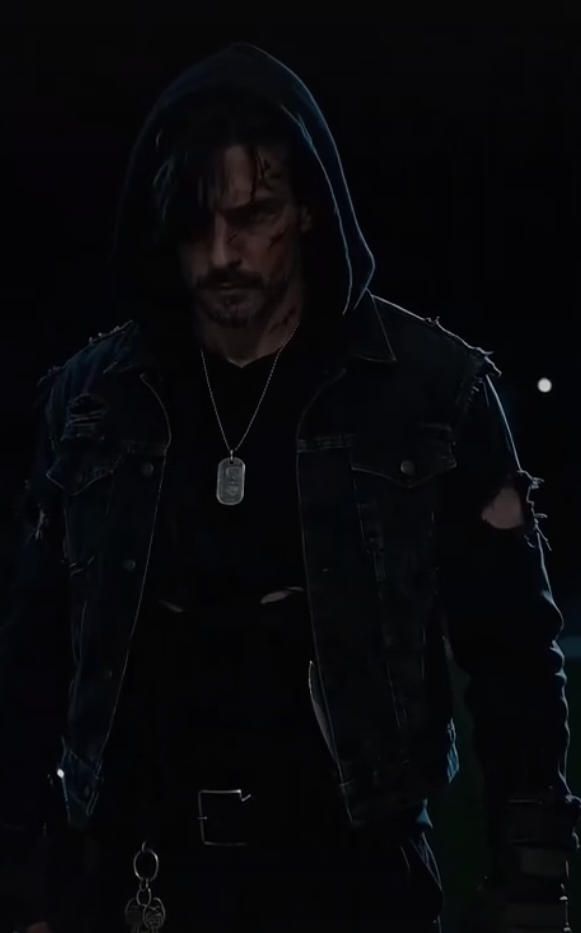
The reveal that Eli — someone Isabella supported for ten years — is the architect of the original massacre would be a strong enough twist on its own. What sharpens it considerably is the detail that Eli also carries memories of the past life.
This produces a specific and uncomfortable dramatic irony. The audience understands, as the unmasking approaches, that the most dangerous person in Isabella's rebuilt world arrived at the present moment just as prepared as she did. He did not react to her moves from ignorance. He anticipated them. Every interaction that precedes his exposure — every apparent moment of ordinary relationship — was a contest between two people who both knew the score and neither was willing to show their hand first.
That symmetry reframes the entire drama. Isabella's advantage was never exclusive. It was simply that her intentions were directed toward survival and justice, while Eli's were directed toward maintaining control he had already used catastrophically once. The question the story generates is not whether Isabella will uncover him. It is whether she can move faster than someone with the same informational head start and a decade of practiced deception behind him.
recos:

The Ten-Minute Frame and Why It Works
A reasonable challenge to this drama's central device is whether ten minutes is a credible window for neutralizing a coordinated massacre. If the attack required planning, multiple participants, and insider knowledge of the household, can two people — even forewarned ones — realistically dismantle it in less time than it takes to make coffee?
The drama's answer is that the ten minutes are not about speed. They are about precision. The hidden murderer is only hidden to those who did not survive long enough to identify them. Isabella survived. The information asymmetry that made the first timeline catastrophic is now inverted. She does not need to outfight a conspiracy. She needs to know where to look before the window closes — and she does.
The compressed timeframe also functions as an emotional constraint. It strips away any fantasy of gradual preparation or careful strategy. Isabella has to act on memory alone, immediately, alongside people who do not yet know what she knows. That pressure is not a flaw in the premise. It is the premise.
Where to Watch Betrayed Bride
Betrayed Bride is available to stream in full episodes on ShortMax, allowing viewers to follow Isabella's arc from the night of the massacre through to Eli's imprisonment without interruption. Depending on your region and account type, episodes may be available to watch free on the platform.



![[Dubbed Version]Life and Death Judge: 101 Debts of Love](https://v.melolo.com/b1265344voduse1318177724/fb27a5935145403705176599779/l30cq5IpwHYA.webp!15491.webp!15491.webp)