Broken Vows: The Goddess Casts You Down: The War God Burned Every Bridge, and Now He's Drowning in the Ash


Picture it: a woman standing at the edge of the Abyss — not the metaphorical abyss of heartbreak, but an actual threshold between the divine world that discarded her and the darkness that will become her sanctuary. Behind her: three years of torture, a stolen child, a divine bloodline she surrendered voluntarily, and a war god who looked at everything she gave him and still chose someone else. Ahead of her: a cursed demon who offers not rescue, but refuge. She steps forward. The story really begins here — not with the sacrifice, not with the betrayal, but with the moment Halie decides that the life they took from her was never the only life she was capable of living.
That image is the emotional axis around which Broken Vows: The Goddess Casts You Down rotates, and it is a more precise dramatic statement than most dramas in this genre manage across their entire runtime.
The Premise: A Myth About What Sacrifice Actually Costs
Every culture has a story about the mortal — or near-mortal — who loves a god and pays for it. The Greeks had Semele, consumed by the divine radiance she begged to witness. The Norse had countless women traded as political objects between worlds they had no power to navigate. Broken Vows: The Goddess Casts You Down knows this mythological lineage intimately, and it draws on it without apology.
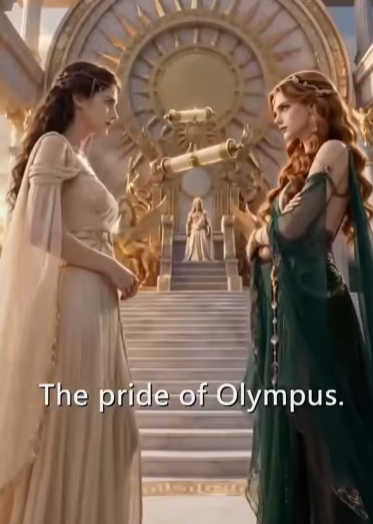
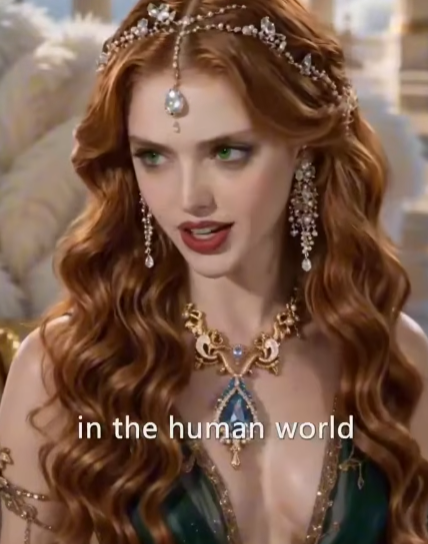
Halie is a half-goddess — which places her in the most archetypal of all positions: the threshold figure. Too divine for the mortal world, too mortal for the divine one. She sacrifices even the divine blood that marks her as something more than human in order to save Enyalius, the war god. The exchange is total and irreversible. And then he betrays her anyway.
What the drama understands, and what separates it from simpler revenge fantasies, is that the betrayal is only the beginning of the structural injury. Halie isn't just framed and discarded — she is tortured, robbed of her unborn child, and stripped of the divine heritage she already chose to relinquish for him. The cruelty isn't incidental. It's systematic. Which means her recovery has to be equally systematic, equally total.
The Abyss isn't punishment. It's the only realm left that the divine court's judgment can't reach.
Halie: The Wound Beneath the Warrior
The psychological architecture of Halie's character is built on a specific and devastating paradox: she is most powerful when she stops being selfless. Her defining act before the drama opens — sacrificing her divine blood — is an expression of pure devotion. It is also, structurally, the act that makes everything that follows possible. Her sacrifice is what Enyalius and his court exploit. Her capacity for total giving is the weapon they turn against her.

What Halie wants, in the early drama, is to have been wrong about Enyalius — to discover that the god she bled for is somehow redeemable, that the suffering had meaning. What she needs — and what the Abyss forces her to find — is the understanding that a love which required the erasure of her divine self was never the kind of love worth sustaining. Her arc is not from weakness to strength. It's from a strength that was weaponized against her to a strength that now belongs entirely to herself.
That shift is the drama's central emotional engine, and it runs on something more complex than simple revenge.
Enyalius: The God Who Believed His Own Mythology
The war god occupies the drama's most structurally rich irony. Enyalius is a figure who has likely never, in his immortal life, been made to account for what he takes. He is the war god — winning is definitionally his function. Sacrifice flows toward him. Worship flows toward him. The idea that a woman he allowed to be destroyed might simply leave — not to punish him, but to survive — is one the divine architecture he inhabits has no framework for processing.

What Enyalius believes about himself, with every resource at his disposal, is that war across heaven and hell can recover what he lost. He wages this campaign with the certainty of someone who has never had to earn anything, only take it. The drama's sharpest irony is that the very qualities that make him a war god — strategic ferocity, total commitment, the willingness to level any opposition — are useless against Halie's actual position, which is not defiance but indifference. She is not waiting to be retrieved. She has moved on. He is waging war against the wrong enemy.
The Cursed Demon: A Structural Counterweight, Not a Replacement
The cursed demon who offers Halie refuge in the Abyss serves a specific dramatic function that the drama is careful not to collapse into a simple love triangle. He is not a better version of Enyalius. He is a structural opposite — a figure who, like Halie, has been cast out of his proper realm and forced to build an existence in the margins. The Abyss, notably, does not belong to either heaven or the mortal world. It is the place for those both domains have expelled.
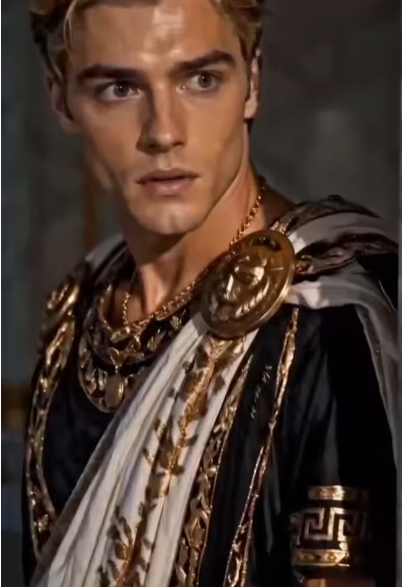
That shared marginalization is the foundation of whatever connection develops between them. Where Enyalius offered Halie a place inside his power structure — as a woman who sacrificed for him — the cursed demon offers her a place beside his survival. The distinction matters. One dynamic requires her to diminish herself; the other begins with the acknowledgment that she has already survived what should have destroyed her.
The drama wisely doesn't flatten this into easy romanticism. The question it plants — whether Halie can trust any bond forged in the shadow of catastrophic betrayal — is far more interesting than the question of which man she chooses.
Dramatic Mechanics: How the Drama Engineers Its Tension
The structural choice to begin after the worst has already happened is Broken Vows: The Goddess Casts You Down's most effective formal decision. The torture, the lost child, the three years of suffering — the drama doesn't dramatize these in real time. It delivers them as a weight already carried. This means the audience's first sustained relationship with Halie is with a woman who has already endured everything the drama's antagonists intended to destroy her with — and is still standing.
The tension, then, is never "will she survive." It is "what does she choose to do with the survival she fought her way to." That reframe — from endurance to agency — gives the drama a forward momentum that most revenge plots, which dwell in the suffering, struggle to generate.
Enyalius waging war across heaven and hell provides the external pressure that keeps the drama's stakes elevated, but the real dramatic question belongs entirely to Halie: what is a half-goddess worth, when no god's world will have her, and she has learned to be worth something anyway?
Emotional Payoff: Why the Title Is a Statement, Not a Threat
The title Broken Vows: The Goddess Casts You Down is doing something specific. It isn't Halie's threat to Enyalius. It's the drama's thesis statement about what happens when someone in the half-divine, perpetually-underestimated position finally stops absorbing the mythology others have built around themselves. The goddess in the title isn't necessarily a divine rank. It's what Halie becomes when she stops measuring herself by what the war god's world says she should be.

That reclamation — quiet, earned, and irreversible — is what makes Broken Vows the #1 trending title on DramaWave. It isn't the scale of the betrayal that viewers respond to. It's the exactness of the recovery.
Where to Watch
Available at DramaWave (search Broken Vows: The Goddess Casts You Down). DramaWave is accessible via mobile app, with select episodes free to watch and additional episodes available through the platform's standard access options.



![[Dubbed Version] In Our Youth](https://v.melolo.com/b1265344voduse1318177724/13e6849c5145403706118740249/h7meXFL7KWAA.webp!15491.webp!15491.webp)