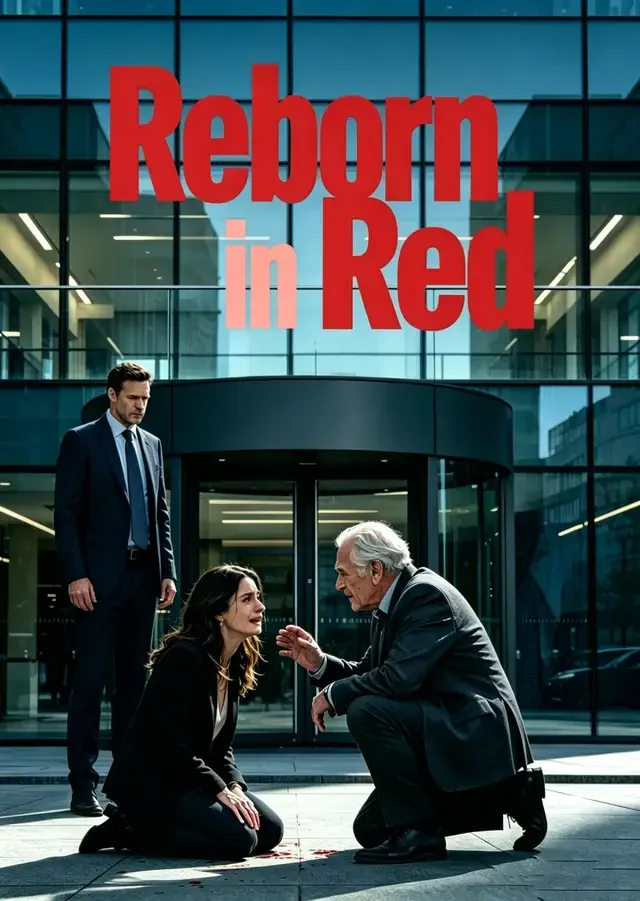
Escaping My Doctor Ex-Boyfriend's Terminal Neglect
Chapter 1
Heh.
The sound wasn’t a laugh, not really. It was more like air escaping a punctured tire, a final, deflated sigh. I stared at my phone, the screen dark now, Sebastian’s last excuse still buzzing in my ear like a dead fly.
“Something came up at the office. Suzanna’s onboarding paperwork is a mess. I have to stay and help her sort it.”
Something came up. Suzanna.
I shoved the phone back into my coat pocket, the cold metal of the case biting into my palm. The late Friday afternoon sun cut across the train platform in sharp, dusty lines, making everything look faded and old.
Including me. Including the woman standing beside me.
I turned and leaned into her, burying my face against the worn wool of her shoulder. Her body was so thin now, the bones sharp under the fabric. A tremor ran through me, starting deep in my chest and shaking out through my limbs until the tears just fell. No sob, no sound. Just a hot, silent flood that soaked into her coat.
“I’m done,” I whispered into the wool, my voice raspy and raw. “I’m done waiting for him.”
Margaret Goode, my mother, didn’t pull away. Her hand came up, hesitant and light, to pat my back.
“Maddie…”
“I’m coming home,” I said, the words firm even as my face was still pressed against her. “I’ll quit. I’ll pack up.
I’ll be there by Monday.”
Her patting stopped. A stillness settled over her, heavier than the autumn air. “What about… what about the wedding?”
The question was so small, so bewildered. It punched through the last dam inside me.
The wedding.
I pulled back, wiping my eyes with the back of my hand. The smear of tears felt gritty. “There isn’t one,
Mom.”
Her face, pale and etched with new lines I hadn’t noticed last month, crumpled into confusion. “But… the ring? The plans? Sebastian—”
“Sebastian,” I said, and the name tasted like ashes. “Sebastian Ross is a coward wrapped in a nice suit.”
The memory didn’t come gently; it slammed into me, vivid and cruel.
It was six weeks ago. The call had come in the middle of my workday, my supervisor’s voice quiet and solemn. Stage two. Gastric. We need to discuss treatment options immediately. My hands went numb. The world tilted. I stumbled out of the office, into the sterile hallway, and my first instinct—my stupid, ingrained instinct—was to call him. To call Sebastian.
His phone rang. And rang. And then he answered, his voice distracted, background noise of a busy restaurant or a bar clattering behind him.
“Madelaine? Hey, what’s up?”
“Seb,” I choked out. “It’s Mom. They… they found cancer. It’s… it’s bad. I need you. Can you come? Can you meet me at the hospital?”
A pause. Not a shocked one. A calculating one. “Oh, Maddie. Jesus. That’s… awful.”
“Can you come?”
More background noise. A laugh, high and feminine. Suzanna Locke’s laugh. I’d heard it before, at company mixers. It was a sound that pierced.
“I… I can’t right now, Maddie. I’m sorry. Suzanna’s first day was today, her HR package is completely botched, and I promised I’d help her navigate it. It’s a mess. I really have to stay.”
Suzanna’s onboarding paperwork.
My mother’s life, potentially ending, and his priority was Suzanna Locke’s onboarding paperwork.
The silence on my end must have stretched. He filled it, his tone shifting to that gentle, patronizing softness he used when he was being reasonable. “I’ll call you tonight, okay? We’ll talk then. I’ll be there for you then.”
He wasn’t. He called late, his voice thick with what sounded like wine, asking vague questions about prognosis, never once asking how I was. Never once saying I’m coming over. That night, curled on my sofa alone, the trust I’d built for four years didn’t just break; it dissolved. It evaporated into the dark room, leaving nothing but a hollow, cold certainty.
Back on the platform, my mother’s eyes were wide, searching my face for a joke, for a misunderstanding. “He said that? When I… when I was diagnosed?”
“He said something came up,” I told her, my voice flat and dry now. “His something was Suzanna Locke.”
Margaret Goode looked down at her hands, frail and speckled with age. She didn’t cry. She just nodded, a slow, accepting dip of her chin. The train to her hometown hissed on the tracks beside us, a beast ready to swallow her back into a world of treatments and uncertainty.
“You don’ have to quit your job, Maddie,” she murmured. “You have your life here.”
“My life here is a lie,” I said, and it felt true. The apartment Sebastian paid half for, the friends who were mostly his colleagues, the future that was a glossy brochure he’d designed. “My life is with you. It’s the only one that’s real.”
The conductor called out. The doors sighed open. She stepped forward, one slow step, then turned back. Her eyes, always so bright, were cloudy with pain and something else—a desperate love. “Be safe, my girl.”
“I will,” I promised, and it was the first promise I’d made in years that I knew I’d keep.
She boarded. The train doors sealed with a soft thump. I watched through the grimy window as she found a seat, as she arranged her small bag, as she looked out at me and gave a tiny, brave wave. The engine grumbled, and the train began to pull away, carrying her away from me, carrying her toward the fight.
I stood there until the last carriage vanished around a bend, leaving me alone on the empty platform. The late sun was dying, casting long, deep shadows. The air smelled of diesel and damp concrete.
My right hand lifted, almost without my bidding. My fingers touched the cold, smooth band on my left ring finger. The diamond was small, modest—sensible, he’d said. We’re sensible people. I twisted it. It resisted for a second, then slid over my knuckle.
I held it in my palm, the metal warm from my skin. It looked cheap suddenly. Tinny. A prop.
Without ceremony, without another thought, I walked to the green municipal bin bolted to a pillar. I dropped the ring over the rim.
It didn’t clatter. It clicked once, a tiny, hollow sound against the plastic lining, and then it was gone.
My hand felt lighter. My whole body felt lighter. A space had been cleared, an empty, clean space where something heavy had been lodged for years.
I turned from the bin, from the platform, and walked toward the stairs leading down to the subway. My steps weren’t hesitant. They were final. Each one slapped against the concrete with a new rhythm.
The future wasn’t a glossy brochure anymore. It was a blank page. And for the first time in a long, long time, that didn’t feel terrifying. It felt possible.
You may also like