Pucked By My Hockey Rival: The Love Letter That Made Two Rivals Inescapable to Each Other

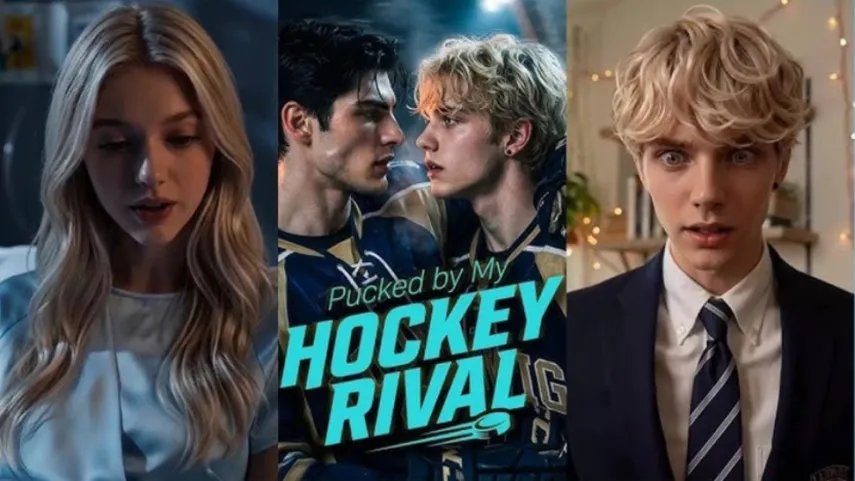
There is a specific kind of dramatic irony that operates less like a plot device and more like a trap — one that closes slowly around characters who can't see the walls moving. Pucked By My Hockey Rival, Dramawave's 2026 LGBTQ+ short drama, sets that trap in its very first scene and then patiently, almost gleefully, watches its two leads walk straight into it.
This is not a story about two men falling in love despite their rivalry. It's a story about how their rivalry was always the relationship — and how one misread letter is what it takes to make that visible.
The Architecture of the Mistake
Owen finds a love letter. The name on it is rare enough, uncommon enough, that the conclusion feels logical: this letter is meant for his sister. What follows is not a passive misunderstanding that resolves itself in five minutes. Owen acts on it. He engineers situations. He positions David and his sister in proximity, playing matchmaker for a romance that exists only in his own head, while simultaneously manufacturing reasons to be present for all of it.
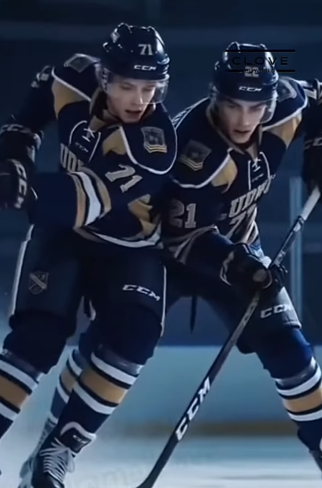
This is where Pucked By My Hockey Rival earns its structural sophistication. The forced proximity here isn't imposed by a blizzard or a broken-down car. It's self-inflicted by the protagonist, which means Owen isn't just a bystander watching feelings develop — he is the architect of his own emotional ambush. Every moment he stage-manages for David and his sister becomes a moment Owen spends in the company of the one person he's convinced himself he despises. The drama understands exactly what it's doing with that irony, and it doesn't rush past it.
Owen: The Man Who Picks the Wrong Fight
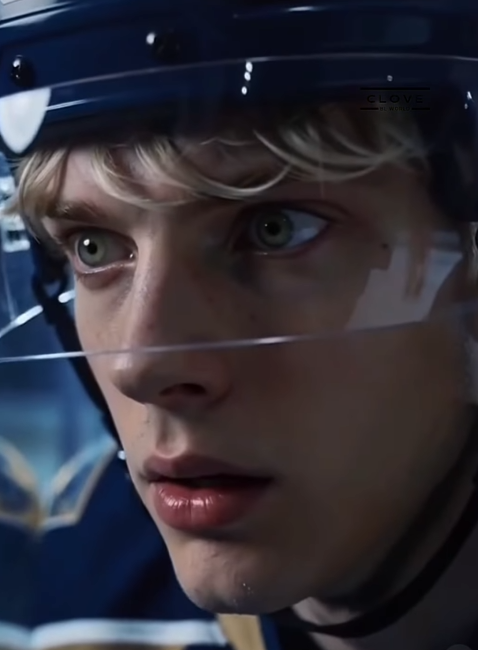
Examine Owen's function in the story and a particular psychological pattern emerges. He is a character who organizes his emotional life around opposition. Rivalry gives him permission to be intensely invested in another person — to study them, to measure himself against them, to feel something sharp and clarifying — without having to name what that investment actually is. The love letter doesn't just trigger a misunderstanding; it triggers a crisis. Because if David's feelings are directed at someone else, Owen has to reckon with why that produces something that doesn't feel like relief.
His core dramatic wound is the gap between what he permits himself to feel through the frame of competition and what he refuses to examine outside it. Rivalry is, for Owen, a form of permission. The story's engine is the slow withdrawal of that permission.
David: Function as Mirror
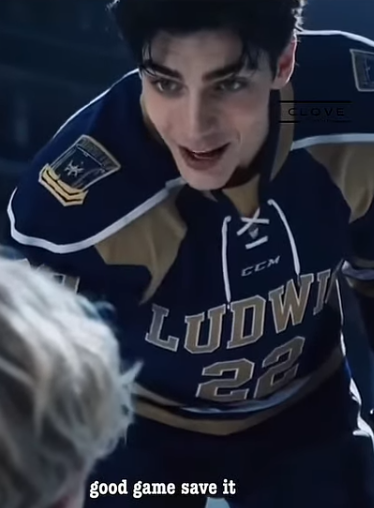
David's structural role in the drama is less about his own interiority — at least initially — and more about what his presence reflects back at Owen. He is the unwitting participant in a scenario he didn't design, which gives him a quality of unpredictability that the drama uses well. He isn't playing along with a plan he understands. He's responding to Owen's manufactured proximity in real time, without the context that explains it.
That asymmetry is dramatically potent. David is reacting authentically to a situation built on a false premise, which means everything he does carries the weight of genuine feeling while Owen is still operating in the register of strategy. The drama positions these two modes — calculation and sincerity — against each other, and what emerges between the rivals is neither: something unplanned, unscripted, and in that sense, more honest than anything either of them might have managed otherwise.
What the Hockey Setting Actually Does
Sports rivalries function in this kind of drama as pressure cookers — environments where physical proximity is mandatory, competition is institutionalized, and emotional restraint is coded as professionalism. Two captains from opposing teams exist in a world that already requires them to be obsessed with each other. Their seasons are structured around matching their wits and bodies against one another. The sport doesn't just provide aesthetic texture; it provides a pre-built justification for the intensity of the relationship before anyone has to admit what that intensity means.
Pucked By My Hockey Rival uses this environment with economy. It doesn't need elaborate backstory to explain why these two men are so attuned to each other's movements, decisions, and emotional states. The ice made them that way. The love letter just reroutes all of it.
The Specific Appeal for LGBTQ+ Audiences
The queer romantic comedy has been, historically, overly reliant on suffering as a precondition for joy. What Dramawave's short drama format offers — and what Pucked By My Hockey Rival deploys effectively — is lightness. The misunderstanding at the center is comedic in construction, which allows the drama to approach its queer romance from a direction that is playful before it is earnest. The feelings arrive through laughter, through absurdity, through the particular mortification of realizing you engineered your own downfall.
That tonal choice matters. It signals to an audience that their love story doesn't require tragedy to be taken seriously. The rivals on this ice don't have to earn their romance through suffering. They just have to stop running interference on themselves.
Pacing and the Short Drama Advantage
The vertical short drama format has trained a particular audience expectation: maximum tension per episode, no filler, emotional escalation as a default gear. Pucked By My Hockey Rival is calibrated to that rhythm. Each episode functions as a contained unit of dramatic pressure — Owen's plan tightens, proximity intensifies, the gap between what he believes and what the audience can see narrows incrementally. For viewers who watch during commutes or between tasks, this format rewards exactly the kind of attention they can actually give it.
The drama knows its audience isn't watching on a television with a blanket and three hours to spare. It's designed to make every five minutes feel like a consequence.
Who This Is For
Viewers who came up on slow-burn hate-to-love dynamics will find this structurally satisfying. Anyone who has watched a protagonist dig themselves into an emotional hole through sheer stubbornness — and felt both exasperated and deeply understood — will clock what Owen is doing long before he does. Fans of LGBTQ+ romance that leads with humor rather than hardship will find the tonal approach a welcome shift. And anyone who simply appreciates a plot engine that actually makes mechanical sense — where the comedy of errors generates the emotion, rather than coexisting awkwardly beside it — will appreciate how neatly the gears here fit together.
The love letter was never really about the sister. It never had to be.
Where to Watch
Pucked By My Hockey Rival (2026) is available on Dramawave via their official YouTube channel and Facebook pages. Episodes have been airing as individual short installments on the Dramawave YouTube channel. The full series is also available on Dailymotion via third-party uploads (search: "Pucked By My Hockey Rival Full Short Drama 2026"). For the official viewing experience, search "Pucked By My Hockey Rival Dramawave" on YouTube. Access is free.
recos: