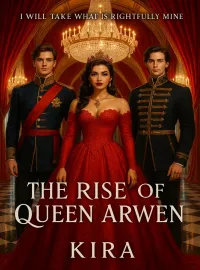
The Rise Of Queen Arwen
Chapter 1
Seventeen-year-old Arwen Valehart had never seen her own throne.
For ten years she had lived behind the walls of St. Aveline’s Convent, hidden away like a secret no one dared to speak aloud. The sisters called her child, her guardians called her Majesty, and Arwen herself no longer knew which she was meant to be. Every dawn, the bells rang for prayer, and she knelt beside her four handmaidens — Isla, Faye, Mira, and Liora — the only remnants of a court she had never ruled.
Each of them had become something precious to her. Isla, bold and sharp as flint, never bowed to anyone. Faye carried warmth in her eyes, always ready with a smile when the world felt cold. Mira was clever and curious, with a habit of asking questions no one else dared to voice. And Liora, quiet and watchful, noticed everything — the shifting glances of visiting clergy, the way soldiers sometimes lingered too long near the chapel gates. Together, they were all Arwen had left of Ravendale.
Outside those convent walls, her kingdom bled. She heard it in whispers — villages burned by British troops, farmers vanishing into the night, alliances turning to dust. Her tutors tried to shield her from the worst of it, but even in exile, she could feel the weight of a crown pressing against her skin. Every lesson reminded her of what she had lost: the echo of her father’s voice in the council chamber, the scent of her mother’s perfume on a silken sleeve, the sound of her name spoken not as a warning, but as a promise.
Some nights she dreamt of her mother’s hands — soft, perfumed with lavender — placing that crown upon her head. Other nights, she dreamt of blood, of faceless men in the dark, and the screams that haunted her sleep. In those moments, she wondered if the gods had cursed her before she even drew breath.
Her only thread to the world beyond the convent was a name she had not spoken aloud in years: Lucien Duvall. The Prince of Valoria. The boy promised to her when they were children, long before her parents’ deaths tore everything apart. She remembered little of him now — only the flash of a smile and a promise whispered in a garden heavy with summer roses. Sometimes she wondered if he remembered her at all, or if she had become another ghost of politics and forgotten vows.
When the seasons turned and winter returned to the convent, Arwen began to feel the walls closing in. The silence had grown heavier, the sisters more watchful, as though they too sensed that the outside world was creeping closer.
It was during one of the convent’s rare feasts — a celebration for the visiting Archbishop of Montrose — that fate finally found her.
The hall was heavy with candlelight, the air rich with roasted meats and spice. The sisters laughed for once, and even Arwen allowed herself to smile. It was the first time she had felt almost human in years, her laughter echoing softly between the ancient stone pillars. For a fleeting moment, she forgot who she was.
Then Isla drank from her cup.
It happened so fast. A small cough, a tremor — and then Isla’s body convulsed, the goblet slipping from her hand and shattering across the table. The laughter died. Arwen froze as her closest friend collapsed, her breath clawing against her throat. The taster who also took a sip from the same cup and dropped beside her moments later, foaming at the mouth.
For a moment, no one moved.
Then chaos broke.
The abbess screamed for aid. Mira pressed trembling fingers against Isla’s throat. Faye sobbed prayers through her hands. Arwen could only stare — at the crimson spreading across the tablecloth, at the cup rolling to a stop near her feet. Her body felt hollow, as though she’d been struck through the chest.
When they prised the cup from the floor, a glint of something caught the candlelight. Underneath the silver base, crudely carved, were the words that would haunt her for years:
“The child-queen must never rise.”
The mark beside it was unmistakable — the three lions of the British crown.
The world tilted. Her heart pounded so loud she could barely hear the abbess’s voice calling her name. The message was clear. They had found her.
By morning, Isla was dead.
The convent was shrouded in silence; even the bells refused to ring. The sisters moved like shadows through the halls, whispering prayers under their breath. Arwen stood by the small grave they dug beneath the apple trees, her cloak heavy with frost. The earth smelled damp and raw, clinging to her fingers as she pressed her palm to the fresh soil. She whispered a promise only the wind could carry.
“No more hiding,” she said. “Not for me. Not for Ravendale.”
When she lifted her head, her eyes were dry, her voice steady. Something inside her — the frightened girl who once wept in the chapel pews — had gone still. In her place stood the queen she was always meant to become.
Her guardians gathered in secret that evening. They argued, their whispers sharp with fear.
“She cannot stay. They know where she is.”
“It’s too soon. She’s not ready.”
“Ready or not, they’ll come for her. And next time, they’ll not miss.”
At last, the decision was made: Arwen would leave that very night. Her only hope lay in Valoria — and in the prince she had not seen since childhood. The alliance her parents forged in blood might now be the only thing strong enough to keep her alive.
The sisters packed what little she owned: a handful of books, her mother’s rosary, a single emerald ring engraved with the royal crest of Ravendale. Mira wept quietly as she tied Arwen’s cloak. Faye clasped her hand.
“You’ll come back,” she said, her voice breaking.
“I will,” Arwen replied. She wished she believed it.
The gates creaked open just before dawn. The sky was the colour of ash, the air thick with mist. A carriage waited on the road, horses restless in the fog. Arwen climbed inside without looking back. The convent’s spire loomed behind her, fading like a ghost into the morning haze.
As the wheels began to turn, she reached for the window, watching the only home she had ever known disappear. For a moment, she thought she saw Isla standing at the gate — head high, eyes fierce, alive again in the pale light. But when she blinked, there was nothing there. Only mist.
She pressed her fingers to her lips and whispered, “For Ravendale.”
The driver snapped the reins. The carriage rolled forward, vanishing into the white haze.
Unseen by those inside, two riders lingered in the treeline, cloaked and silent. One lowered his hood, the faint gleam of steel flashing in his hand.
“The Queen of Ravendale rides to her fate,” he murmured.
The other gave a low laugh, his breath misting in the cold.
“Then we’d best make sure she never arrives.”
You may also like