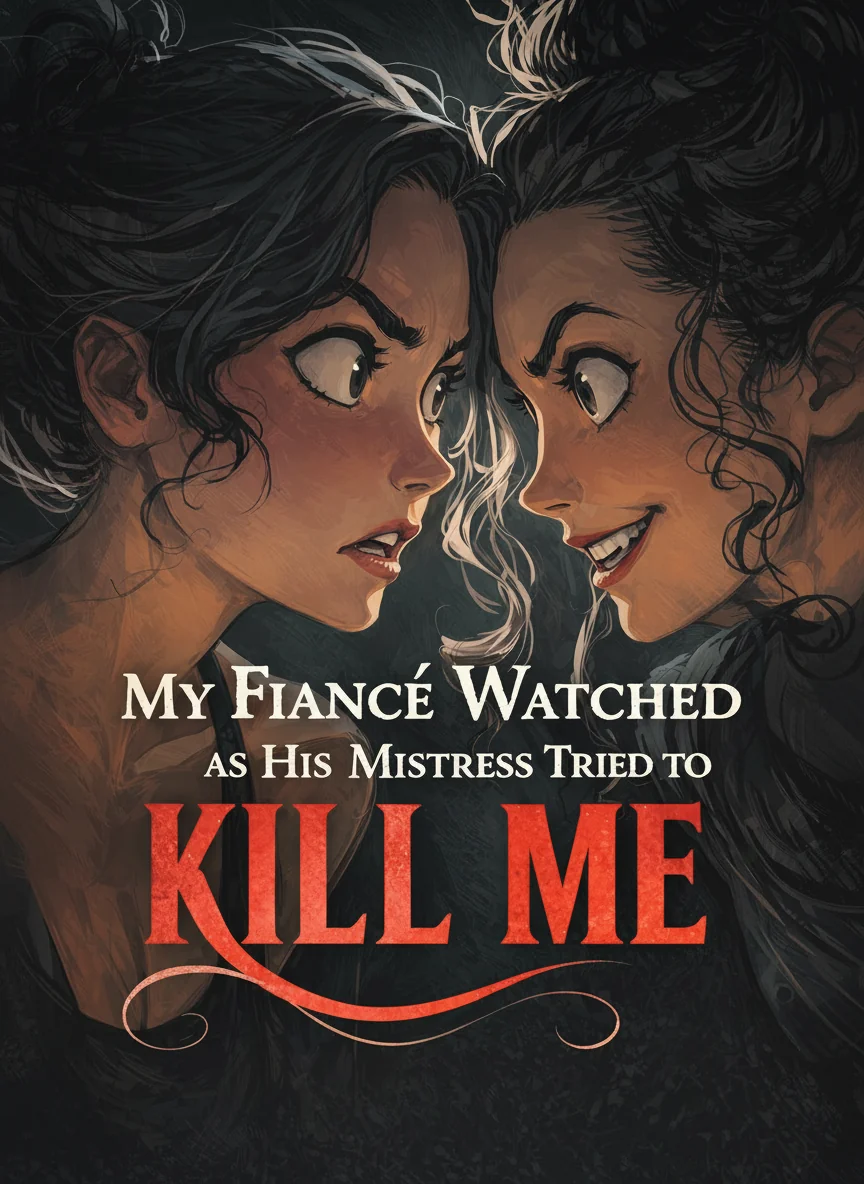
My Groom’s Mistress Staged Her Own Suicide to Destroy Me
Chapter 2
He found me in the backstage corridor before I'd made it twenty feet from the main room.
The noise from the other side of the wall was still going — voices layered over voices, the particular chaos of two hundred people processing something they hadn't expected to witness. I could hear Chase's mother somewhere in the middle of it, her pitch climbing. I kept walking.
"Katelyn." His hand closed around my elbow. Not rough, but firm. The grip of a man who still believed he was managing a situation. "Stop. Just — stop for one second."
I stopped. Not because he asked me to.
I turned and looked at him. The rehearsed urgency from earlier was gone. What replaced it was something rawer and less flattering — the expression of a man recalculating, rapidly, who he was dealing with.
"That was completely unnecessary," he said. "What you just did in there."
I waited.
"The Dallas thing — it's a legal arrangement. Insurance, beneficiary coverage, it's paperwork, Kate, it doesn't mean what you're making it mean." He ran a hand through his hair. "You stood up in front of everyone we know and made a scene over a technicality."
The fluorescent light in the corridor hummed. Somewhere down the hall, a door opened and closed.
"You're upset," he continued, his voice dropping into the register he used when he wanted to sound reasonable. "I understand that. But you need to think clearly right now, because you cannot afford to burn this bridge. Your family's finances — Kate, I know the situation. I've known for a while. You don't have the runway you think you do, and walking away from this—"
"Chase."
He stopped.
"Don't," I said.
That was all. I turned and walked to the exit.
Behind me, he said my name twice more. The second time had an edge in it I'd never heard before — something between anger and the first faint tremor of a man who has just noticed the ground shifting under him.
I pushed through the door into the flat white Tuesday light and didn't look back.
---
The video went up the next morning at seven forty-three.
Vera sent me the link with no commentary, which told me everything about how bad it was before I pressed play. Dallas sat in soft, carefully arranged lighting — the kind that takes twenty minutes to set up — in what appeared to be a hotel room. Her eyes were red. Her voice broke in exactly the right places.
She talked about fear. About walking on eggshells. About a powerful woman at the office who had made her life a quiet nightmare for months — veiled threats, social exclusion, the particular cruelty of someone who never raised her voice but always made sure you knew your place. She talked about Chase as a lifeline. About their love as something that had grown in the shadow of that cruelty, something real and fragile that she'd been terrified to name.
She never said my name. She didn't have to.
By nine o'clock, my name was trending.
I read the comments for exactly four minutes, then set my phone face-down on my desk.
"PR is asking for authorization to respond," Vera said from the doorway.
"Tell them to hold."
"The window for narrative control—"
"I know what the window is." I looked up. "Tell them to hold."
Vera held my gaze for a moment, then nodded and stepped back.
I turned to the window. Bell Industries occupied the top three floors of a building that Chase had walked past a hundred times without knowing what was inside it. I thought about that for a moment. Then I pulled up the embargo file and got back to work.
---
The café Vera chose was quiet and expensive, the kind of place where serious conversations happened without being overheard. We took a corner table and spread the documents between our coffee cups — contract dependencies, talent assessments, the full architecture of what dismantling Riley Group's lifeline would actually look like.
We were twenty minutes in when the group arrived.
Four men, Riley Group senior staff — I recognized two of them from quarterly meetings I'd attended as Chase's fiancée, invisible and underestimated in equal measure. They took a table nearby without noticing me, or noticing me and not caring, which amounted to the same thing. Their voices carried.
The words *unhinged* and *always knew she was unstable* reached me clearly.
Vera's pen stopped moving.
"Keep going," I said quietly.
The man at the table beside ours set down his coffee cup.
I hadn't registered him before — he'd been reading, unhurried, the kind of stillness that doesn't announce itself. He was perhaps thirty-five, with the particular ease of someone who had never needed a room to know he was the most consequential person in it. He didn't stand. He didn't raise his voice. He simply turned toward the Riley Group table with an expression of such calm, complete attention that the laughter died mid-sentence.
"Gentlemen." His voice was even. "You might want to finish that conversation somewhere else."
One of them started to respond. The man looked at him. That was all it took.
They gathered their things and left.
He turned back to his book. Then, as if it had just occurred to him, he glanced over at our table — not at me with the hungry assessment I'd learned to expect from men who thought they were doing you a favor, but with something quieter. A nod. The kind that said *I saw what was happening and it was wrong*, nothing more and nothing less.
I held his gaze for a moment.
Then I looked back down at the embargo file and turned to the next page.
You may also like