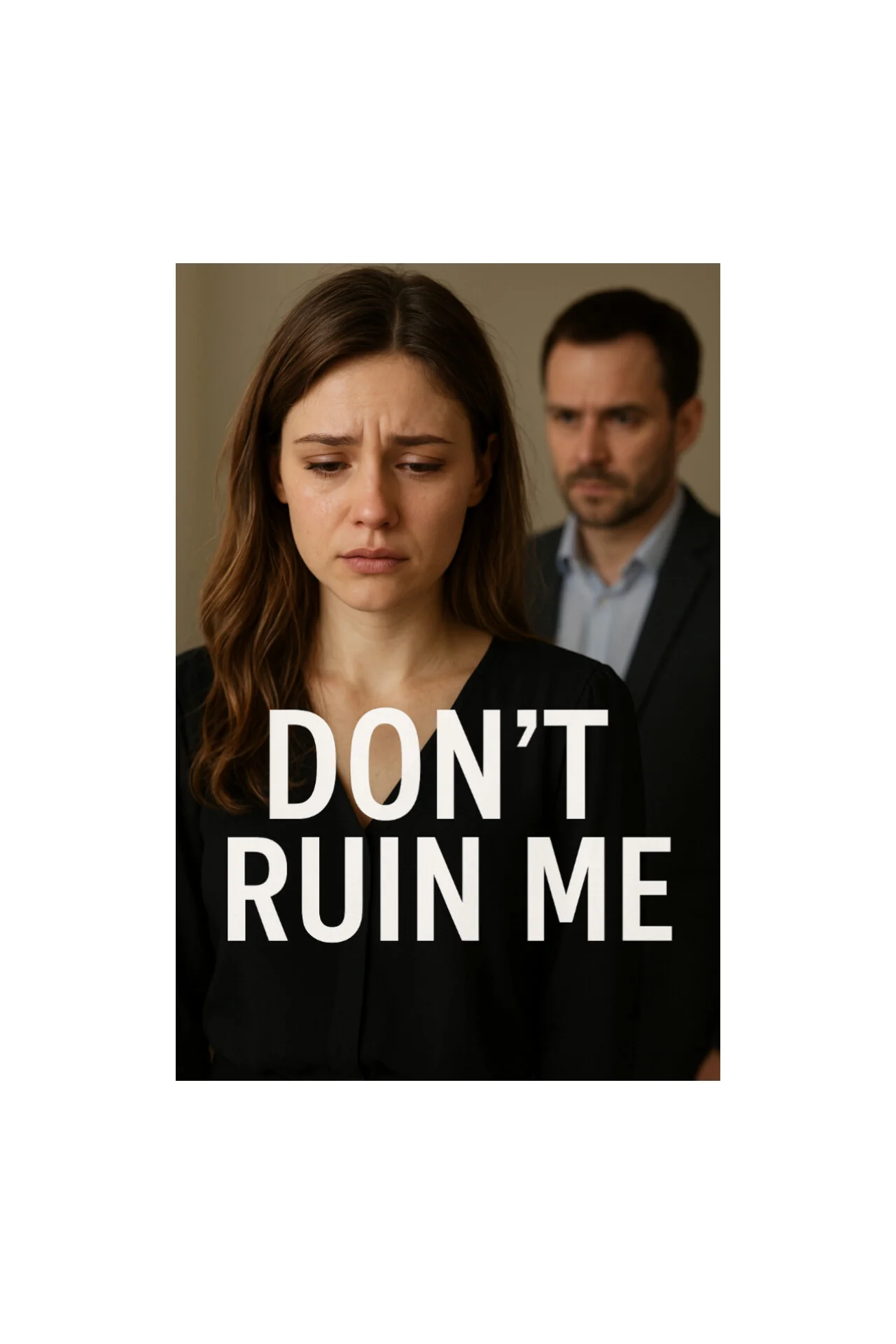
My Husband Protected His Mistress After She Killed My Mother
Chapter 1
The call came on a Tuesday. I was scrubbing out of a nine-hour case when my phone lit up with my mother's clinic number, and some part of me — the part trained to read vitals off a monitor before anyone says a word — already knew.
My mother, Marianna Nichols, had gone in for a routine consult. She trusted the place because I trusted the girl who worked there. Leighton Cook. Twenty-six, no license, no business touching a scalpel, and somehow alone in a room with my mother when something went wrong. The camera in the corner recorded all of it — Leighton's hands shaking, the tray of instruments still in their sterile wrap, unopened, unused because there hadn't been time. My mother stopped breathing at 4:52 p.m. I know the exact minute. I've watched the footage enough times to know it the way I know my own pulse.
I turned that footage over myself. I drove it to the ethics board in a manila envelope like it was evidence in someone else's life, because if I let myself believe it was mine, I wouldn't have been able to walk.
The trial opened three months later at Manhattan Supreme Court, and that was where I first watched my husband become someone I didn't recognize.
Grayson Armstrong sat one row behind the defense table. Not beside me. Behind Leighton. He'd hired Derek Holt — a defense attorney with a reputation for making inconvenient facts disappear — the week after the arraignment, and he hadn't told me until the retainer had already cleared. "She was crying, Reagan," he'd said, like that was an argument. "She kept saying it was an accident. That she loved your mother too."
I watched Holt work. He moved to suppress the footage on a chain-of-custody technicality and won. He put my mother's cardiologist on the stand and reduced thirty years of practice to a shrug and a raised eyebrow. He never raised his voice. He didn't need to. Leighton sat at the defense table in a blouse the color of a hospital wall, dabbing at eyes that never seemed to actually produce tears, and every camera in that courtroom loved her for it.
The jury was out for two hours and forty minutes.
"Not guilty on all counts."
I didn't cry. I didn't make a sound. I sat very still on the plaintiff's side of the gallery, alone, because Grayson had chosen his seat before he'd chosen anything else that day, and I watched him lean across the aisle and put his hand on Leighton's shoulder. He squeezed once, the way you'd reassure a nervous intern after a hard rotation. He did not look at me. Not once. Not when the verdict landed, not when I stood, not when I walked out past the reporters with my face arranged into something that wouldn't give them a headline.
Something in me closed that day. Cleanly. The way a good incision closes — no jagged edges, no room for infection, just a line that would scar and hold.
That night, in the townhouse we still shared, I sat at my desk long after Grayson had gone to sleep, and I drafted divorce papers I had no intention of filing yet. I wasn't ready. I told myself I needed more — dates, documentation, the quiet architecture of proof — before I could afford to be angry out loud. I hid the papers in the false bottom of my desk drawer, underneath the card my mother gave me the day I matched into my surgical residency. *Go be brilliant, baby. The world owes you nothing, so take it anyway.* I read it once, put it back, and didn't cry that night either.
Grayson came home the next evening with a bouquet of white peonies and a voice full of gentle reasonableness. "We should move forward," he said, setting the flowers on the counter like an offering. "Grief is a process, Reagan. We'll get through it together." He said *grief* the way he said *quarterly projections* — a word he understood the shape of but had never once felt the weight of.
I said very little. I started keeping a folder instead — clinic access logs, financial transfers, the exact dates Leighton had been let into rooms she had no business entering. I did it quietly, invisibly, the way you'd monitor a patient you already knew was crashing. Grayson noticed none of it. He had never once considered that I might be a variable he needed to track.
Then came the Hamptons.
"A weekend away," he said, sliding the invitation across the breakfast table like a peace treaty. "Just us. We'll heal."
I said yes, because refusing would have required an explanation I wasn't ready to give.
On the drive out, the ocean flickering gray beyond the dunes, Grayson talked about a deal closing at Armstrong Holdings. He did not say my mother's name once. I watched the highway markers blur past and pressed my thumb hard into the inside of my left wrist, a habit I hadn't noticed forming until it was already mine.
You may also like