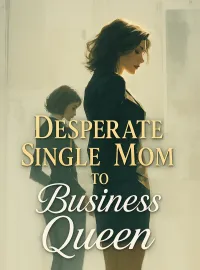
Desperate Single Mom to Business Queen
Chapter 2
Three weeks later, the contractions hit me like a freight train while I was scrubbing the floors of the downtown office building. The mop clattered to the ground as I doubled over, my hand instinctively flying to my swollen belly.
"Not now," I whispered to Hope, as if my daughter could hear me and somehow decide to wait. "Please, not now."
But babies don't listen to desperate mothers who can't afford proper prenatal care.
The taxi ride to the charity hospital was a blur of pain and panic. I clutched the worn vinyl seat as another contraction ripped through me, counting the crumpled bills in my purse. Forty-three dollars. It had to be enough.
The emergency room smelled like disinfectant and desperation. Fluorescent lights buzzed overhead as I was wheeled into a delivery room that had seen better decades. The paint was peeling, and the equipment looked like it belonged in a museum, but the nurses were kind. That was something.
"Is there anyone we should call?" asked the nurse, a middle-aged woman with gentle eyes and calloused hands.
I shook my head, tears streaming down my face. "It's just us."
The labor was brutal and lonely. No husband holding my hand. No father pacing in the waiting room. No sister offering words of encouragement. Just me and the medical staff who saw cases like mine every day—young women abandoned by the world, bringing children into circumstances that would challenge them from their first breath.
When Hope finally arrived, screaming and perfect, the doctor placed her on my chest with a smile that seemed genuine despite the chaos of the public hospital.
"She's beautiful," he said. "What's her name?"
I looked down at my daughter's tiny, wrinkled face, her eyes squeezed shut against the harsh hospital lights. She was so small, so fragile, yet she'd fought her way into this world three weeks early. A survivor, just like her mother would have to be.
"Hope," I whispered, my voice hoarse from hours of labor. "Her name is Hope."
Because that's all I had left.
---
The studio apartment in East Oakland was a far cry from the mansion I'd grown up in. Four hundred square feet of cracked linoleum, water-stained walls, and a radiator that clanged like a ghost in chains. But it was ours—mine and Hope's—and I'd fought for every dollar of the security deposit.
The alarm clock screamed at 4:30 AM, just like it had every morning for the past two months. Hope stirred in her secondhand crib, making the soft mewling sounds that meant she'd be hungry soon. I stumbled to the kitchenette, my body aching from the previous night's cleaning shift, and prepared her bottle with the precision of someone who'd learned that wasted formula meant a hungry baby.
"Good morning, sweetheart," I murmured, lifting her into my arms. She was growing so fast, changing every day. Sometimes I caught glimpses of Ethan in her features and felt a stab of pain so sharp it took my breath away. But mostly, I saw possibility. I saw hope.
After feeding her, I'd shower quickly in the tiny bathroom where the hot water lasted exactly three minutes, then dress in my waitressing uniform—a polyester nightmare that made me look like every other struggling single mother in the city. The woman who'd once worn designer dresses to charity galas now served coffee and eggs to truckers and construction workers.
The lunch shift at Mel's Diner was a masterclass in humility. My feet swelled in cheap shoes, my back ached from carrying heavy trays, and my hands were permanently stained with coffee and grease. But the tips were decent, and the other waitresses had taken me under their wing once they realized I wasn't too proud to work.
"You're different from the usual girls who come through here," said Rosa, a veteran waitress with kind eyes and a mouth that could make a sailor blush. "You got education written all over you. What's your story?"
I'd learned to deflect those questions with a smile and a shrug. "Just trying to make it work, like everyone else."
Evenings were for data entry—mind-numbing work that I could do from home while Hope slept. My fingers flew across the keyboard, inputting numbers and information for companies that would never know my name. The pay was terrible, but it meant I could be there when Hope woke up crying, when she needed to be fed, when she just needed her mother.
The government assistance check arrived like clockwork on the first of each month, along with the food stamps that I used with a mixture of gratitude and shame. I'd grown up writing checks to charity, never imagining I'd be the one standing in line at the welfare office, bouncing a baby on my hip while caseworkers determined my worth in dollars and cents.
But I was surviving. We were surviving.
---
I was folding Hope's tiny clothes in the laundromat when I saw it. The newspaper someone had left behind was folded to the society pages, and there, in glossy color, was my former life.
The headline read: "Thorne-Rossi Engagement Celebration Dazzles High Society."
My hands trembled as I picked up the paper. The photograph showed Ethan and Isabella on the grand staircase of the Thorne mansion—my childhood home. Isabella wore a stunning emerald gown that I recognized from my own closet, and Ethan looked every inch the successful businessman in his tailored tuxedo.
But it was the caption that destroyed me: "Isabella Rossi, the daughter Richard Thorne always wanted, celebrates her engagement to rising business star Ethan Vance. The couple met through family connections and bonded over their shared vision for the future of Thorne Industries. Their wedding, planned for next spring, promises to be the social event of the season."
The daughter he always wanted.
I read the article three times, each word a fresh cut. It described Isabella as "poised and intelligent," praised her "natural business acumen," and quoted my father calling her "a blessing to our family." There was no mention of me. No acknowledgment that Richard Thorne had ever had another daughter.
I'd been erased.
Hope fussed in her carrier, sensing my distress. I folded the newspaper and shoved it into the trash, but the damage was done. They weren't just living my life—they were rewriting history to pretend I'd never existed.
---
The grocery store on Fifth Street was where I'd learned to shop like the poor. I clipped coupons, bought generic brands, and calculated every purchase down to the penny. The food stamps covered the basics, but I'd become an expert at stretching a dollar until it screamed.
I was comparing prices on baby formula when I heard the voices—cultured, familiar tones that made my blood run cold.
"It's such a tragedy about Richard Thorne's daughter," said one woman, her voice carrying the particular brand of concern that wealthy women used when discussing scandal.
"Oh, the one who had the breakdown?" replied her companion. "I heard she completely lost it. Paranoid delusions, wild accusations against her own family."
I froze, my hand still reaching for the formula.
"Martha Whitmore was at the country club when it happened. She said the poor girl was screaming about conspiracies, claiming her husband was having an affair with her own sister. Can you imagine?"
A bitter laugh. "Mental illness is so tragic in young mothers. The hormones, you know. Richard tried everything—the best doctors, private facilities. But she just disappeared one night with the baby."
"How heartbreaking for him. Thank goodness he has Isabella now. Such a sensible girl, and she's been wonderful for the business."
"A blessing, really. Some daughters are meant to carry on the family legacy, and others..." The woman's voice trailed off with practiced sympathy.
I stood there, invisible in my cheap clothes and tired face, listening to my own story being rewritten by women who'd once smiled at me across dinner tables. I was no longer Amelia Thorne, beloved daughter and devoted wife. I was a cautionary tale, a whispered tragedy, a woman who'd lost her mind and abandoned her family.
The lies had become truth.
I paid for my groceries with shaking hands, Hope sleeping peacefully in her carrier, oblivious to the fact that her mother had just heard her own obituary read by the living.
You may also like