After My Husband Faked My Funeral to Steal Our Child
Chapter 3
The ballroom was a suspended breath, a vacuum of shock that Aunt Margaret’s sobbing finally punctured. I held her frail frame, feeling the tremors racking her body, but my eyes remained locked on the stage. I couldn't afford to look away. Not when the predators were cornered.
Charli recovered first. Of course she did. She was a creature of social survival, a chameleon who had painted herself into my life with layers of deceit. She stepped away from the frozen Clayton, her hands smoothing the lace of her gown—a nervous, jerky motion that betrayed her composure. She didn't retreat; she advanced to the edge of the stage, her face twisting into a mask of righteous indignation.
"How dare you?" Her voice started low, trembling with a theatrically perfect vibrato, before rising to a shriek that clawed at the crystal chandeliers. "You let us mourn you! You let us bury you!"
She pointed a manicured finger at me, the diamond on her hand catching the light—a harsh, glittering accusation. "Three years, Genevieve! We grieved. We suffered. And you were just... playing dead? Abandoning your family to run off with some soldier?"
Murmurs rippled through the crowd. The tide of sympathy was fickle; Charli was trying to turn it, painting me as the cruel deserter rather than the victim. I felt the heat rise in my cheeks, not from shame, but from a rage so pure it felt like cold water in my veins.
"I didn't run, Charli," I said, my voice cutting through her performance. "I was erased. There’s a difference between leaving and being disposed of."
"Liar!" She spat the word, looking out at the confused faces of Seattle’s elite, her eyes wide and wet with forced tears. "She’s unstable! Everyone knew she was struggling with her mental health before the accident. This is just another episode. She faked her death to hurt Clayton! Look at her, crashing our joy with her... her delusions!"
Clayton seemed to inflate at her words, finding his footing in her narrative. The color returned to his face in blotchy patches of red. He stepped down from the dais, abandoning the microphone. He didn't look like a grieving husband; he looked like a CEO whose merger was falling apart.
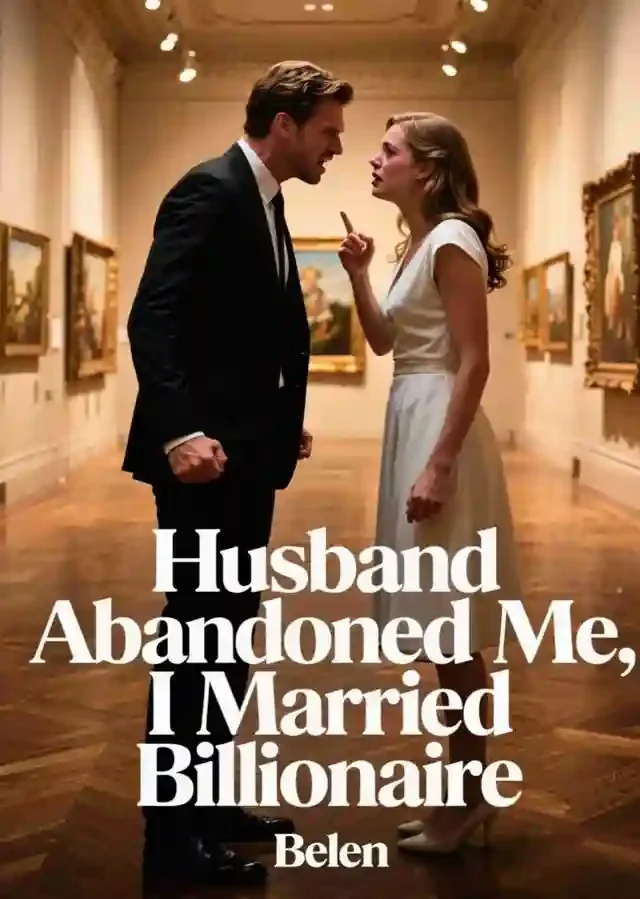
He marched toward me, his expensive shoes thudding heavily against the marble. "That’s enough," he snarled, his charm fully dissolved, revealing the rot underneath. "I don't know what game you're playing, or who this man is, but you are causing a scene."
He reached for me. His hand, large and manicured, stretched out—a claw meant to seize, to control, to drag me back into the dark. For a split second, the ballroom vanished. I was back in the basement, the air thick with mold, watching that same hand turn the lock.
My breath hitched. My lungs seized.
But the hand never reached me.
Rhodes moved. It wasn't a frantic lunge; it was a shift of tectonic plates—inevitable and crushing. He stepped between us, his dress blues creating a wall of midnight wool and gold brass. He didn't shove Clayton; he simply occupied the space where Clayton wanted to be, forcing the other man to skid to a halt or collide with a chest full of medals.
Clayton stopped, inches from Rhodes’s face. The height difference was negligible, but the difference in presence was staggering. Clayton was a man who bought power; Rhodes was a man who commanded it.
"Step aside," Clayton barked, though his voice wavered as he looked up into Rhodes’s eyes. "This is a family matter. I'm escorting my wife out."
"You have no wife here, Mr. O'Brien," Rhodes said. His voice was terrifyingly calm, a low frequency that vibrated in the floorboards. "You buried an empty box."
"Get out of my way!" Clayton tried to shove past him, reaching around Rhodes’s torso to grab my arm.
Rhodes caught Clayton’s wrist. He didn't twist it. He didn't strike him. He just held it, his grip absolute, freezing Clayton in place. I saw Clayton’s eyes widen, the realization of physical inferiority dawning on him. He tried to yank his hand back. He couldn't.
"Touch my wife again," Rhodes whispered, the words carrying more violence than a scream, "and you will answer to the United States Army."
*Wife.* The word hung in the air, heavy and absolute.
Clayton flinched as if struck. He ripped his wrist free as Rhodes released him with a disdainful shove. Rubbing his arm, Clayton stumbled back, his gaze darting frantically for an exit, a lawyer, a weapon—anything.
Then, he saw her.
Iris had been clinging to the back of Rhodes’s pant leg, burying her face in the fabric of his uniform. But the shouting had startled her. She peeked out, her dark curls tumbling over her forehead, her wide, terrified eyes scanning the angry man in front of us. She clutched her stuffed rabbit to her chest, looking so much like a miniature version of me that it made my heart ache.
Clayton froze. His eyes locked onto her. I saw the gears turning in his head—not the recognition of a father, but the calculation of an accountant.
He did the math. Three years gone. I had been three months pregnant when he locked me away. In his mind, the timeline was perfect. He didn't see a child; he saw the trust fund stipulations. He saw the heir clause in my grandfather’s will. He saw the money he had killed for, suddenly standing there in a velvet dress.
Greed cannibalized his fear. A sick, triumphant smile broke across his face.
"My God," he breathed, loud enough for the press to hear. He pointed a shaking finger at Iris.
"No," I whispered, stepping forward to shield her, but he was already shouting.
"That’s her!" Clayton roared, turning to the crowd, playing the victimized father with sickening ease. "That’s the baby she was carrying! That’s my daughter!"
Rhodes stiffened, his hand dropping to his side, fingers curling into a fist.
"You stole my child!" Clayton screamed, lunging forward again, his eyes manic with the promise of millions. "You faked your death and kidnapped my daughter! Give her to me!"
You may also like