Wrestling with Love: Two Boys, One Mat, and Feelings Neither Can Pin Down

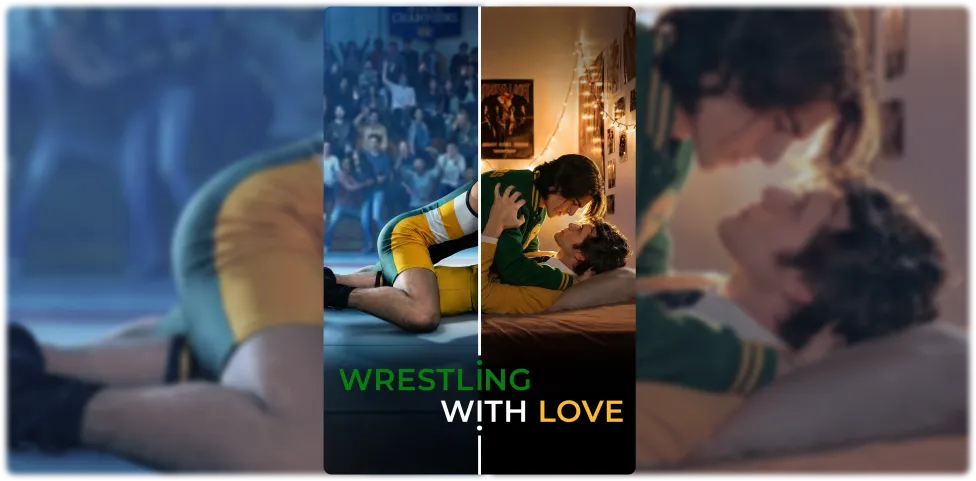
There's a particular kind of tension this series understands perfectly — the kind that lives in your body before your brain catches up. Wrestling with Love, which premiered on March 20, 2026, doesn't announce itself as a love story. It announces itself as a conflict. And that distinction is exactly what makes it work.
The Setup Isn't the Point — The Trap Is
On paper, the premise sounds almost comically high-concept: shy artist Cal is pushed by his strict father to join the high school wrestling team, and his assigned trainer turns out to be Ricky — the aggressive star wrestler who has bullied him for years. It sounds like the setup for either a revenge arc or a bad sports movie.
It's neither. What the series does instead is more psychologically uncomfortable and far more interesting: it refuses to let either character escape the other. Forced proximity isn't a romantic device here — it's a crucible. Every training session is a confrontation. Every moment of physical contact carries the weight of everything that came before it. What begins as pure humiliation and hostility slowly shifts as constant physical training blurs the line between rivalry and attraction. The genius of the bl series' structure is that the mat — a space designed for domination and submission — becomes the only place where both boys are forced to be completely, vulnerably real.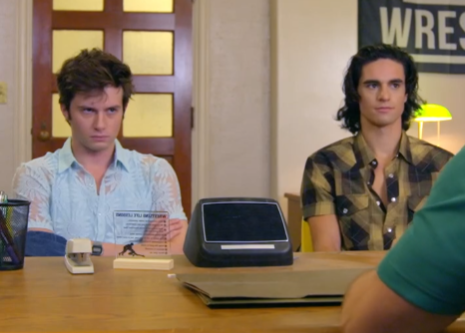

Cal: Reading a Character Through What He Doesn't Say
Cal is played by Zakhar Shadrin. The performance is built almost entirely in the negative space — in held breath, in averted eyes, in the way Cal's body language shifts millimeter by millimeter across the series. He begins as someone who has learned to make himself small, and the drama tracks the slow, painful process of him unlearning that.
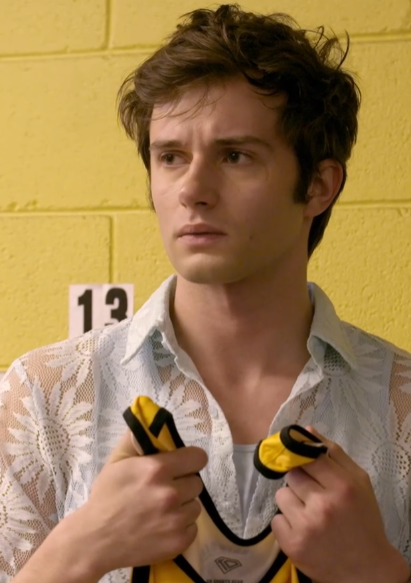
What makes Cal compelling isn't his sensitivity — it's the specific flavor of his resilience. He doesn't fight back loudly. He endures, observes, and quietly refuses to disappear. Even viewers who've never been bullied will recognize something in the way he carries the exhaustion of being perpetually misread. Cal is shy, sensitive, and constantly bullied — especially by Ricky, the star wrestler with anger issues and a messy home life. The contrast between their outward lives — artist versus athlete, invisible versus dominant — sets up a false binary the series then methodically dismantles.
Ricky: The Antagonist Who Doesn't Get to Stay Simple
The most dramatically dangerous character in this story isn't a villain — it's someone who could become one and chooses not to. Ricky is played by Mark Ciccarelli. What the role demands is something genuinely difficult: performing aggression and vulnerability simultaneously, without letting either cancel the other out.
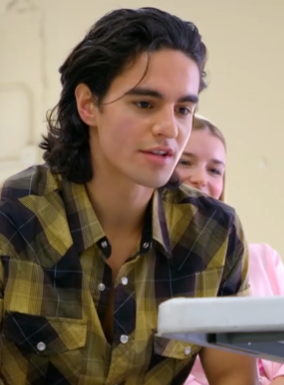
Ricky is a star wrestler with anger issues and a messy home life. The drama is careful never to use that context as an excuse for his behavior — but it does use it to explain the architecture of who he is. His cruelty toward Cal isn't random. It has the particular shape of self-protection, of someone attacking what he can't afford to want. As the series progresses, his function in the story shifts from antagonist to something more unsettling: a mirror. The audience watches him realize, episode by episode, that everything he despises about Cal is everything he's been told to bury in himself.
Maya and the Weight of the Outside World
Maya, played by Arcadia Kendal, occupies a dramatic function that lesser stories would flatten into pure obstacle. Here, she represents the social contract Ricky has signed — the performance of normalcy that he's been executing long enough to almost believe it. Jealousy from Ricky's social circle, including his manipulative girlfriend Maya, and school gossip threaten to expose their growing connection.
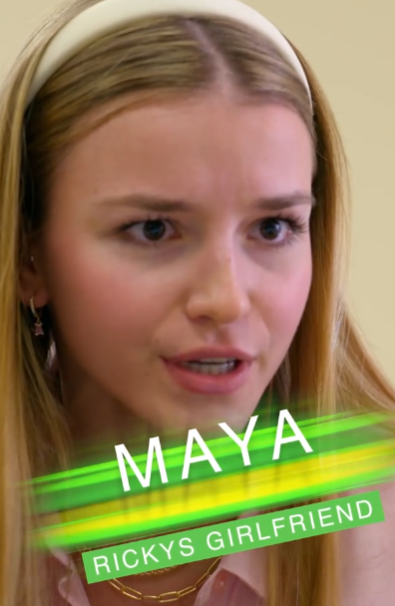
Maya isn't simply in the way. She's a reminder of what the world outside the gym expects of Ricky — and what it would cost him to contradict that. Her presence sharpens the stakes without making the romance a simple battle between a "bad" relationship and a "good" one. The drama is smarter than that: it understands that the real obstacle was never Maya. It was always Ricky's own internalized fear.
The Mat as Metaphor — And Why It Actually Works
The series centers on a bully-victim dynamic that is never glossed over; it evolves through genuine growth, redemption, and mutual understanding rather than instant forgiveness. This is worth dwelling on, because enemies-to-lovers stories live or die on the question of whether the "enemies" part is ever truly reckoned with. Too many romances in this genre fast-forward through accountability in a rush to get to the warmth. Wrestling with Love doesn't. The series lets the damage between Cal and Ricky sit in the room before it begins clearing the air.
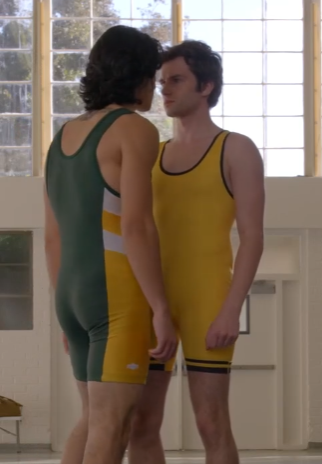
The sport itself is doing heavy thematic lifting throughout. Wrestling is uniquely, unavoidably intimate — two bodies in sustained contact, each trying to read the other's weight and intention in real time. Wrestling scenes turn every grapple into electric tension — the physical closeness makes the shift from hate to heat feel authentic and intense. The show earns its charged moments because the physicality has been there from the beginning, just under a different name.
What the Series Gets Right About Identity
The drama is not a soft romance — it's complicated, painful, and very real. It honestly explores attraction, confusion, and acceptance, including the painful push-pull of internalized feelings and social pressure.
This is where Wrestling with Love earns its place as something more than a genre exercise. The LGBTQ+ experience it depicts isn't idealized or neatly resolved. Both boys struggle with pressure — from family, expectations, and their own identities. The tournament that drives the final act functions not just as a plot climax, but as a deadline: a point at which avoidance is no longer structurally possible, where both characters must finally choose what they're actually fighting for.
Supporting roles add layers of school gossip, team rivalry, and adult expectations that make the central romance feel grounded and high-stakes, preventing the story from becoming an isolated bubble where queerness exists without consequence.
Wrestling with Love Where to Watch — Full Episodes
Wrestling with Love all episodes are available on My Drama and Melolo, the series' official platform. Early episodes are free or ad-supported, with later episodes accessible via in-app coins that can be purchased or earned daily. The full story is currently accessible in the app.
For the best viewing experience: watch in portrait mode on your phone — the vertical filming makes every close-up hit harder. Keep headphones on; whispered dialogues and heavy breathing during training scenes carry the emotional weight.
Final Verdict
Wrestling with Love is the rare short drama that justifies every one of its charged glances and loaded silences — because it actually does the work to earn them. It's uncomfortable in the right ways, honest about the specific pain of wanting something you've been taught to fear, and anchored by two lead performances that understand exactly what the story needs from them.
If you loved it for the tension, you'll stay for the reckoning. And if you found it at 2 a.m. through a TikTok clip — no judgment. That's exactly how this kind of story should travel.
rocos: