The Rise Of The Lycan Queen: They Cast Her Out. She Came Back to Rewrite the Law

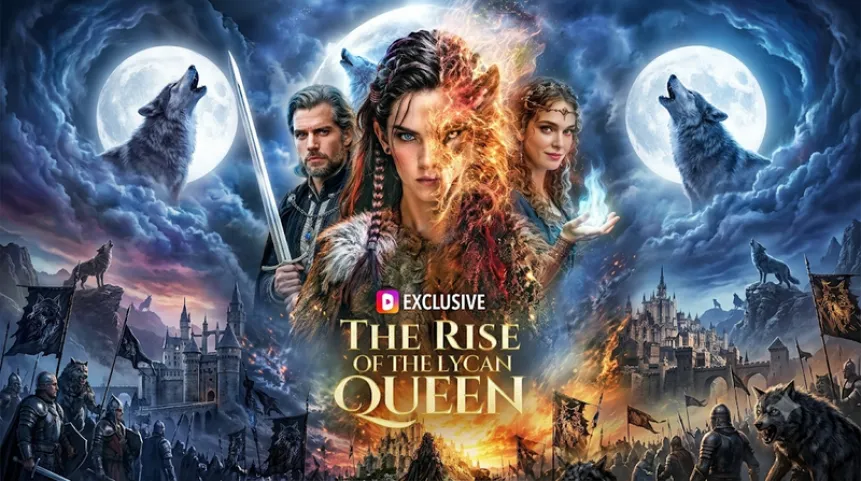
She wasn't hiding anything. That's the first and most important thing to understand about the silver moon wolf princess at the center of this drama. The werewolf fantasy genre has a well-worn structure: the hero who appears powerless but secretly carries something extraordinary, waiting for the moment of awakening to arrive. The Rise Of The Lycan Queen declines that structure at the outset. The princess is genuinely powerless when she is cast away. The wolf realm doesn't misjudge a hidden ability. It correctly identifies an absence — and then makes the catastrophic mistake of believing that absence is permanent.
Twenty years later, it learns otherwise.
The Origin and Why Genuine Powerlessness Matters
The drama's decision to make the princess authentically without power at birth is its most significant structural choice, and it separates The Rise Of The Lycan Queen from the larger category of hidden-strength fantasy it superficially resembles. In the hidden-strength format, the dramatic irony is front-loaded: the audience knows the protagonist has something extraordinary while the antagonists don't, and the pleasure of the drama comes from watching that gap close. The heroine is already the most powerful person in the room — she just hasn't shown it yet.
That structure is not available here. The princess is cast out not because the realm misreads power she has, but because she genuinely lacks what her world demands. Her exile is, by the internal logic of the wolf realm, a defensible decision — a community protecting its standards by removing a member who fails to meet them. The injustice isn't that they got her wrong. It's that the standards themselves are the problem: a world that discards people for what they cannot yet do, without any mechanism for accounting for what they might become.
This distinction makes the drama's eventual reversal hit differently. The Lycan Queen who returns isn't correcting a misperception. She is the proof that the framework used to judge her was always insufficient — that the wolf realm's logic of inherent worth-by-power condemned someone for a condition that time and exile transformed entirely.
The Silver Moon Bloodline and Its Quiet Irony
The princess's lineage is named with precise mythological intent. The silver moon wolf bloodline is, within the realm's hierarchy, among the most expected to produce power. The moon, across werewolf tradition, is the governing force of transformation and strength — the light that awakens what wolves carry. A silver moon wolf should, by the realm's own mythology, be formidable.
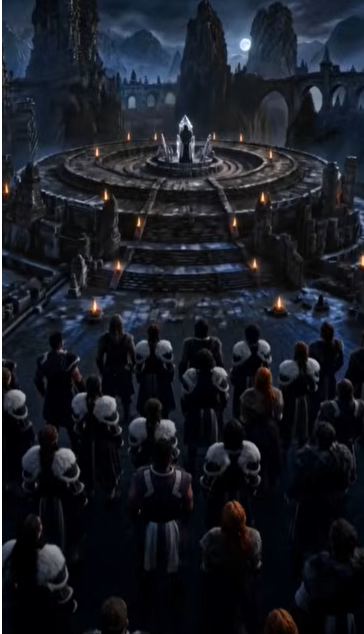
Which means that the community's decision to exile a silver moon wolf princess for apparent powerlessness is a self-contradiction that the drama builds its entire irony around. They didn't just discard a weak child. They discarded the heir of a lineage their own mythology marks as exceptional — and then spent twenty years not noticing the gap in their logic. The silver moon label is the drama's quiet argument, planted in the protagonist's identity from birth, that the realm was always wrong. Not about what she was at the moment of exile, but about what the name she carried meant for what she would eventually become.
When the Lycan Queen returns, she isn't just the woman they threw away. She is the fulfillment of their own bloodline mythology, the proof their framework generated and then failed to wait for.
The Community as Antagonist
One of the drama's most structurally mature choices — confirmed across multiple reviewer analyses — is the decision to frame the protagonist's banishment not as the act of a single villain but as a collective community decision. The wolf realm didn't exile the princess because one cruel figure manipulated events. It exiled her because its laws told it that strength was the only thing worth protecting, and a community operating under those laws reached a shared, internally consistent verdict about a powerless child.
This matters enormously for the drama's emotional and thematic register. A single villain can be defeated in a confrontation. A community that operated in good faith under bad laws presents a fundamentally different challenge. The Lycan Queen's return isn't aimed at one person whose removal would resolve the injustice. It is aimed at the order itself — the shared framework that made the original verdict not just possible but reasonable within its own logic.
That's why the drama's stated goal of rewriting the laws is not an addendum to the revenge arc. It is the revenge arc's only complete form. Defeating individuals who enforced the law changes nothing structural. Rewriting the law changes everything.
The Mother's Fate and the Emotional Spine of the Revenge Arc
The protagonist's mother is the drama's emotional center of gravity — the relationship that makes the revenge arc personal rather than purely ideological. The mother's suffering, tied directly to the princess's exile and the realm's treatment of their bloodline, is what transforms the Lycan Queen's return from a power demonstration into something closer to mourning in motion.
The drama handles this with appropriate restraint. The mother's fate isn't deployed as spectacle. It functions as the sustained emotional undercurrent beneath every confrontation and every step of the protagonist's ascent — the reason her most ruthless moments are grief expressed as action rather than cruelty for its own sake. She is not returning to the wolf realm because she wants the throne. She is returning because someone she loved was harmed by a system that should have protected them both, and that debt requires a specific kind of settlement.
This emotional tethering is what prevents the power fantasy element from consuming the drama's humanity. The Lycan Queen is formidable. She is also a daughter. The drama holds both simultaneously, and the tension between those two registers is where its best scenes live.
Twenty Years and the Drama's Central Structural Gamble
Keeping the protagonist's transformation offscreen for twenty years is the riskiest formal choice the drama makes, and it pays off precisely because it is committed to fully. There is no midpoint check-in with the exiled princess during her two decades away. No training montage, no gradual-awakening sequence, no glimpse of what she became and how. The drama jumps the gap entirely: powerless child cast away, Lycan Queen returns.
That ellipsis is the drama's central structural gamble. It asks the audience to trust that the leap is real — that the woman who comes back is genuinely what the title claims, and that the twenty years of absence were sufficient to produce her. The gamble works because the drama has established, in its opening, the full weight of what the princess was exiled from: a community that operated on absolute conviction, that saw her clearly and found nothing worth keeping.
When she returns, the audience doesn't need to have watched the transformation to believe it. They saw what it was being built in response to.
The Lycan Queen: What the Title Actually Promises

The name Lycan Queen is doing specific work within the drama's world. Lycan — the ancient form, the apex predator of werewolf mythology — sits above the standard wolf hierarchy in the same way that Avalon's magic sits above court sorcery in The Mage From Avalon: it answers to a different and older power than the one the realm's current order recognizes. The princess didn't return as a stronger version of what the realm values. She returned as something the realm's framework of value was never designed to contain.
This distinction is the drama's most pointed statement about the nature of the exile's consequence. By casting her out, the wolf realm removed from its own hierarchy a figure who would eventually transcend it. The title Lycan Queen isn't a rank within the existing order — it's the name for what exists when someone has grown completely beyond the order that rejected them.
Rewriting the Laws — Avenger as Reformer
The drama's three-part mission — reclaim her bloodline, avenge her mother, rewrite the laws of the wolf realm — is structured with deliberate hierarchy, and the third element is the one that gives the drama its political weight. Reclaiming a bloodline and avenging a mother are acts of personal and familial restoration. Rewriting the laws is an act of structural transformation.
Most revenge fantasy dramas satisfy themselves with the first two. The protagonist reclaims what was taken, settles the personal debt, and the story closes on restoration. The Rise Of The Lycan Queen identifies the insufficiency of that ending for a story about a protagonist exiled not by a villain's malice but by a community's laws. If the laws remain unchanged, the next powerless princess born into the silver moon bloodline faces the same verdict. The Lycan Queen's mission isn't complete until the system that produced her exile cannot produce another one.
That reformist ambition reframes the entire revenge arc as something larger than personal — and it gives the drama's 51-episode length genuine necessity. Dismantling a legal order and replacing it with something better requires the kind of political intrigue, faction management, and accumulated confrontation that a shorter run simply couldn't contain. The length is the drama honoring the scale of what it promised.
Who This Is For
The Rise Of The Lycan Queen rewards viewers who want their werewolf fantasy to carry genuine thematic weight beneath the transformation spectacle. If you're drawn to protagonists whose power was actually earned rather than merely revealed — and to revenge arcs that target systems rather than individuals — this drama delivers one of the more structurally ambitious entries in the female-led fantasy short drama format. She didn't come back to take a throne. She came back to make sure no one else gets thrown away for what they haven't yet become.
recos: