The Alpha King's Virgin Bride: She Married a Monster — and Found Something Else Entirely

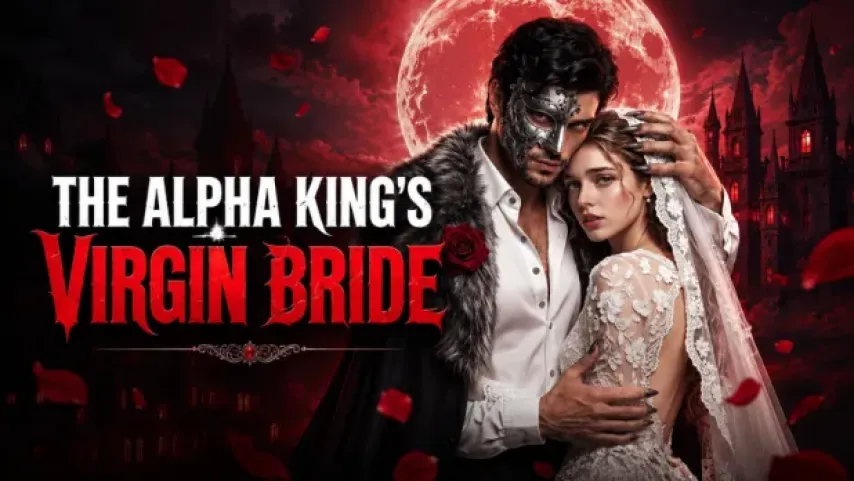
Seven previous brides. The number sits in the drama's premise like a fact that has already decided something. Most werewolf romance dramas establish their Alpha as dangerous through reputation — whispered warnings, fearful servants, the performative cruelty of the first meeting. The Alpha King's Virgin Bride does something with more structural weight: it gives the danger a body count. Hunter Vere hasn't been accused of coldness or arrogance. He has been rumored — specifically, with numerical precision — to have killed seven women who stood exactly where Juno is now standing.
That number is the drama's opening condition, and everything that follows is the audience watching Juno navigate a world organized around it.
The Setup and What the Seven Brides Actually Mean
The seven previous brides are not backstory. They are the drama's active structural tension, present in every scene between Juno and Hunter as a question that hasn't been answered yet: is this time different, and if so, why?
This is the formal achievement of the premise. A romance that opens with established danger of this specificity can't coast on genre convention — the audience can't simply assume a happy outcome because the format suggests one. Seven dead brides is too precise a history to dismiss. It sits beneath every scene of developing tenderness as a persistent counter-argument: maybe the softness is temporary. Maybe it always looked like this, right up until it didn't.
The drama earns its romance precisely because it doesn't ask the audience to forget that number. It asks them to watch Juno navigate it, live inside it, and slowly build an understanding of Hunter Vere that the rumor never accounted for. Seven brides as premise is a promise that the answer, when it comes, will have to be specific enough to address all seven.
Juno: The Woman Who Wasn't Supposed to Be Here
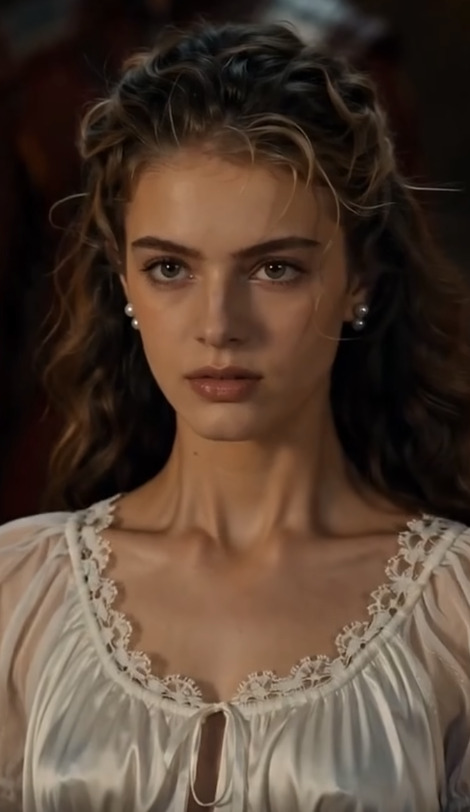
Juno's most important characteristic is also her most basic one: she is in the wrong place. The arrangement was her stepsister's. The risk was supposed to belong to someone else. She arrived in the werewolf world not through any choice of her own but through the failure of the person who should have been there instead — which means she enters the drama carrying a particular kind of displaced vulnerability that isn't the same as weakness.
She didn't choose this. She didn't prepare for it. And she has no existing map for navigating a world that operates by rules she didn't grow up with. What the drama does with that displacement is use it as Juno's primary mode of perception: she sees the werewolf world fresh, without the frameworks that might cause a more assimilated character to miss what's actually in front of her. She reads Hunter Vere without the overlay of what everyone else has decided he is — which turns out to be exactly the quality required to see what everyone else has missed.
Her survival instinct is the drama's engine. Her clarity of perception, unburdened by the world's pre-existing conclusions about her husband, is what makes the romance possible.
The Stepsister Substitution and Its Structural Function
The stepsister who should have married Hunter Vere but didn't is the drama's most pointed off-screen presence. Her absence — her successful evasion of an arrangement that Juno now inhabits — raises a question the drama circles without answering immediately: did the stepsister know what she was sending Juno into?
If she didn't know, the substitution is opportunism. If she did know, it is something considerably darker. Either reading positions Juno as someone who has been failed, at minimum, by a family member in the moment of maximum consequence. The stepsister's choice — whether calculated or simply self-preserving — is what makes Juno alone in this world. There is no one coming for her. No one who sent her here is invested in her return.
That isolation is the precondition for everything the drama builds between Juno and Hunter. She has nowhere else to go. He is, structurally, her only possible ally in a world that is entirely foreign to her. The drama is sophisticated enough to let that structural reality coexist with the developing emotional truth without pretending the two aren't in tension.
Hunter Vere: Cold Exterior as Character Architecture
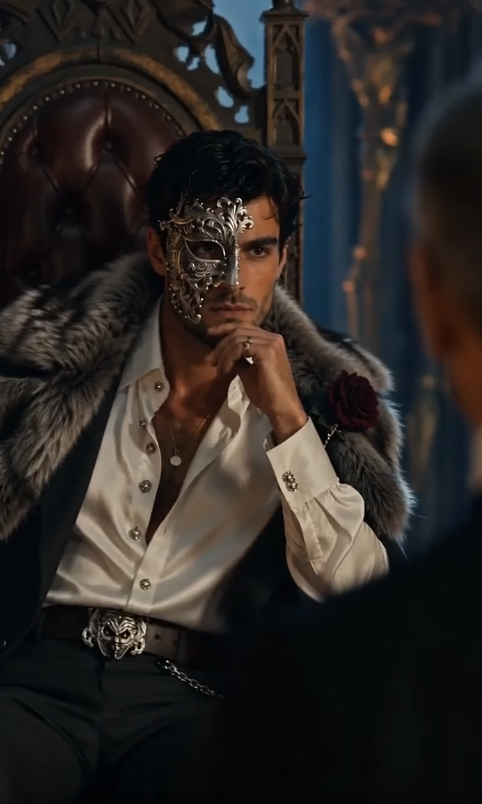
The Alpha rumored to have murdered seven brides is the drama's central interpretive challenge, and it's the one the story takes most seriously. Hunter's coldness is not presented as a surface affect waiting to be warmed by the right woman — the drama has too much structural intelligence for that kind of shorthand. His exterior is built from something, and the question the drama poses is what.
The "tenderness hidden beneath the cold exterior" formulation only lands if the coldness is real first. Hunter Vere has to be genuinely frightening — genuinely incomprehensible to Juno in the early episodes — for his hidden capacity for affection to register as revelation rather than genre inevitability. The drama earns the warmth by taking the cold seriously.
What the seven-bride rumor ultimately sets up is the possibility that Hunter's coldness is not cruelty but armor — that the history others interpret as evidence of violence contains a different story entirely, one that Juno is positioned, uniquely, to eventually read correctly. The romance is built on this interpretive pivot: the moment Juno stops navigating him through the lens of what she was told and starts seeing what's actually there.
The Werewolf World and What Displacement Does Narratively
Being trapped in the werewolf world gives the drama's central relationship a pressure and intimacy that an ordinary contemporary setting couldn't generate. Juno cannot leave. She cannot appeal to any external framework — no law, no family, no familiar social structure — that would give her standing outside of what Hunter Vere chooses to grant her. She survives, in the early episodes, entirely within the rules of a world she is learning while living in it.
This forced immersion does two things for the drama simultaneously. It creates genuine stakes — Juno's navigation of the werewolf world's social hierarchies, power structures, and unspoken rules is survival, not curiosity. And it creates the conditions for the kind of intimacy that only develops under sustained, inescapable proximity. Hunter is not someone Juno encounters and retreats from. He is the world she wakes up in.
That sustained closeness — learning someone under conditions of displacement, with no exit and no external reference point — is what makes the eventual tenderness feel earned rather than scheduled.
The Slow Revelation and Why This Romance Works
The drama's central emotional arc — Juno gradually discovering the depth of feeling hidden beneath Hunter's cold exterior — is a familiar structure in werewolf romance. What separates The Alpha King's Virgin Bride from the many dramas that use the same architecture is the specificity of what it takes to earn the reveal.
Juno doesn't soften Hunter. She doesn't fix him. What she does is become the first person in the drama who is willing to look at him without the filter of what everyone else has concluded. She arrives without the werewolf world's existing calculus about him — she doesn't know the seven brides story as a social fact the way his pack does, doesn't carry the accumulated weight of years of his reputation. She knows only what she observes.
And what she observes, slowly and with appropriate caution, is that the monster the world describes and the man in front of her have a gap between them. The drama's romance lives in that gap — not in the discovery that Hunter was secretly good all along, but in the specific, hard-won understanding of what he actually is beneath what everyone decided he was.
That's a more careful and more satisfying version of the reveal. It doesn't ask the audience to revise the danger retroactively. It asks them to watch someone learn to read a person accurately, in real time, under difficult conditions.
Who This Is For
The Alpha King's Virgin Bride rewards viewers who want their werewolf romance to carry genuine structural tension alongside the emotional arc. If you're drawn to dramas where the danger is real before the tenderness arrives — and where the heroine's survival requires active perception rather than passive endurance — this drama handles one of the genre's most familiar premises with more narrative care than most. Juno didn't choose this world. What she chooses within it is the story.
recos: