False Weakling, True Power: Why Everyone Underestimated Lucien's Hidden Power


You know the feeling before the reveal. You're three episodes in, watching a character absorb insult after insult — the nobles snickering, the first mage of the empire dismissing him, the entire court having already filed him under "irrelevant." And somewhere in your chest, there's a quiet coil of anticipation tightening. You don't want the reveal yet. You want five more episodes of people being catastrophically wrong. That sensation — the pleasure of watching other characters walk toward something they can't yet see — is the specific emotional engine that False Weakling, True Power is built to run.
The drama understands this feeling with unusual precision, and it structures nearly everything around maintaining it.
The Psychology Beneath the Playboy Mask
Lucien's fake playboy image isn't vanity or laziness — it's a survival strategy mixed with revenge planning. That distinction matters more than it might initially seem. A character who hides their strength out of humility is a fantasy of modesty. A character who hides their strength as a tactical weapon is something far more interesting: a person whose apparent weakness is itself an act of total control.
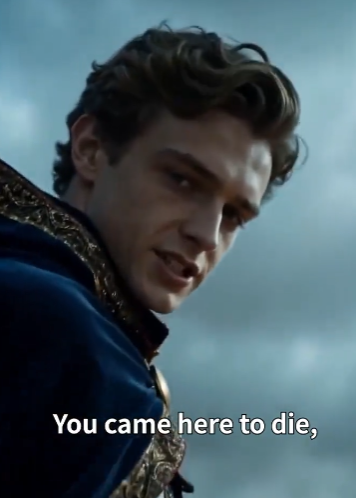
What Lucien wants, on the surface, is to be left alone — to occupy his corner of the empire without interference. What he actually needs, the drama gradually reveals, is something more specific and more dangerous. His true goal has always been to gain enough political power to escape his stepmother Morgana's control and uncover the truth behind his mother's death. That's not the goal of a man at peace with his circumstances. That's the goal of a man who has been running a long game while everyone around him played checkers.
The psychological architecture here is tight. Lucien can't seek justice openly — the court has already decided who he is. His stepmother carefully shaped public opinion around him, and the royal court had already decided what kind of man he was before he could defend himself. So he doesn't fight the label. He turns it into camouflage. The question the drama plants early and waters carefully: what kind of patience does it take to let people mock you for years while you wait for exactly the right moment? And what does that patience cost?
Kael: The Dramatic Function of Being Wrong With Authority

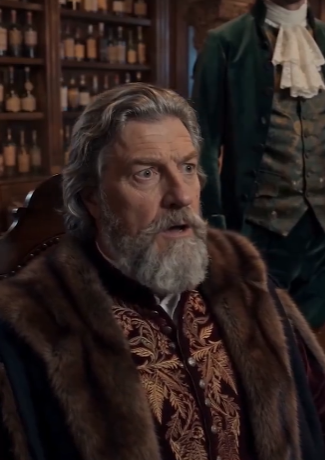
Kael, Aurelian's First Mage, is the drama's most structurally essential character — not because of what he knows, but because of what he confidently doesn't know. His role in the architecture is precise: he is the measuring stick. The empire's most qualified judge of magical ability has assessed Lucien and found nothing. When that assessment is overturned, the drama doesn't just surprise the audience — it invalidates the empire's entire system of recognition.

Kael walks into Lucien's room expecting a useless rich kid and leaves realizing he may have just robbed the most dangerous mage in the kingdom. The power shift happens almost without announcement — which is exactly the point. The drama understands that the most effective reveals aren't explosions. They're the quiet moments when someone realizes they have been, for a very long time, looking at the wrong thing.
Kael isn't a villain. He's an honest error walking around in an expert's clothing. That's a much harder target to dismiss, and a much more interesting dramatic function to fill.
Lucien and the Irony of Being Seen
The deepest irony operating through False Weakling, True Power is one Lucien is fully aware of and the rest of the court is not: the version of him they despise is the safest version of him. He never wanted respect too early — respect would expose him. Every sneer directed at him is, from his perspective, a small victory. Every dismissal keeps the timeline intact.
This creates a genuinely unusual viewer experience. Most dramas ask you to root for a character who wants to be seen. False Weakling, True Power asks you to root for a character who is strategically, brilliantly avoiding being seen — while simultaneously giving you just enough glimpses of his real capability to keep the anticipation of revelation simmering.
The moment described by viewers as iconic — "my turn to play" — lands with the force it does precisely because the show has made the audience wait for it. The emotional payoff is proportional to the compression. Lucien's patience is not patience in the passive sense. It is the patience of someone loading a weapon over fifty episodes and choosing the exact moment to fire.
What the Tournament Reveals About the Empire's Blind Spots
The martial tournament framing is more than set dressing. Gathering the Northern Kingdoms' most powerful mages to compete for Princess Isolde's hand creates a world where power is presumed to be visible, rankable, and publicly verifiable. The empire has built an entire event around the assumption that the strongest mage can be identified in open competition.
Lucien's existence breaks that assumption before the tournament even begins. When a Northern rogue wreaks havoc in the streets, a mysterious god-tier spell vaporizes him instantly — before anyone with a face or a title can claim credit. The empire's official power structure had no idea what was in its own house. The tournament, by extension, is an empire confidently measuring something it has never actually understood.
That's the drama's sharpest observation: institutions that rank power based on what people choose to display will always be blind to what people choose to conceal.
The Romance as a Secondary Psychological Layer
Princess Isolde initially sees Lucien as an embarrassment. When she discovers he's the legendary hidden protector everyone admires, a weaker drama would let that revelation instantly produce romance. Instead, Lucien openly admits his goals are revenge and political power. That confession reframes the entire dynamic. He isn't performing cold indifference as a seduction tactic. He's telling the truth about his priorities — which is, in its own way, more intimate than any declaration of feeling. It leaves a question hanging over their dynamic that the drama wisely refuses to rush: can someone operating purely in survival mode allow themselves to want something beyond strategy?
Who This Drama Is Built For
Viewers who have grown tired of protagonists who want to be recognized will find False Weakling, True Power pointedly different. Lucien doesn't want applause. He wants leverage. That distinction gives the drama an unusual edge in a genre crowded with "rise to glory" arcs, and it's what makes 50 episodes feel less like an endurance test and more like a long, deliberate game of chess — played by someone who already knows how it ends.
Where to Watch
The drama is accessible on NetShort. The NetShort app (iOS and Android) offers free episode access; some later episodes may require in-app coins or a subscription.