The 5-Time Rejected Luna: Power Was Never Kael's to Give — and Lyra Knew It First

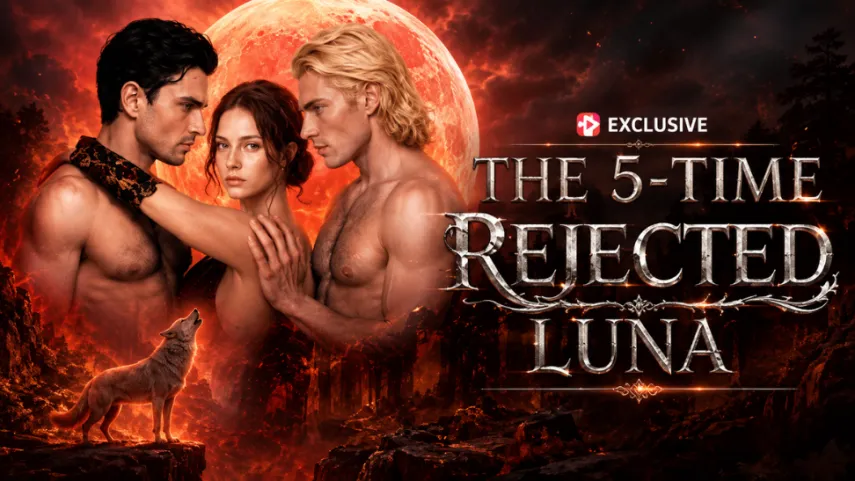
You already know how you're going to feel watching this short drama. You know, because you've felt it before — that particular frustration of watching someone be chosen adjacent to rather than chosen fully.
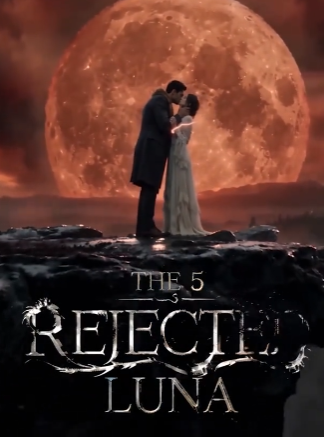
The 5-time rejected luna banks on that recognition hard. It opens inside a dynamic where Lyra, a Beta in the werewolf hierarchy of the Blood Pack, has been selected by Alpha Kael for marriage — and the cruelest part isn't that he's cruel. It's that he's certain. Certain he loves someone else. Certain Lyra is a placeholder. Certain the woman he's always wanted is Mia, the stepsister standing one step to the left.
What the drama understands — and what makes it worth your time — is that certainty built on a false premise isn't love. It's a power structure masquerading as one.
The Architecture of Misrecognized Power
Run the entire story through a single lens and everything snaps into focus: The 5-time rejected luna is a drama about who holds authority over identity. Kael is an Alpha, which means the werewolf social world has handed him every instrument of power available — pack leadership, the right to choose a mate, the ability to define who is valued and who is not. He uses all of it confidently and completely in the wrong direction.
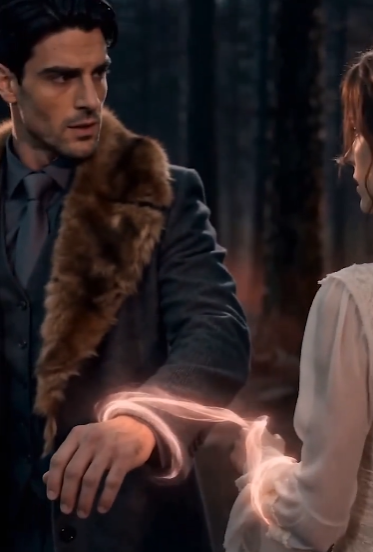
The drama's central trap isn't a love triangle — it's a misrecognition tragedy. Kael isn't simply "a bad male lead"; he's someone acting on a false emotional anchor, believing Mia is a figure from his past, which means every cold decision toward Lyra feels justified in his own mind. His cruelty isn't random. It's organized. That's what makes it sting differently than the usual Alpha-rejects-heroine setup — audiences aren't watching thoughtless dismissal, they're watching a man construct an entire emotional architecture on a misidentified foundation.
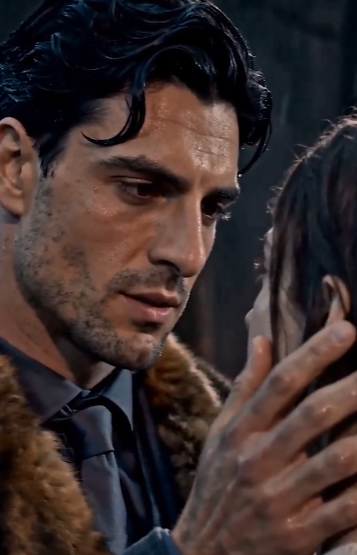
Lyra: The Psychological Pivot
The drama's real power move is what Lyra does the moment she learns the truth about Kael's feelings. She doesn't collapse. She negotiates. Swapping marriages with Mia — choosing Leo, the blind husband, over the Alpha who wanted her body beside him and his heart elsewhere — is not a retreat. It's a hostile takeover dressed as concession.
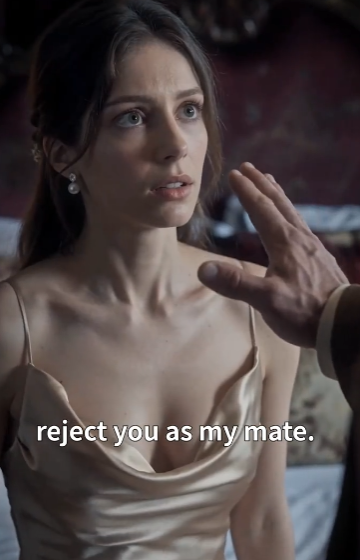
Lyra's core wound, as the drama constructs it, is the particular pain of being visible but unseen. Kael looks directly at her throughout their engagement and perceives Mia. To live inside that inversion — to be the real thing that someone keeps mistaking for a substitute — is a specific kind of erasure. Her decision to exit that dynamic entirely, to refuse the position of "wife-who-is-secretly-the-wrong-woman," isn't just self-preservation. It's a refusal to participate in someone else's false reality.
Kael and Leo: Two Men, One Dramatic Irony
The irony that structures Kael's entire arc is elegant in its brutality: he spends the drama asserting absolute knowledge — of love, of loyalty, of who deserves his devotion — while being catastrophically wrong about all of it. The necklace reveal and the eventual recognition that Lyra was always the one he loved changes everything audiences thought they understood about his earlier choices. His regret, when it arrives, isn't just emotional — it's epistemological. He has to reckon with the fact that his certainty, the thing that made him an Alpha, was the very thing that destroyed what mattered.
Leo functions as the drama's structural counterweight. Where Kael sees clearly and understands nothing, Leo cannot see at all — and yet his relationship with Lyra is the one built on actual recognition. Viewers respond to this contrast viscerally: his attentiveness to Lyra, his willingness to ask for all of her rather than treat her as a placeholder, lands as a genuine rebuke to everything Kael represented. The drama knows this. It places them in deliberate opposition not to say "blind men are better" but to ask a sharper question: what is the value of perfect vision if you refuse to actually look?
Mia and the Quiet Machinery of Deception
Mia's role in the power structure is the most structurally interesting element of the drama. She isn't merely the stepsister who benefits from Lyra's suffering — she's the person whose passivity actively enables it. The drama shows Mia hiding behind Lyra as a kind of shield, using Lyra's suffering while presenting herself as the protected one. Her dynamic with Lyra creates the story's central engine: every scene where Mia accepts Kael's misplaced devotion is a scene where the drama quietly builds the case for why the misrecognition can't hold. The deception isn't malevolent in a theatrical way — it's mundane. That's more unsettling.
What the Werewolf Setting Actually Does
The supernatural framework — Alphas, Betas, Blood Pack hierarchies, wolf transformations, red moons — isn't decorative. The wolf transformation and the visual language of the red moon setting establish a world where power is biological, pack-based, and rigidly tiered. Lyra and Mia being Betas is the drama's thesis statement in worldbuilding form: they are, by the logic of their society, beneath the attention of an Alpha. The drama then spends its entire runtime dismantling that hierarchy from the inside — not through rebellion, but through the slow revelation that the Alpha's power of discernment, his defining trait, was broken all along.
The Short Drama Format as Dramatic Pressure Cooker
The pacing is calibrated specifically for mobile viewing — emotional reversals arrive fast, and the compression forces every scene to carry double weight. What would take a 16-episode long-form series three acts to establish, The 5-time rejected luna accomplishes in tight vertical episodes that strip out the connective tissue and go directly for the nerve. This is not a criticism. The format demands efficiency, and the drama is efficient. Each visual — the CGI magic swirling around Lyra, the wolf transformation in a dark room, the soft lighting of intimate scenes between Lyra and Leo — functions as compressed emotional data, telling you where the power sits in any given moment without requiring a line of dialogue.
The drama's final proposition is this: power isn't confirmed by who holds the title. It's confirmed by who survives being underestimated.
Lyra survives.
Where to Watch
The 5-time rejected luna is available to stream on NetShort at netshort.com. The NetShort app is free to download on iOS (App Store) and Android (Google Play), with in-app purchases for early episode access. Some episodes are available to watch free; premium content requires coins or a subscription.
Find Out More Popular Dramas on Here:




![[Dubbed Version]The Princess's Severed Love](https://v.melolo.com/b1265344voduse1318177724/0593291b5145403704719120467/dWXFlRZJ7OcA.webp!15491.webp!15491.webp)