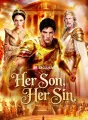
Queen's Wrath: The Heiress Swap Exposed — She Waited 18 Years. Worth Every Second


Most betrayal dramas establish their wound in the first act and spend the rest of the runtime healing it, avenging it, or both. Queen's Wrath: The Heiress Swap Exposed does something that requires a fundamentally different kind of storytelling patience: it establishes the wound, shows the protagonist closing it herself, and then asks the audience to sit with eighteen years of deliberate, sovereign silence before the real drama begins.
That silence is not waiting. It is preparation.
The Opening Betrayal and What Makes It Structurally Devastating
The baby swap is ancient as a narrative device — it appears across folklore, myth, and literary tradition in dozens of cultures, precisely because it targets something primal: the certainty of blood, of lineage, of the child that is unambiguously yours. What Queen's Wrath does to make this version land harder than the archetype usually does is specify exactly who performs it and exactly why.
Eirik is not a rival king. He is Reina's husband — the person whose proximity to the throne exists entirely because of her. Astrid is not a political enemy. She is Reina's friend — the person whose access to the queen's most private moment, the birth of her child, required trust that went beyond any formal relationship. These are not strangers who exploited an opportunity. They are the two people in the world who had the least right to do what they did, precisely because Reina gave them everything they needed to do it.
That distinction is the drama's opening blow, and it is delivered with precision. The betrayal isn't a political maneuver that happened to use a baby as its instrument. It is a personal annihilation designed by the people closest to her, using the most irreplaceable thing she had. Reina's throne could theoretically be reclaimed through force. Her daughter cannot be replaced. The swap targets both simultaneously.
Reina: The Queen Who Chose the Long Game

The critical character decision the drama makes — and the one that separates Reina from most revenge heroines in the short-form genre — is giving her discovery of the swap and her reversal of it almost immediately, and then asking what she does next. The answer is: nothing visible. For eighteen years.
This choice is counterintuitive for a genre that typically rewards immediate action. The audience watches Reina discover the betrayal, watches her quietly reclaim her real daughter, and then watches her absorb the position she's in: a queen surrounded by traitors, in a kingdom where the most dangerous move is to reveal that she knows. And she chooses, with full awareness, to wait.
That decision is the drama's central character argument. Reina isn't a woman who endures because she has no other option. She is a woman who calculates that the most devastating revenge isn't the fastest one — it's the one that strips her enemies of everything they built on her ruin, at the moment of maximum exposure, eighteen years in the making. Every year she waited is a year her enemies grew more confident. Every year they grew more confident is a year they built more on the foundation of their betrayal. By the time Reina moves, she isn't just dismantling a conspiracy. She is collapsing an edifice.
The YouTube promotional materials describe her trajectory precisely: "My Husband Stole My Crown… So I Destroyed His Kingdom." The sequence is important. She let him steal it. She watched him build on it. Then she destroyed not just the crown, but everything the theft made possible.
Eirik: The Husband Who Forgot What He Married

Eirik's dramatic function is built on a specific irony: he orchestrated the theft of a throne from a queen, which means he spent eighteen years ruling beside — and presumably over — the woman who knew exactly what he had done, who had already reversed his central move, and who was simply waiting for the right moment. He believed he had won. The drama is interested in what winning looks like when the person you defeated has already responded and you don't know it.
Eirik's corruption, as the drama frames it, is the corruption of someone who mistook access for power. He was close to the throne because Reina placed him there. He understood the mechanics of the court because she governed it. The swap was his attempt to convert proximity into ownership — to replace her lineage with one he could control. Eighteen years of apparent success would have confirmed that belief completely.
Which is precisely why the eventual wrath lands where it does. Eirik isn't destroyed by an external force or a rival claimant. He is destroyed by the woman he thought he had already defeated, using the eighteen years he gave her.
Astrid: The Friend Whose Betrayal Cuts Deepest
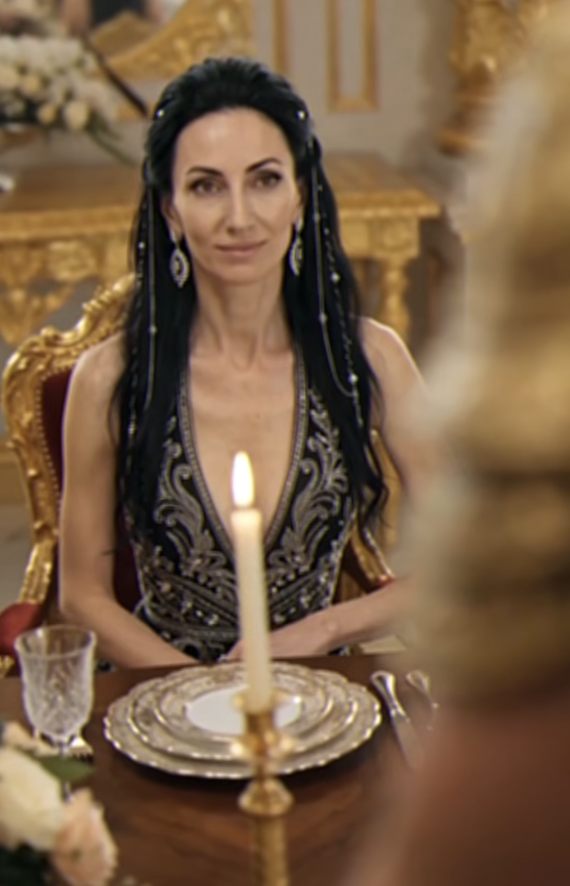
Of the two conspirators, Astrid carries the drama's most painful secondary function. Eirik's betrayal is comprehensible within the logic of ambition — he wanted the throne, he moved to take it. Astrid's betrayal requires something more corrosive: she chose ambition over a bond that had nothing to do with power.
A husband can be understood as a political ally whose interests may diverge. A friend — particularly one close enough to be present at a birth, trusted with the most private moment of a queen's life — is supposed to occupy a different category entirely. Astrid's participation in the swap isn't just a political act. It is a redefinition of what their friendship was, retroactively. Every moment of closeness Reina believed they shared becomes, in retrospect, a moment of proximity to someone who was already calculating her betrayal.
The drama doesn't need to dwell on this to make it land. The structure does the work. Astrid's inclusion in the revenge arc means that Reina's wrath isn't only political. It is also deeply personal, in a way that Eirik's punishment alone could never fully address.
The Eighteen Years and What They Mean
Eighteen years is not an abstract number in this drama — it is the specific duration of Reina's strategic patience, and it maps exactly onto a human life cycle: the time required for a child to grow from newborn to adult, from an infant whose identity can be disputed to a person whose presence, claim, and capability can no longer be denied.
Reina waited eighteen years because eighteen years was exactly long enough. Not for the wound to heal — the drama doesn't suggest it healed. But for the conditions of the reckoning to be optimal: for Eirik and Astrid to have built maximally on their stolen foundation, for the true heiress to be old enough to stand and be recognized, for every piece of the conspiracy to be fully extended and therefore fully vulnerable.
The patience is not passive. It is the most active thing Reina does in the drama. Every day of those eighteen years, she maintained the performance of a queen who didn't know — or who had accepted the loss. Every day was a day she held the information that should have destroyed them and chose to save it. That sustained, deliberate performance across nearly two decades is what makes the eventual wrath not just satisfying but inevitable in the way that true consequences always feel inevitable in retrospect.
The Divine Dimension and the Drama's Mythological Register
The setting in Nordic Asgard is doing more narrative work than mere backdrop. Asgard, in Norse mythological tradition, is the realm of the gods — a space where power is cosmic, where the stakes of betrayal extend beyond the political into the divine, and where justice operates on a scale that human courts cannot fully contain.
Positioning Reina's story within this framework elevates the revenge arc from palace intrigue into something with mythological weight. She isn't just a wronged queen reclaiming a stolen throne. She is, within the drama's cosmological register, a figure whose wrath has divine sanction — someone whose enemies didn't merely betray a person but violated a sacred order. The promotional materials describe her as "Feared by the Gods," which is the drama's clearest statement of where Reina sits in the hierarchy of this world: above the political, above the personal, at the level where wrath and justice become the same thing.
The Heiress at the Center of the Swap
The true heiress — Reina's real daughter, raised in the wrong place for eighteen years — is the drama's most structurally significant secondary character, and the one whose situation carries the most latent complexity. She has lived a life that wasn't hers. She has an identity constructed entirely around circumstances that were engineered by her mother's enemies. When Reina's plan finally executes and the truth is exposed, this character must absorb not just a revelation about her parentage but a complete restructuring of everything she understood about her own life.
The drama frames the heiress swap as Reina's story of wrath and patience. But the heiress herself is the living cost of the conspiracy — the person who spent eighteen years as collateral in a plot she had no knowledge of. Her reintegration into the truth of her identity is the drama's most emotionally complex element, and the one that separates Queen's Wrath from revenge dramas that treat their victims as props rather than people.
When the Wrath Finally Arrives
The drama's title promises wrath, and the eighteen-year structure means the audience spends the entire runtime understanding, with accumulating weight, exactly how much pressure has been building toward it. By the time Reina moves, the audience has a precise accounting of everything that has been sacrificed, endured, and strategically withheld. The wrath isn't a sudden explosion. It is the controlled, deliberate release of eighteen years of contained fury — targeted, systematic, and absolute.
"Feared by the Gods" is not hyperbole in this context. It is the drama's most accurate description of what Reina becomes when the performance of patience is finally over. She waited long enough to make the destruction complete. She aimed well enough to make it irreversible. And she built the coalition of truth — her daughter, her evidence, her restored claim — carefully enough that there is no version of the reckoning that Eirik and Astrid survive intact. The wrath, when it comes, is worth every year it took to arrive.
recos: