Pieces of Her: What Happens When Your Parents Investigate Your Murder Without Knowing It's You


Picture the scene. A mother bends over a dismemberment case file, cross-referencing tissue samples with missing persons data. A father works the street side of the same investigation, pulling surveillance and canvassing witnesses. They are two of the city's most qualified people to find the truth — one a cop, one a forensic examiner. And somewhere just beyond the edge of their perception, the answer is standing in their living room, watching them celebrate the wrong girl.
This is the engine of Pieces of Her, and it is almost unbearably precise in its cruelty.
The Premise That Earns Every Second of Its Horror
Most short dramas with supernatural elements use the ghost as a romantic device — a lingering spirit drawn back by unfinished love, or a presence that guides the living toward healing. Pieces of Her does something colder and more structurally inventive: it uses the ghost as a witness to a specific, ongoing injustice that she alone fully understands.
Taylor doesn't haunt the drama's edges. She comes home. And home, when she arrives, is mid-celebration. The family is gathered around Emma — the girl whose brother Noah received a heart, a donor heart, a heart that used to beat inside Taylor. The irony the drama constructs here isn't subtle, but it earns its sharpness because the premise has been built with care. Taylor isn't watching strangers celebrate someone else's organ donation. She is watching her own parents weep with gratitude over a procedure that was made possible by her murder.
That image — the ghost standing in the doorway of her own home while her family unknowingly celebrates the act of her killing — is the drama's central horror, and it's deployed with real restraint. The show doesn't oversell the moment. It lets the architecture do the work.
The Investigation Structure and Its Ironic Load
The decision to make Taylor's parents both a cop and a forensic examiner is not incidental. These are precisely the two roles that, combined, should guarantee that a victim is identified. A forensic examiner works with physical evidence — tissue, remains, the biological record of what happened to a body. A detective works with narrative — who, when, where, the story that connects evidence to outcome. Together, they represent the full apparatus of recognition. And the drama's central dramatic engine is the horror of that apparatus failing on its most personal case.
The forensic examiner processes pieces of a victim without knowing she is processing pieces of her own daughter. The detective builds a profile of a missing person without recognizing the missing person is his child. The expertise that defines them professionally becomes, in this context, a devastating blind spot — because expertise is trained to look outward, at strangers, at cases. It was never designed to recognize what you already think you know.
This is where Pieces of Her is at its most structurally intelligent. The audience knows the truth from the first episode. Every subsequent scene in which a parent comes close to understanding and doesn't is experienced not as a mystery but as a sustained, worsening dread. The dramatic irony isn't a device layered over the story — it is the story.
Taylor's Function as Ghost and Witness

Taylor's character is defined almost entirely by what she cannot do. She cannot speak. Cannot intervene. Cannot redirect her parents' attention toward the evidence that would name her. What she can do — all she can do — is watch. And in that forced passivity lies the drama's most interesting emotional question: what does it feel like to be both the victim of a crime and its most informed observer, while being structurally prevented from changing the outcome?
The dramatic function Taylor serves is essentially that of a chorus figure in Greek tragedy — the one who understands everything while the protagonists move inexorably through a sequence of decisions they cannot know is wrong. Except in classical tragedy, the chorus speaks. Taylor's silence is the drama's most telling formal choice. She is the answer to the mystery, literally present in every scene, and the story must work to keep her inaudible.
Emma and the Weight of an Unasked Question
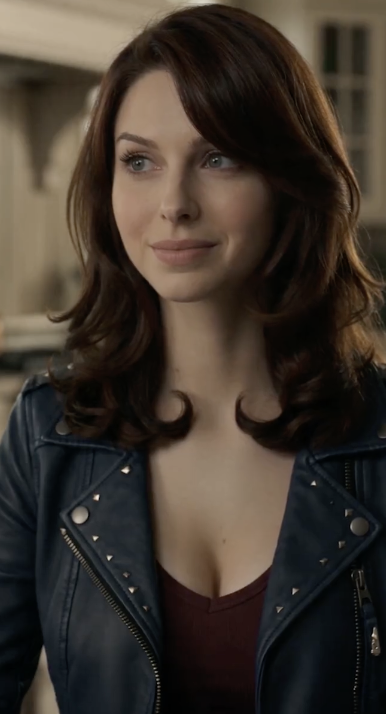
Emma's position in the drama is the one that accumulates the most moral complexity without the show ever having to make it explicit. She did nothing wrong. Her brother needed a heart. The donation was processed through whatever channels made it appear legitimate. She arrived at this family's home with gratitude that is entirely genuine.
What she doesn't know — and what the drama refrains from resolving in its early episodes — is whether her gratitude is owed to generosity or to a crime. Emma functions as the drama's moral fulcrum: the character whose innocence makes the horror worse rather than lighter, because if she had knowingly benefited from Taylor's murder, the family could redirect their grief as outrage. As it stands, she is loved by people who have every reason to love her, for reasons they don't yet understand are a wound.
The Dismemberment Case as the Drama's Structural Clock
The city's biggest dismemberment case functions in the plot as a ticking clock, but its effect on the audience is something else: it's the drama's method of measuring how close the parents are to knowing. Every procedural step — every forensic analysis, every investigative thread — is simultaneously a step toward identifying the victim and a step toward a recognition that will destroy the family's current reality.
The parents are not working to find a stranger's killer. They are dismantling the illusion that their daughter is simply somewhere else, that the absence is temporary, that celebration is warranted. Every scene in the investigation is a scene of approaching grief, even when neither character knows it yet.
That's the drama's real subject: not murder, not investigation, not even grief — but the precise, excruciating interval between a devastating truth existing and the people who need to know it finally understanding. Taylor is already home. The only question is when her parents will see her.
Who This Is For
Pieces of Her is built for viewers who want their short drama to carry genuine structural weight. If you're drawn to premises where the horror comes from architecture rather than shock — where dramatic irony is the sustained emotional experience rather than a brief twist — this drama delivers something rare in the short-form format. It doesn't coast on its premise. It earns it, scene by scene.






![[Dubbed Version] Love Ends at the Brink of Promise](https://v.melolo.com/b1265344voduse1318177724/fd399fa05145403705295658042/zWteTEfB4UYA.webp!15491.webp!15491.webp)