My Dad Is the Supreme Archmage: The Most Powerful Man in the Kingdom Is Being Mistaken for a Beggar — And It's Perfect

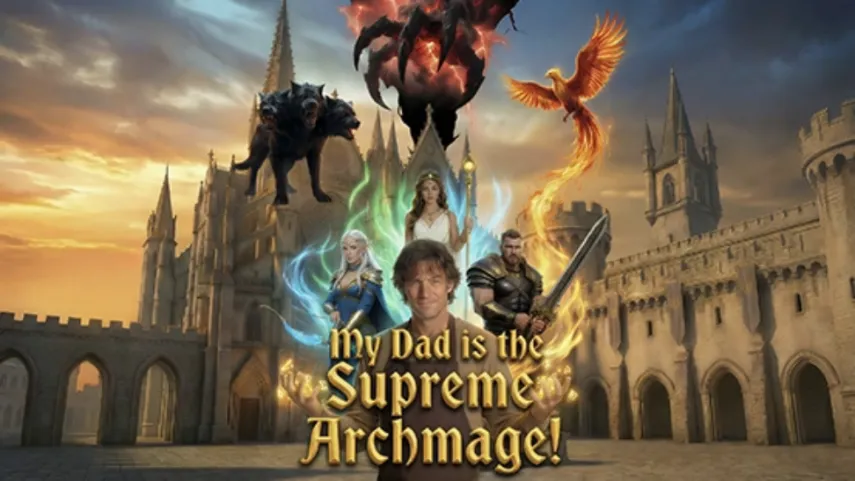
There's a specific pleasure in watching someone who could destroy the room choose not to. My Dad Is the Supreme Archmage — streaming on ShortMax across 49 episodes — understands this completely. It doesn't open with a hero rising to power. It opens with one who already rose, already won, and deliberately walked away. That reversal of the standard fantasy arc is exactly what makes this drama tick.
The Setup: Power Dressed in Rags
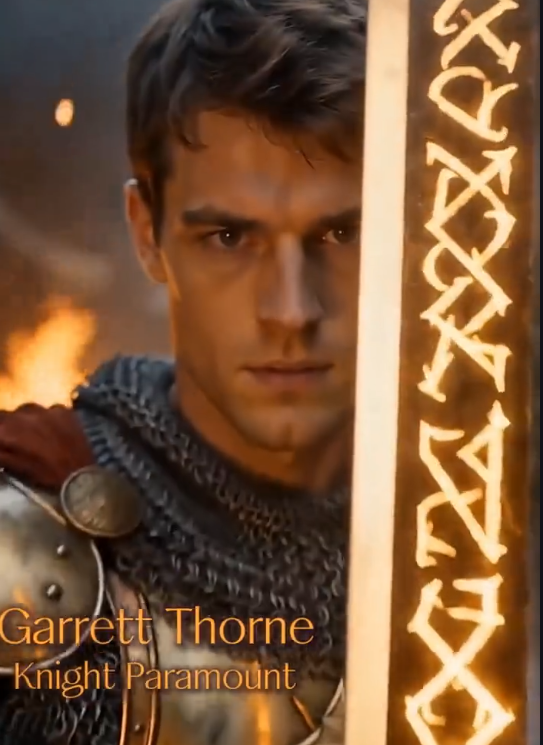
Eden Thorne — the most powerful mage ever, the legendary Oracle Mentor — has disguised himself as a lowly peasant for twenty years since defeating the dark forces. Even his son Garrett, who fought his way to become Knight Paramount, remains unaware of his father's true identity.
That single premise does a lot of heavy lifting. Most fantasy stories build toward a revelation of power. This one begins there, then asks a more interesting question: what does a god among men look like when he's content to muck out a barn? The answer, as far as the capital's nobles are concerned, is a beggar who doesn't belong at the royal banquet. At the city gates, Eden is mocked by guards and a pompous mage named Barry. When he finally arrives at the royal gathering, nobles including the haughty Miss Dewey and Count Whitster see only a vagrant and demand his removal.
The comedy of errors is fully intentional — and fully earned.
The Dramatic Architecture: Irony as the Engine
What separates My Dad Is the Supreme Archmage from a straightforward "hidden master" story is how it structures its dramatic irony. The audience knows Eden's secret from episode one. Every scene of humiliation, every sneer from a lesser mage, every guard who waves him off — all of it lands with a double meaning. We're not watching a man be degraded. We're watching the people degrading him dig their own embarrassment deeper, one insult at a time.
Eden's farm, dismissed by soldiers as a crumbling patch of countryside, is actually housing legendary creatures and divine herbs that heal wounds and cure illnesses. The visual metaphor writes itself: what looks worthless from the outside holds everything of value. The drama leans into this contrast repeatedly, and it never gets old — because the snobs never learn until the moment they absolutely have to.
This structure will feel immediately satisfying to fans of "sleeping giant" stories. It borrows from a long tradition of disguised royalty and hidden masters, but sets itself apart by playing the gap between perception and reality for both laughs and genuine tension.
Character Lens: The Father, Read as Dramatic Function
Eden Thorne isn't framed as a protagonist striving toward something — he's a catalyst in human form. After years of combat, he chose to retire to a farm. He raised his son Garrett entirely by himself. The deliberate choice to shrink from greatness into fatherhood is what gives his character its quiet moral weight. He didn't abandon the world; he decided his son was worth more than any throne.
This makes his return to action feel earned rather than convenient. When the Dark Lord resurfaces and Eden steps back in, it's not ambition or glory that drives him — it's the same instinct that made him a farmer in the first place. Protection. He dispatches a shadow demon with casual ease, then leaves his three disciples a note telling them to "work harder." The humor lands precisely because he's completely unbothered. The most dangerous person in the room is also the most relaxed.
Character Lens: The Son, Read Through Relationship
Garrett's story is the emotional counterpoint to his father's. He was raised in the countryside, obtained his position through his own efforts alone, and remained deeply serious about his duty — always putting the needs of others before himself. He is, in other words, everything his father quietly shaped him to be — without ever knowing the full extent of who shaped him.
That tension is the drama's most underrated quality. Garrett respects his father as a farmer and a man. He doesn't know he's standing in the shadow of a legend. Viewers who've engaged with the series have noted the father-son dynamic as a genuine highlight — the warmth between them works because it's built on real affection, not dramatic irony alone. When the reveal of Eden's true identity eventually ripples toward Garrett, the weight of it carries because the relationship beneath it was never hollow.
The Snob Problem: Class as Comic Villainy
The nobles of Aruwith serve a very specific dramatic function: they are wrong about everything, loudly, and in every episode. Miss Dewey, Count Whitster, and their circle represent a kind of social blindness that the story takes genuine pleasure in puncturing. They see clothes. They see posture. They see a man who arrived without a gilded carriage and assume they know everything that follows.
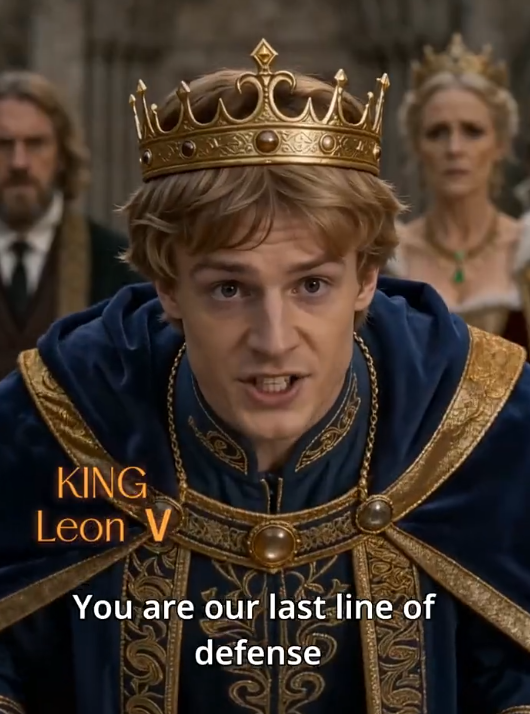
What makes these antagonists work is that they're not evil in a threatening way — they're small in a frustrating way. Their cruelty is the cruelty of people who've never had to be right about anything important. The Dark Lord is the external threat. But the nobles are the dramatic engine of every satisfying face-turn moment, and the drama knows exactly how to time those humiliations.
Honest Verdict: What Kind of Show Is This, Really?
It would be doing the drama a disservice to call it polished in the traditional sense. Viewers have noted the production has a certain low-budget charm — the CGI is uneven, the acting varies across the cast, and the world-building leaves some questions deliberately (or accidentally) unanswered. But those same viewers agree on one thing: the writing fully achieved what it set out to achieve, and the humor landed consistently.
This is a drama that knows its audience. It's not asking to be Game of Thrones. It's asking you to spend twenty minutes watching a man who could level a city be told to use the servants' entrance — and to enjoy every second of the buildup to the moment he doesn't need to say a word in response. For that specific pleasure, it delivers reliably.
Where to Watch
My Dad Is the Supreme Archmage — also listed on IMDb as My Farmer Dad Is Secretly an Archmage — is a ShortMax production, available to stream in full on the ShortMax app. All episodes are accessible via the platform, making it easy to binge in short sessions.
My dad is the supreme archmage where to watch: Download the ShortMax app for full access to all episodes, free to stream.
If you've ever wanted to see the most powerful person in any room play completely dumb while everyone around them talks themselves into catastrophe — this is your show. Eden Thorne doesn't need to announce himself. The story does it for him, one clueless noble at a time.


![[Dubbed Version] A Lottery-like Life](https://v.melolo.com/b1265344voduse1318177724/827df3755145403706113019734/0laUHtB2G6MA.webp!15491.webp!15491.webp)