Lone Sniper: A Vengeance Shot — The Drunk on the Street Was the Best Shot Alive

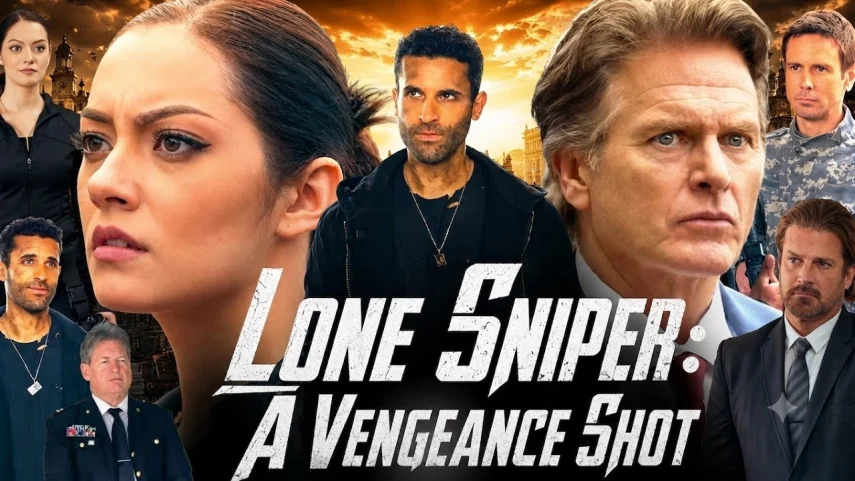
The man sleeping rough, visibly broken, reeking of alcohol and failure — nobody looks twice. That's not a side effect of Jake's cover. That's the cover. The most dangerous sniper alive has chosen the one disguise that guarantees complete social invisibility: the person everyone has already decided doesn't matter. Lone Sniper: A Vengeance Shot opens on that irony and builds everything else on top of it, understanding that the gap between what Jake appears to be and what he actually is constitutes the drama's entire structural foundation.
Every character who dismisses him is measuring the gap incorrectly. The drama is the story of what it costs them when the measurement is corrected.
The Double Life and Why Jake's Cover Is Structurally Perfect
Jake's decision to hide as a homeless drunk isn't merely a tactical choice — it's a character statement about what he is willing to endure to achieve his objectives, and how completely he has subordinated every other identity to the mission of avenging his wife. A man operating under a military alias who needs to stay hidden has options. He could take a low-profile job, maintain a modest apartment, build a plausible life at an unassuming register. Jake chose something more extreme: full social erasure.
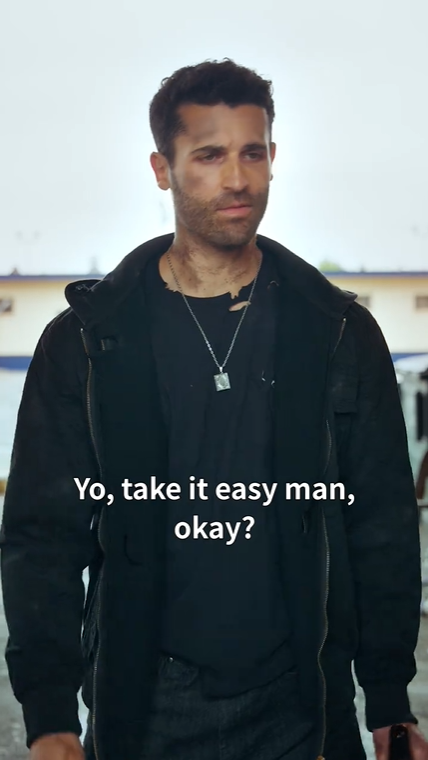
That choice has costs. It means being disowned by his father. It means carrying the weight of public disgrace on top of private grief. It means existing, every day, as the worst version of himself in everyone else's eyes — including the eyes of people who once respected him. The drama doesn't minimize these costs. It builds them into the architecture of Jake's character, so that when Bullseye eventually surfaces, the audience has a precise accounting of what the cover required of him.
The legendary sniper hiding as a drunk is, in structural terms, the inverse of the taxi driver hiding as the Millisecond Tyrant or the janitor hiding as a champion fighter. What distinguishes Jake's version of the hidden-identity premise is the deliberateness of the degradation. He didn't just go unassuming. He went to the bottom — and stayed there long enough for the people around him to build permanent conclusions about his character.
The Murdered Wife and the Personal Engine Beneath the Plot
Every operational element of the drama — the hiding, the mission, the coup, the fake marriage — runs on the fuel of a murdered wife. Jake isn't Bullseye out of duty or institutional loyalty or personal ambition. He is Bullseye because someone killed the person he was protecting the most, and every subsequent decision he has made has been organized around the eventual settling of that account.
This personal engine is what prevents Lone Sniper: A Vengeance Shot from collapsing into pure action spectacle. The missions and set pieces are the drama's surface. Beneath them is a man who has been carrying an unresolved grief long enough to build an entire false identity around it, and who cannot lay that grief down until the people responsible for it have been answered for. The murdered wife is not backstory. She is the drama's constant present tense — the reason Jake absorbs every humiliation, maintains every discomfort, and refuses every easier path that his capabilities could access.
Her murder is also what makes Theodore's eventual exposure so structurally devastating. The brother's crimes aren't confined to framing Jake for things he didn't do. They exist in a larger context of betrayal that the drama reveals with deliberate pacing — and the audience understands, before the full picture arrives, that whatever Theodore's involvement amounts to, it runs deeper than a legal frame-up.
Theodore: The Betrayal That Runs Deepest
Theodore's function in the drama is built on a specific and particularly corrosive form of treachery: betrayal by family, compounded by false accusation. He doesn't merely oppose Jake or compete with him. He actively constructs Jake's disgrace — working with Jasmine to frame him for crimes he didn't commit, engineering the legal and social circumstances that drive Jake from decorated sniper to homeless drunk, and doing so from within the family structure that should have been the one place Jake could rely on.
The courtroom thread the drama develops around this frame-up is where the emotional weight of Theodore's betrayal lands most precisely. Jake is not just falsely accused of a crime. He is falsely accused by his own brother, in a setting where the institutional apparatus of justice is arrayed against him, in front of a father who chooses to believe the accusation. The orange prisoner jumpsuit that viewer commentary highlights is the drama's visual statement of how completely Theodore's campaign succeeded: the best sniper alive, reduced to defendant, stripped of every marker of the person he actually is.
What the drama builds toward — Theodore's eventual exposure — isn't framed as a twist so much as an inevitability. The audience knows Jake is Bullseye. The audience knows the charges are false. Every scene of Theodore's apparent success is a scene of consequence being deferred, not avoided.
The Fake Marriage and Its Narrative Function
The forced marriage to the president's daughter is the drama's pivot mechanism — the event that pulls Jake out of cover and into a mission that will ultimately force every hidden truth into the open. The fake marriage isn't a romantic complication layered onto an action plot. It's the structural hinge that connects Jake's private revenge mission to a national-scale threat, placing the best sniper alive in a position where his capabilities are suddenly exactly what the situation requires.
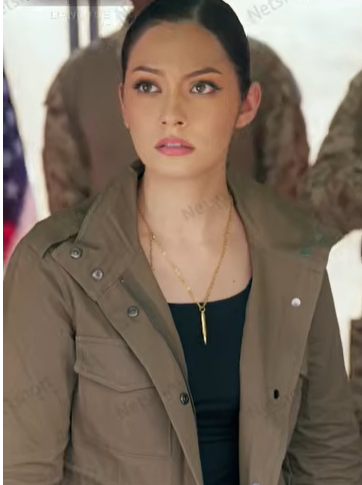
The president's daughter operates as the drama's establishment of stakes beyond the personal. Jake's wife was murdered. That's a private injustice. A coup against the president's administration is a public one. The drama uses the fake marriage to bridge those two registers — to move Jake from hiding in personal grief to operating in institutional crisis — and the bridge works because his motivation was never purely personal to begin with. Bullseye was always a figure of national significance. The fake marriage is simply the moment that significance becomes impossible to suppress.
The Stadium Scene and What a Single Shot Does
The football stadium sequence is the drama's most cinematically ambitious set piece, and viewer commentary confirms it as the moment the drama fully delivers on its premise. Jake, in a setting designed for maximum public visibility, picks up a glass shard and makes an impossible shot — the kind that confirms, irrevocably, that the man everyone dismissed is exactly who the legend says he is.
The crowd chanting for Bullseye is the drama's most precise reversal image: the same public that absorbed Jake's disgrace, that watched him reduced to drunk and defendant and disowned son, now chanting the name he has been hiding. The stadium setting amplifies this reversal to its maximum scale. This isn't a private vindication witnessed by a handful of people who needed to see it. It is a public declaration, performed in front of the largest possible audience, that the verdict on Jake Ryan was catastrophically wrong.
The dog tag reveal that follows — Jake showing the physical proof of who he is — is the drama's formal close on the identity question. The shot proved it. The tag names it. From this point, the cover is permanently dissolved.
The Father-Son Thread and What Disownment Costs
The relationship between Jake and his father runs beneath the drama's action mechanics as its most emotionally costly throughline. A father who disowns a son on the basis of a frame-up his other son engineered has made a choice that the drama refuses to make easy. He believed Theodore over Jake. He accepted the disgrace as real. He was present, presumably, for everything the false accusation produced — and he did not withhold his verdict until the full picture emerged.
When Bullseye's identity is confirmed and Theodore's crimes are exposed, the father's position becomes one of the drama's most complex emotional spaces. He was wrong about his son in the most consequential way possible — wrong about his character, his guilt, his worth — at the moment when being wrong had maximum impact. The drama uses this thread to give Jake's vindication emotional texture beyond the operational. It isn't enough that his name is cleared in the abstract. The clearing has to reach the person whose condemnation was the most painful to carry.
The Coup, the Clearing, the Return
The coup plot is the drama's largest-scale structural element, and the one that most directly connects Jake's personal mission to a resolution that operates at every level simultaneously. By defeating the coup, Jake doesn't just complete the anti-terror mission the fake marriage assigned him. He does it in a way that makes his capabilities undeniable, his allegiances clear, and his brother's crimes impossible to bury.
The drama's final movement — name cleared, hero status confirmed, return complete — is earned because the drama has built the full weight of what was taken from Jake before it gives any of it back. The disgrace was total. The disownment was public. The grief was private and sustained. The return is commensurately complete: not a quiet restoration but a full public reversal, delivered at the scale the original injustice demanded.
Jake doesn't come back as a man who has been formally exonerated. He comes back as a hero — the word the drama uses deliberately — because the clearing of his name happened in the same moment as his most significant act of service. Bullseye didn't just prove he was innocent. He proved, under maximum pressure, exactly what he was capable of when his country needed it most.
Who This Is For
Lone Sniper: A Vengeance Shot is built for viewers who want their hidden-identity action drama to carry genuine emotional stakes alongside the set-piece satisfaction. If you're drawn to protagonists whose concealment is an act of sustained personal sacrifice rather than tactical convenience — and to vindication arcs that operate at every level simultaneously, personal, familial, and national — this drama delivers one of the most fully stacked revenge-and-redemption arcs in recent short-form action. Jake endured everything the frame-up required of him. The stadium shot is what he was enduring it for.
recos: