Claimed by My Ex's Alpha Brother: Rejected by Her Mate, Claimed by the Powerful Alpha


Claimed by My Ex's Alpha Brother is a 2025 werewolf fantasy short drama from ReelShort that follows Ella Wilson — a wolfless outcast at Shifters Academy — through the collapse of a false mate bond and the slow, fearful acceptance of the real one. Directed by Ken Zheng and written by Astrid Carlen-Helmer, the series stars Savannah Coffee and Blake Lewis across 64 episodes. It has built a devoted following on ReelShort through its specific emotional register: this is not a story about a woman being rescued by a powerful Alpha, but about a woman learning, episode by careful episode, that she was never as powerless as she was taught to believe.
Quick verdict: A standout supernatural romance that earns its emotional payoff through 64 episodes of patient, psychologically grounded storytelling. Savannah Coffee and Blake Lewis are the reason to watch. Ken Zheng's direction gives the fantasy world genuine atmospheric weight.
Claimed by My Ex's Alpha Brother — At a Glance
| Title | Claimed by My Ex's Alpha Brother |
| Platform | ReelShort |
| Director | Ken Zheng |
| Writer | Astrid Carlen-Helmer |
| Year | 2025 |
| Episodes | 64 (standout episodes: 23 and 27) |
| Genre | Supernatural Romance, Werewolf Fantasy, Drama |
| Lead Cast | Savannah Coffee (Ella Wilson), Blake Lewis (Liam Gravens) |
| Supporting | Shane Dorriz (Noah Gravens), Nadia Wilemski (Ava Reynolds), María José De La Cruz (Jade Edge), Frankie Stofan (Kat), Jaida Henley (Rachel), Raphaella Dreyer (Elder Witch) |
Claimed by My Ex's Alpha Brother: What the Story Is Really About
The series opens on a significant day at Shifters Academy: Alpha Liam Gravens is returning to be crowned leader of the Crescent Pack. For most students it is a moment of ceremony and anticipation. For Ella Wilson, it barely registers. Her entire world is Noah Gravens — Liam's younger brother, the pack's Beta, and the man she has devoted herself to completely, believing he is her mate and the person who saved her life years ago.
That devotion is the series' first and most important deception — not of Ella by Noah, but of Ella by her own history. When Noah publicly and brutally rejects her in front of the entire academy, choosing her rival Ava Reynolds instead, the series does not treat this as a romantic subplot. It is a structural detonation. Noah's rejection does not just end a relationship — it collapses the identity Ella has built around being his mate. For a girl already branded a 'freak' and a 'defect' for being wolfless in a world that measures worth by supernatural ability, losing Noah means losing the one structure through which the pack's hierarchy made any space for her at all.
What the rejection also does — and this is the series' most important dramatic irony — is free her from a false path. Liam has known since childhood that Ella is his fated mate. He has been protecting her quietly for years. The rescues she credited to Noah were Liam's. Their true bond is confirmed when they share a night together — and everything Ella thought she understood about her own history begins to rewrite itself around that revelation.
Plot highlight: Noah's public rejection of Ella in front of the entire academy is the series' most painful and most important scene. It strips away every false comfort she has been holding — and it is precisely what makes her eventual acceptance of Liam feel genuinely earned rather than convenient.
Claimed by My Ex's Alpha Brother: Key Themes and What They Mean
Self-Worth as the Real Subject
The wolfless premise carries more dramatic weight than it initially appears. In the Crescent Pack's hierarchy, a wolf is not just a physical capability — it is an identity marker, a proof of worth, a prerequisite for social belonging. Ella's wolflessness means she has spent her entire life in a community that has formally categorized her as defective. Her attachment to Noah is not purely romantic; it is the one structure through which the pack's hierarchy made space for her existence.
When that structure collapses, the series uses it to ask its sharpest question: what does a person who has been told she is 'less' do when the most powerful man in the pack tells her she is his everything? The answer Claimed by My Ex's Alpha Brother builds toward is not a sudden, triumphant self-belief. It is a slow, fearful, and ultimately courageous decision to trust again — which is a more honest and affecting emotional arc than most supernatural romances attempt.
The Prophecy: Rewriting the Past
The prophecy thread running through the series does something structurally elegant: it recontextualizes Ella's entire history without invalidating the pain that came from it. The childhood rescues she credited to Noah were Liam's. The bond forming between them fulfills a prophecy written long before either of them knew it existed. Ella's path — including the devastating rejection by Noah — was always leading here.
This retroactive reframing is one of the series' most effective devices. It doesn't change what happened to Ella. It changes what those events meant. The betrayal by Noah becomes not just a wound but a necessary break from a false path — painful, real, and ultimately clarifying. The series is honest enough to hold both truths at once: the hurt was genuine, and it was also the thing that freed her.
Brotherhood, Rivalry, and the Gravens Dynamic
The relationship between Liam and Noah is the series' most layered secondary thread. Noah is not written as a pure villain. He is smaller than his brother in every measurable dimension — rank, power, restraint, emotional honesty — and his treatment of Ella reads as the behavior of a man who understood, on some level, the deeper connection she had to Liam, and chose cruelty over confronting that truth. That psychological reading gives the sibling dynamic real texture.
Liam's patient, long-held protection of Ella is implicitly a rebuke to every choice Noah made. Their rivalry is ultimately not about Ella — it is about what kind of man each of them chose to be when tested. The series keeps that distinction clear without making Noah a caricature, which is what allows the conflict to carry genuine dramatic weight.
Claimed by My Ex's Alpha Brother Cast: Performance Analysis
Savannah Coffee as Ella Wilson

Savannah Coffee plays Ella as a woman whose softness is not weakness but accumulated self-protection — the logical result of years being told she doesn't belong. The character's timidity in the early episodes is not a personality flaw; it is a survival posture. Coffee holds that interior logic with real care: Ella's vulnerability is present without being played for easy sympathy, and her moments of courage — particularly in scenes with Liam where she begins to lower her defenses — feel genuinely hard-won.
IMDb reviewers describe her performance as 'absolutely luminous — innocent, loving, and vulnerable, yet quietly strong,' which captures precisely the balance the role demands. Coffee never lets Ella become a passive object of the plot. Even in episodes where Ella's circumstances constrain her choices, there is always a visible interior life working through what is happening to her.
Blake Lewis as Alpha Liam Gravens

Blake Lewis faces the specific challenge that every Alpha role in this genre presents: commanding enough to be credible as the most powerful werewolf in the Crescent Pack, tender enough that his sustained, years-long devotion to Ella reads as love rather than possession. Lewis handles the balance with increasing confidence across the series' 64 episodes.
IMDb viewers note his performance feels 'much more natural and immersive — no longer reading like lines from a script but lived-in emotion.' The character's most important quality is restraint: Liam consistently prioritizes Ella's emotional readiness over his own claim on her as Alpha, which is what makes him the series' moral center rather than simply its dominant male lead.
Shane Dorriz as Noah and Nadia Wilemski as Ava Reynolds
Shane Dorriz plays Noah with what IMDb reviewers describe as 'perfectly arrogant and cruel' precision — exactly what the role requires. Noah's function is to embody the false version of what Ella deserved: a mate-bond that appears legitimate but is hollow at its core. Dorriz makes the dismissal of Ella convincing without making Noah a cartoon, which is critical — a paper villain would undercut the emotional weight of the rejection entirely.
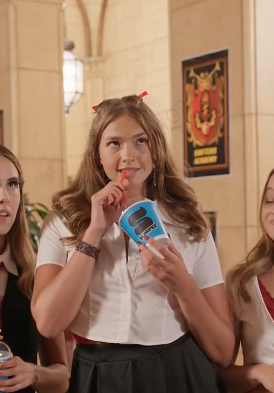
Nadia Wilemski as Ava Reynolds provides the series' most watchably wicked supporting performance. Reviewers note you 'can't take your eyes off her' in her scenes — and the role justifies that attention. Ava is not merely a romantic rival; she is a character whose confidence in her own schemes makes every scene she appears in genuinely unpredictable.
Supporting Cast Worth Noting
Raphaella Dreyer as the Elder Witch and Jones Titera as Young Ella provide the series' fantasy mythology with grounding detail — the Elder Witch in particular anchors the prophecy thread with authority, and Young Ella gives Liam's childhood devotion a visual and emotional foundation that pays off in the series' later acts.
Claimed by My Ex's Alpha Brother Ending: Does It Deliver?
The series builds toward Ella's full acceptance of her identity as Liam's fated mate and her role as Luna of the Crescent Pack — the transformation the series has been tracking from its opening episode. The Fandom wiki describes the drama's arc as 'a defective werewolf to a much greater Luna,' and the ending earns that description by keeping Ella's transformation grounded in the specific emotional work she has done rather than a sudden external revelation.
What the ending gets right is that Ella's change is not caused by Liam's love — it is enabled by her own decision to stop measuring her worth by a hierarchy that was always wrong about her. The series keeps that distinction clear throughout. Liam is the person who sees her accurately; Ella is the person who has to choose, eventually, to trust that he is right. That choice, made credibly and at cost, is what gives the finale its emotional weight.
Episodes to watch: Episodes 23 and 27 are confirmed by ReelShort as the series' standout episodes — the emotional peaks before the final act resolution. If the middle section slows for you, those are the anchors to return to.
Claimed by My Ex's Alpha Brother: What Works
• Savannah Coffee gives Ella a fully realized emotional interior — her arc from 'defect' to Luna feels psychologically honest, not dramatically convenient
• Blake Lewis earns the Alpha role through restraint and consistency, making Liam's protection of Ella feel like love rather than possession
• The wolfless premise adds genuine social stakes — Ella's outsider status is structural, not decorative
• The prophecy thread recontextualizes the past without invalidating the pain that came from it
• Ken Zheng's direction gives the series atmospheric coherence — it feels like a built world rather than a studio backdrop
• Astrid Carlen-Helmer's writing keeps the emotional logic of each character consistent, even across 64 episodes
• Shane Dorriz and Nadia Wilemski as Noah and Ava Reynolds deliver antagonist performances with real texture — neither role is wasted
Final Verdict: Is Claimed by My Ex's Alpha Brother Worth Watching?
Claimed by My Ex's Alpha Brother is one of the more carefully constructed supernatural romances in ReelShort's 2025 catalog. Its strength is not the fantasy world-building, though Ken Zheng's direction handles that competently. Its strength is the emotional specificity of Ella's arc: a woman who was told she was defective discovering, episode by episode, that the people who told her so were wrong — and that the person who always understood her true worth was protecting her the entire time.
Savannah Coffee and Blake Lewis make that arc feel real and earned. The supporting cast — particularly Shane Dorriz and Nadia Wilemski as Ava Reynolds — ensure the obstacles along the way carry genuine dramatic weight. Astrid Carlen-Helmer's writing holds the emotional logic together across all 64 episodes without losing consistency. For viewers drawn to fated-mate romance where the female lead's journey is about self-worth as much as love, Claimed by My Ex's Alpha Brother is one of the best-executed examples currently on ReelShort.