After I Left, the Twins Went Crazy: Three Years of Love, One Family's Revenge

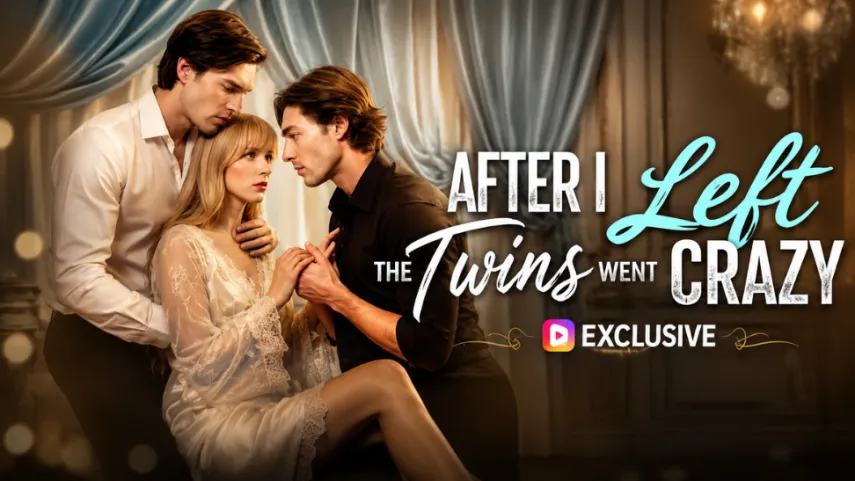
You already know the moment before you see it. You've watched enough of these short dramas to feel it arrive — that still, gut-dropping beat where the protagonist overhears something she was never supposed to hear, and the version of her life she trusted dissolves in real time. You're watching After I Left, the Twins Went Crazy from the opening frames with a specific kind of dread, not because the premise is unfamiliar, but because you understand exactly what kind of woman Amber Stone is. Competent. Committed. The kind of person who builds her world carefully, methodically — a medical degree in progress, a long relationship with a man she loves. The audience recognizes her, and the drama weaponizes that recognition immediately.
A Thesis About Power, Not Just Betrayal
The central argument this drama makes isn't really about twins, or love, or even deception. It's about who gets to design someone else's life without their consent, and what the fallout looks like when that design collapses.
The Sinclair family didn't merely lie to Amber — they constructed a three-year architecture of false intimacy, assigning one twin to stand in for another, building a relationship as a vehicle for family grievance. Amber wasn't a person to them. She was a mechanism. And the drama understands that this distinction — between being loved and being used — is what makes the betrayal so total. Romantic deception dramas often ask: can she forgive him? This one asks something sharper: can she trust that any part of what she felt was real?
Amber Stone: The Wound That Precedes the Story
Sarah-Grace Donnelly, whose prior credits include His Sweet Bella (2025), takes on the role of Amber Stone — and the character functions as the drama's psychological engine.

Amber's defining characteristic isn't her intelligence or her medical ambition, though both are present. It's the particular vulnerability of someone who invests fully, who doesn't hedge emotionally. She believed in the relationship completely, which is precisely why the Sinclair family chose her as its target. Her core wound, as the drama frames it, is the gap between her capacity for trust and the world's willingness to honor it. The pregnancy revelation doesn't just complicate her situation — it forecloses the option of walking away cleanly. She now carries the biological evidence of a relationship that was, by design, never hers to have. The drama doesn't let Amber be simply angry. It makes her carry the full weight of that contradiction. IMDb
The Twin Architecture: Ryan's Role in the Story's Machinery
Ryan is the drama's structural fulcrum. As the twin who was actually in the relationship, he occupies an unusual narrative position — he is simultaneously the agent of deception and, potentially, the source of something genuine.

The drama uses this ambiguity with precision. Ryan isn't framed as a simple villain; he's framed as a person who participated in a family scheme and, in doing so, may have generated feelings he wasn't supposed to generate. His dramatic function is to embody the question the story keeps circling: can something real grow inside a constructed lie? He holds the tension between the Sinclair family's agenda and whatever private reality existed within those three years. Whether that tension resolves toward remorse or continued manipulation is exactly what keeps the drama moving.
The Sinclair Name as Institution
IMDB lists After I Left, the Twins Went Crazy as a 2026 TV mini-series, and the short-form structure suits the drama's pacing perfectly — it operates in concentrated bursts of revelation rather than slow-burn character study. IMDb
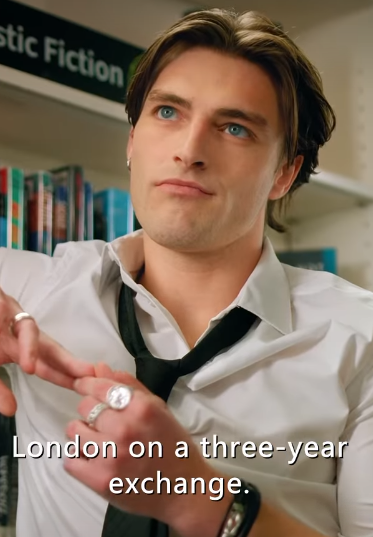
Carson Polish plays Ethan, the twin whose name Amber believed she knew for three years. His dramatic irony is clean and devastating: Ethan almost certainly believes the scheme was justified. The Sinclair family's revenge logic requires him to hold that position — that whatever was done to Amber was proportionate, necessary, a settling of accounts. What the audience understands, and what Ethan may never fully reckon with, is that Amber had nothing to do with whatever debt the Sinclairs imagined was owed. The irony of Ethan's position is that he likely sees himself as a loyal son fulfilling a family obligation, while the story sees him as a person who laundered cruelty through his brother's face and called it justice. Dailymotion
The Counter-Consideration: What Short Drama Realism Costs
It's worth acknowledging what the format gives up. Short drama, by design, moves fast — and After I Left, the Twins Went Crazy has a premise that arguably deserves more texture than episode-length storytelling allows.

The question of what a three-year relationship actually felt like from inside, for both Amber and Ryan, is the drama's most interesting territory, and the short-form structure sometimes skips past it in favor of plot momentum. Viewers who want their deception dramas psychologically granular may find the pacing aggressive.
Why It Still Works
It works because the power dynamics are clean without being simple. The Sinclair family holds institutional power — wealth, name, a coordinated strategy. Amber holds moral power and, as the story develops, increasing narrative authority. That inversion — the woman who was treated as a pawn becoming the one with the most legitimate claim on the story's outcome — is handled with enough intelligence to distinguish the drama from its genre peers. The title itself telegraphs that distinction. After I Left frames Amber as the one who departs, not the one who is abandoned. The twins going "crazy" positions their reaction as a symptom of her agency, not proof of their desire. It's a title that quietly assigns consequence in the right direction.
Who Should Watch This
This is a drama for viewers who enjoy watching a protagonist rebuild her worldview in real time, without the safety net of a love interest to catch her. The pregnancy thread adds stakes without softening Amber's position into victimhood. If you've watched short dramas primarily for the romantic resolution and found them unsatisfying when the ending felt unearned, this one earns it differently — through structural logic rather than sentiment.
Where to Watch
- Dramawave — Available on the Dramawave platform (search title directly); subscription or free-access options vary by region.
- Dailymotion — Full episodes are available on Dailymotion with English subtitles, uploaded in 2026, including complete-run compilations.
Ready to Watch Free:




![[Dubbed Version] Ten Years of Obsession, One Step of Ruin](https://v.melolo.com/b1265344voduse1318177724/a044abc65145403705097061969/aH4BKB8wyQwA.webp!15491.webp!15491.webp)