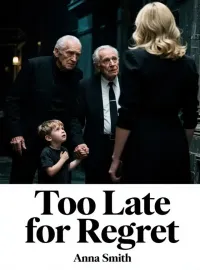
Too Late for Regret
Chapter 2
The next morning, I went downstairs for my morning run.
The ground floor living room was brightly lit, laughter spilling out like broken glass.
Elena was clinging to my mother’s, arm, rubbing against her like a kitten, her voice sickeningly sweet:
“Mamma, please invite every ‘made man’ in the city to the coming-of-age party. I want the Rose Mass to be the most sensational event New York has seen in ten years.”
“Yes, yes, my little princess gets what she wants,” my mother said, gently tidying a stray strand of hair near Elena’s temple.
My father took the cigar from his lips and smiled with complete indulgence: “Elena is growing up. It’s good to invite the elders. Let the outsiders see the Elio family’s next rose.”
They were the picture of domestic bliss, like a Mafia-version of ‘The Holy Family.’ I was the superfluous character accidentally sketched into the corner.
I hugged the wall, heading toward the kitchen, just wanting a glass of cold water.
“Rhea, you’re awake?” My mother looked up, and immediately dropped her beaming smile, switching to the formal tone she reserved for social functions. “Elena’s coming-of-age is on the 3rd of next month at St. Cecilia Cathedral. You’ll be there, won’t you?”
The 3rd of next month—
That’s the date I’d booked my flight to Nevada to start acclimating to the desert project early.
Last life, for this “family public debut,” I ditched my summer grid-testing project at NREL (National Renewable Energy Laboratory), pulled all-nighters memorizing Sicilian Etiquette History, only to be publicly mocked by Elena on the day of the ceremony for being “so unrefined she couldn’t even pronounce the Latin right”.
That gunfight fifteen years ago, that bullet that should have killed me instantly, was like a bloody wound. The harder I tried to stitch it up, the more they tore it open.
“No,” I heard myself say, my voice like an ice cube hitting a glass. “I’ve signed up for the subsidiary’s ‘Desert Wind Power Preliminary Survey’ field internship. I leave on the 1st of next month.”
The living room went quiet enough to hear the cigar burning.
Elena was the first to react. A flash of blinding joy flickered in her eyes, but her tone was full of concern: “Sister? The desert has snakes, extreme temperature swings, and… it’s unsafe.”
My father crushed his cigar heavily, the furrow in his brow deepening: “What idiotic survey? Cancel it immediately. It’s your sister’s coming-of-age. What will the others think if you don’t show up?”
It was always like this—
My schedule, my wishes, always the footnote that could be casually sacrificed.
I gripped the glass, my knuckles white, but my voice was steady, like a mixing board slider pushed all the way down: “The project list has been submitted to the union. I can’t back out.”
“You—” My father’s Adam’s apple bobbed. His barely contained rage made the air around him feel like it was ready to burst into flames.
My mother stepped in to smooth things over: “Alright, it’s good for a child to have her own career. Rhea, just make sure you take plenty of sunscreen.”
I gave a curt “Hmm,” filled my glass, and headed back to my room.
Behind me, Elena’s low, saintly sigh drifted through the hall: “Mom, Dad, don’t be mad. Sis just… hasn’t fully accepted she’s an Elio yet.”
I gently closed the door, shutting the saint’s lamentation out.
Back in my room, I started ‘decluttering.’
My belongings were pathetically sparse:
A used MacBook I bought with saved cash, A few sweaters hand-knitted by my foster mother, An old key to the Palermo apartment—a property the family had long since ‘dealt with,’ but I’d forgotten to toss the key.
I crammed everything into a 20-inch carry-on.
My bank account held two years’ worth of my ‘good girl’ allowance and the salary I had saved—a six-figure sum, enough to survive in the desert until my project profit share kicked in. I had no intention of using the Elio family’s black card ever again.
7:00 PM. Dinner at the long table.
The silver candelabra was dazzling, but the atmosphere was as frozen like a cold winter.
My father was seething with visible anger. His knife, scraping the steak against the porcelain, let out a high, grating shriek.
My mother attempted to inject some life into the frozen air, prattling on about the gala menu: “We’ll need the truffles flown in from Alba, of course, and the main course must be the Chilean sea bass. Oh, and the patisserie will require those twenty-four karat gold flakes for the dessert tower…”
Elena played along, occasionally tossing a line my way: “Sister, the Nevada sun is fierce. Your skin is so fair. Remember to pack SPF 50.”
“Noted.”
“The food out there is quite cowboy. You have a sensitive stomach. Should I have someone mail you some nice pasta?”
“No need.”
My curt responses finally broke my mother’s composure. She put down her silverware, her voice still maintaining an aristocratic restraint: “Rhea, are you upset about something with your father and me?”
I lifted my eyes, scanning the three faces—Father, irate; Mother, helpless; Elena, performing concern.
What a familiar judgment stage. Last life, every time my lip curled, it inevitably resulted in the final verdict: “The ungrateful child.”
“No,” my tone was steady. “I just want to take a path where I hold the steering wheel.”
“Your path is running off to the desert to breathe sand?” My father scoffed. “Is the Elio family short on cash for you? Are you so desperate to leave that you think we’re going to eat you alive?”
Yes. Desperate.
I finished his sentence in my head, but on my face, I held up the shield they couldn’t argue against: “Renewable energy is a federally subsidized priority. It benefits the family’s whitewashing endeavors. I’m laying groundwork for the Elio family’s future.”
The word—‘whitewashing’—hit my father like a blow. His face went green, as if dripping with cigar ash.
My mother quickly smoothed things over: “Alright, alright, it’s good the child has foresight. Eat your dinner. The pasta is getting cold.”
I stood up first: “I’m finished. Please enjoy your meal.”
As I turned to go upstairs, my father’s suppressed roar followed me: “Look at her! Look what those heathens outside have taught her!”
My mother softly reassured him: “Don’t shout. It’s normal for her to be shortsighted after wandering outside for so many years…”
I gently closed my bedroom door, locking all their voices out of the gilded hallway.
Just as I thought. In their eyes, I will always be the one—
—who can’t wash off the scent of dirt, —who doesn’t deserve the Elio surname, —who should just quietly serve as a backdrop, “The Returned Stray Dog”.
This time, I couldn’t be bothered to even offer an explanation.
You may also like