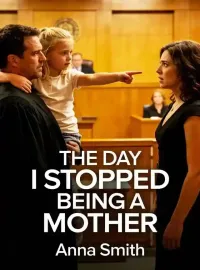
The Day I Stopped Being a Mother
Chapter 2
Lily shrank back into Victor’s arms.
In a small, defensive voice, she argued,
“I… I didn’t say anything wrong! Wouldn’t it be better if our whole family stayed together? Dad begged you for so long, and you still insist on getting divorced.”
“You never think about how I feel!”
I tugged at the corner of my mouth, my gaze falling on her with unmistakable mockery.
“Your father begged me not to divorce him because he cheated.”
“The fault is his. Divorce does him no favors at all.”
Just thinking about it made me want to laugh.
In my previous life, desperate to secure Lily’s custody as quickly as possible, I had made countless concessions during the asset division.
Victor had secretly plotted to take all the shares, leaving me with nothing but a hollow shell of a company.
This time, I wouldn’t be that foolish again.
Lily looked stunned by my words.
She lifted her head and stared at Victor in confusion, clearly not understanding what cheating meant.
When I exposed Victor’s true face in front of our daughter, his face flushed an ugly mix of red and black.
“How dare you say something like that to our daughter!” he barked.
“Do you have no shame at all?”
“If you have the courage to do it,” I shot back, “why shouldn’t I have the courage to say it?”
I looked at Lily, who was still struggling to process everything, and asked her the same question I had asked in my previous life.
“Even so, do you still oppose the divorce?”
“Do you still insist on staying with your father?”
My voice was calm. Cold. Final.
Lily was frightened by my tone and didn’t answer.
Victor tightened his grip on her hand.
In the next second, the hesitation on Lily’s face vanished—replaced by firm resolve.
“Yes.”
She truly was Victor’s daughter.
I forced down the ache in my chest and let out a self-mocking smile. Then I picked up my bag and turned to leave.
After leaving the lakeside villa, I returned to the apartment near my office.
The moment I stepped inside, my phone rang.
It was my mother.
She asked how the divorce proceedings had gone.
I told her the deal hadn’t been finalized.
“It didn’t?” she asked, surprised.
“Why? Was it Victor refusing again, or did Lily cause another scene?”
“Neither,” I replied.
“I want to draft a new divorce agreement.”
She hesitated.
“You’re not planning to give up the company just to get Lily’s custody, are you?” She sighed.
“It’s not that I dislike Lily—but her heart is entirely with the Ricci family.”
“Forcing her to stay by your side won’t do anyone any good.”
In my previous life, my mother had said something very similar.
Watching me sacrifice my own interests again and again for Lily, she had once pointed at me and scolded me outright.
She said I must have lost my mind—to hand over the wealth my father had built over a lifetime to an ungrateful, spoiled playboy.
She hadn’t approved of my marriage to Victor from the beginning.
He came from a completely different social class.
Later, when I nearly gave up the company for Lily’s sake, her anger only deepened.
More than once, she had demanded that I send Lily back.
“If you want a child, you can have another one.”
“If you don’t want to raise one yourself, you can adopt.”
“Lily has already been spoiled rotten by the Ricci family. She can’t be changed.”
Back then, I refused to listen.
Now—even without my mother’s advice—I had finally woken up.
I explained that no, the previous agreement had simply been drafted poorly.
In the new agreement, I wanted Victor to walk away with nothing.
My mother froze for a moment, then asked cautiously,
“And what if Lily doesn’t agree?”
I let out a cold laugh.
“Then she can go back to the Ricci family.”
In this new life, I intended to cherish only those who were worth cherishing.
After submitting the revised terms to my lawyer, I threw myself into work for several consecutive days.
Finally, on Saturday, I drove to an orphanage in a nearby town.
When I arrived, the director told me that the child I was looking for hadn’t been at the orphanage recently.
The little girl studied diligently.
She had been selected by her school to participate in a math competition.
The director pulled out an old photo album from a cabinet and handed me a photograph.
I lowered my head and looked at the short-haired girl in the picture.
She looked seven or eight years old.
Malnourished, her frame was thin—but her eyes were bright, full of life.
I raised my hand and gently brushed my fingertips over her small face.
In my previous life, when I was fifty and diagnosed with terminal liver cancer—bedridden, unable to move—it was this very girl who took care of me.
She was an orphan I had sponsored years ago.
Her name was Mia.
After seeing the news of my illness online, she had made a point to check in every day.
She’d bring me snacks, refill my water, and make sure I didn’t miss any of my medications.
She’d tidy up my apartment in her small, careful way, putting things back where they belonged.
When pain kept me awake at night, she’d sit quietly beside me, humming or telling little jokes until I could relax.
She even scraped together her savings to help cover some of my bills, insisting I shouldn’t worry about money.
She said that if it hadn’t been for my kindness back then, she would never have been able to continue her education.
So she wanted to repay me.
How ironic.
The daughter I had cherished as my entire world treated me like an enemy—conspired with others and drained me of everything I had.
And yet, a stranger—a little girl—fed me, bathed me, cared for me to the very end.
All because of a small, unintentional act of kindness.
When the director learned that I was her sponsor—and that I wanted to adopt her—she was overjoyed.
You may also like