Sentence Me To Death, Then Beg For My Return: They Called Him a Traitor. His Memories Proved Otherwise

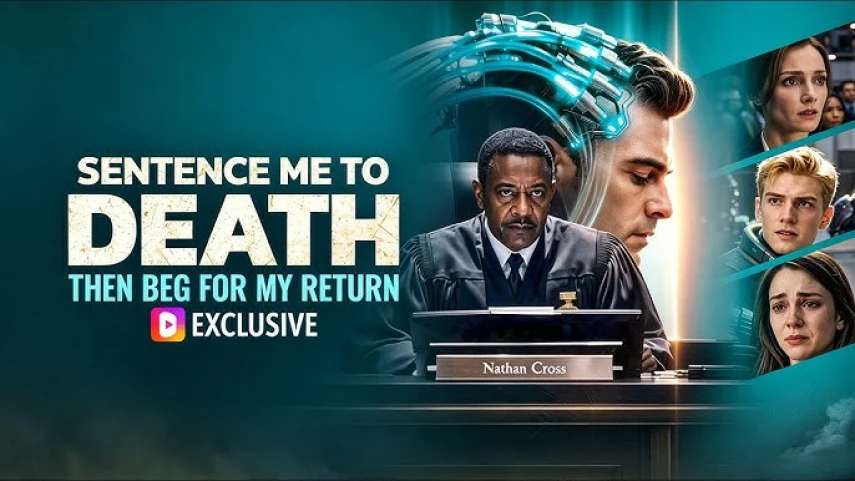
There is a specific cruelty in being condemned by the people you protected. Not betrayed by strangers, not defeated by enemies, but tried and sentenced by a wife, a family, former teammates — the precise individuals whose survival, in some form, depended on what you did. Jason Kane doesn't enter this drama in triumph, or in hiding, or with allies waiting to vindicate him. He enters it already convicted in the court of every relationship that was supposed to matter. The trial that opens Sentence Me To Death, Then Beg For My Return isn't a beginning. It's a reckoning for a verdict that was already rendered before the first episode.
What the drama is interested in is what happens when that verdict is forced to answer for itself.
The Trial as the Drama's Central Structural Choice
The decision to center the drama's reveal mechanism on a live trial is the most formally significant choice the drama makes, and it pays dividends throughout. A private revelation — Jason presenting evidence to individuals, one by one, in controlled settings — would generate a series of personal confrontations. A live trial generates something entirely different: a single, public, irreversible moment of collective reckoning.
The live format means that every person who condemned Jason is present, or watching, when the memories are exposed. There is no private reconsideration, no quiet revision of position, no opportunity to process the truth before facing its implications. The exposure is simultaneous and shared — the wife, the family, the former teammates, and whatever audience the trial commands all encounter the same truth at the same moment. Whatever they believed about Jason Kane, they believed it publicly. The correction arrives the same way.
This is the drama's most structurally intelligent choice. Public condemnation demands public correction, and the live trial delivers that correction with the maximum possible weight. The scale of the original verdict determines the scale of its unraveling.
Jason Kane: The Character Defined by What He Refused to Say

Jason's most important characteristic is not his heroism — which the drama confirms — but his silence. The man condemned as a traitor by everyone who knew him had, presumably, the ability to defend himself at some earlier point. The memories exposed during the trial represent a truth that existed before the condemnation, which means Jason either couldn't reveal it or chose not to.
That distinction is the drama's central character question, and the answer shapes everything about how the eventual revelation lands. A man who couldn't speak — whose silence was forced by circumstances, mission parameters, or protective necessity — is a victim of the same systems that were supposed to protect him. A man who chose not to speak, who absorbed the condemnation of his wife and family and teammates because saying the truth would have cost something more important, is something else entirely: someone whose loyalty ran deeper than his need to be understood.
The drama's emotional register suggests the latter. Jason Kane is not a man awaiting rescue by the truth. He is a man who carried the truth alone, for long enough that the people around him built entire new realities on the assumption of his guilt. By the time the trial exposes what he actually did, the gap between what they believed and what was true has been widening for long enough to be devastating in both directions — for him, and for them.
The Wife, the Family, the Teammates — and What Their Condemnation Costs
The drama is precise about who condemned Jason, and the precision matters. His wife. His family. His former teammates. This is not an anonymous institution or a faceless state apparatus that labeled him a traitor. These are the people who knew him, who had the most information about who he was, and who collectively arrived at the worst possible conclusion about that person.

That specificity makes the condemnation structurally more painful than any external verdict could be — and it makes the eventual reversal more complicated than a simple exoneration. Each of these figures condemned Jason from a position of intimacy. They didn't assess a stranger. They assessed someone they shared a life with, trained with, trusted. The conclusion they reached wasn't ignorance. It was informed judgment that turned out to be catastrophically wrong.
The drama doesn't need to dwell on individual motivations to make this land. The collective nature of the condemnation is sufficient: when everyone who knew you decides you are the worst version of yourself, that consensus feels like reality. What Sentence Me To Death, Then Beg For My Return is interested in is the moment that consensus fractures under the weight of what actually happened — and what each person is left holding when it does.
The Memory Reveal and Why Live Exposure Matters
The memories exposed during the trial are the drama's central evidentiary event, and the mechanics of how they are surfaced — involuntarily, in a live setting — give the revelation its specific emotional quality. Jason isn't choosing to present his defense at the optimal moment, curated for maximum impact. The memories emerge in the context of a trial designed to confirm his guilt, which means the truth arrives not as a carefully orchestrated counter-argument but as something the trial itself is forced to confront.
This distinction matters enormously for how the audience experiences the reversal. A planned vindication — Jason producing evidence he has been holding in reserve — would feel like strategy. The memories surfacing during a live proceeding feel like inevitability: the truth asserting itself in the one setting where it cannot be suppressed or redirected. The trial that was supposed to end Jason Kane becomes the mechanism of his restoration, which is the drama's most precise formal irony.
What the memories reveal — that Jason was the only hero who never stopped saving the people who condemned him — is a truth that the trial was structurally incapable of accommodating and is now incapable of denying. The live setting ensures no one present can claim they didn't see it.
The "Traitor" Label and What It Conceals
The word traitor carries a specific moral weight — it doesn't merely describe a wrong action but a fundamental character verdict, a conclusion about who someone is at their core rather than what they did in a particular moment. When Jason's wife, family, and teammates called him a traitor, they weren't making a tactical assessment. They were making a judgment about the kind of person he fundamentally was.
What the drama's memory reveal exposes is not just that Jason didn't commit the act they accused him of, but that the act he actually committed — continuous, unacknowledged heroism on behalf of the people who condemned him — is the precise inversion of what the traitor label implies. He wasn't saving himself at their expense. He was saving them at his own. The label that was supposed to define him describes, with perfect accuracy, exactly what he wasn't.
This inversion is the drama's emotional core. The title's first half — sentence me to death — is what they did. The second half — then beg for my return — is the consequence of the memory reveal: the moment every person who issued that sentence understands what they sentenced, and what they lost.
The Aftermath and the Weight of the Title's Second Half
The drama's title is constructed in two movements, and each half carries a different temporal register. "Sentence me to death" is past tense — something already done, already rendered. "Then beg for my return" is future tense, conditional on the reveal, on the reckoning, on the full weight of the truth landing on the people who need to carry it.
The second half of the title is not a threat Jason makes. It's a prediction the drama makes about the people who condemned him — that the revelation of what he actually was will create in them a need for him that his execution would make permanently impossible to satisfy. The begging isn't a humiliation scenario staged for the audience's satisfaction. It's the natural consequence of understanding, too late, the full value of what you destroyed.
Whether those relationships — with his wife, his family, his former teammates — can survive what the trial exposes is the drama's most emotionally complex question. The truth vindicates Jason completely. It doesn't automatically repair anything. What forgiveness looks like when the people who need to offer it are also the people who most comprehensively failed to deserve his — that's the space the drama's aftermath inhabits, and it's the space that gives Sentence Me To Death, Then Beg For My Return its unusual emotional weight for the genre.
Who This Is For
Sentence Me To Death, Then Beg For My Return rewards viewers who want their vindication drama to carry genuine emotional cost on both sides of the reveal. If you're drawn to stories where the protagonist's heroism is measured not by what he did but by what he refused to say about it — and where the reversal arrives not as triumph but as the beginning of a much harder reckoning — this drama delivers one of the most structurally considered betrayal-and-vindication arcs in recent short-form. Jason Kane didn't ask them to believe him. He just kept saving them anyway.
recos: