Rusty Ring To Royal Crown: Why Elena Chose the Axe, and What That Choice Costs Everyone Else


The drama doesn't open with Elena's murder — not really. It opens with a choice. Two objects: a golden medallion, gleaming, obvious, reeking of the power it promises; and a rusted axe, dull and mocked, the kind of thing people set aside because they've already decided it has no value. Elena has already died at her jealous sister's hands. She has come back. And in that moment of return, with full knowledge of everything her first life cost her, she reaches for the rust.
That image — a reborn woman passing over gold for iron — is Rusty Ring To Royal Crown's thesis statement, and the drama spends its entire runtime proving it correct.
The Rebirth Premise as a Mechanism of Clarity
Fantasy rebirth stories usually operate on one of two emotional registers: vengeance (the protagonist returns knowing exactly what happens and moves to prevent it) or caution (the protagonist returns humbled, this time willing to play the long game). Rusty Ring To Royal Crown does something more interesting. Elena's rebirth doesn't give her a tactical advantage in any obvious sense. She doesn't walk back into the same court with better information and cleverer moves. She walks back in and makes a choice that looks, to everyone watching, like the move of someone who has already lost.
Choosing the rusted axe when the golden medallion is right there — when everyone knows what the medallion represents, when the social script for this scene has already been written — is the act of a person who has died once and decided she will no longer let other people's perception of value dictate her own. The axe is not inferior to the medallion. It is simply legible only to someone willing to look past the surface. Elena is that person. The drama earns its title before the first real conflict even begins.
The Mockery Structure and What It Reveals About Everyone Else
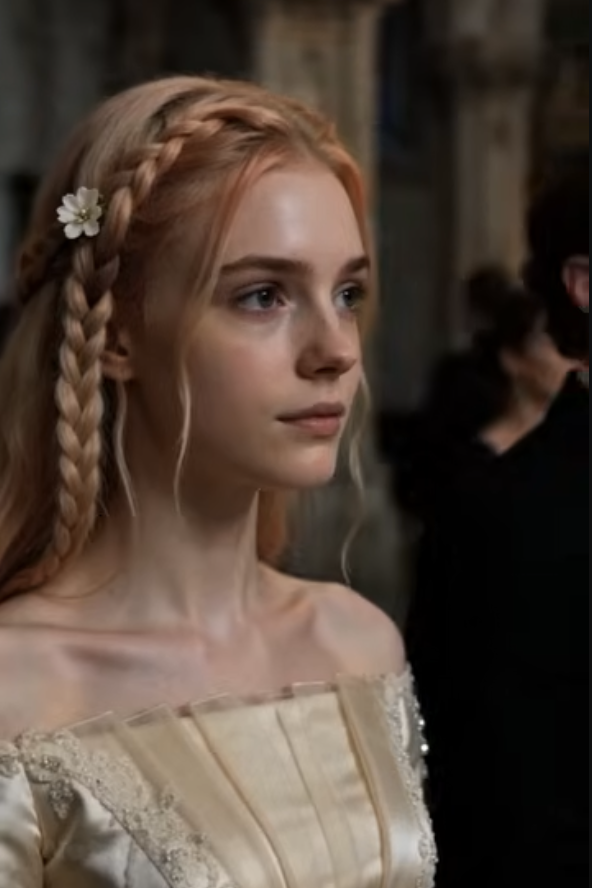
The social derision that follows Elena's choice — and then her marriage to Alistair, a man everyone reads as a lowly woodcutter — functions in the drama as a diagnostic tool. Every character who laughs, who pities her, who treats her match as evidence of her diminishment is simultaneously revealing the depth of their own blindness.
This is the drama's most quietly pleasurable structural move. The audience is positioned, from the moment Elena chose the axe, to understand that she is operating on a different level than those around her. Which means that every condescending glance, every whispered slight, every gathered witness to her supposed fall is unknowingly performing the same mistake that got her killed the first time: judging her entirely by surface legibility. Her sister murdered her because she understood Elena as a rival — as someone who could be removed. She never understood Elena as someone who could see.
The wedding to Alistair is framed as humiliation from the outside. From inside Elena's perspective — and from the audience's — it is the consummation of a bet that was never in doubt.
Alistair: The Misread Asset and the Weight of His Revelation
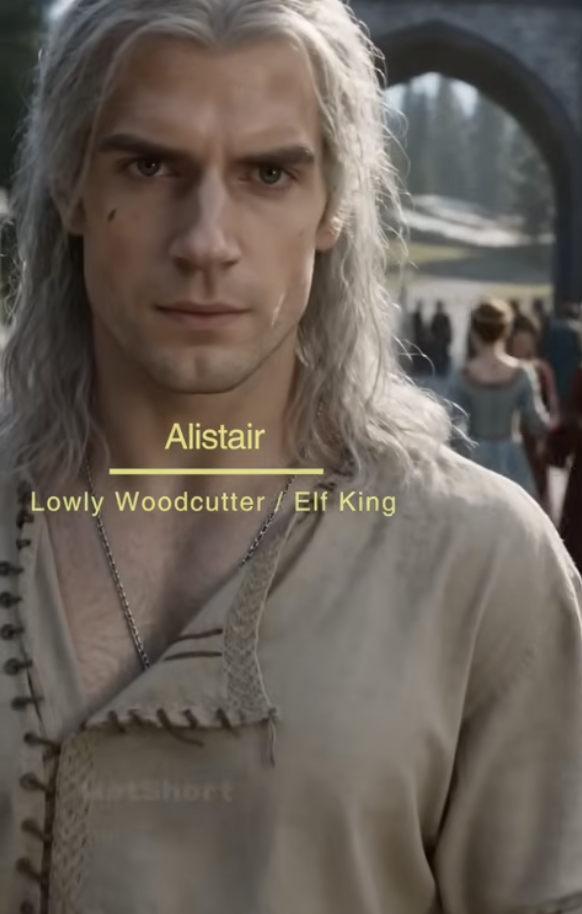
Alistair's function in the drama is structurally analogous to the rusted axe itself. Both are dismissed by people who mistake surface condition for intrinsic worth. Both reveal their true nature on Elena's timeline, not the world's.
The hidden Elf King reveal is the drama's central dramatic hinge, but its effect is less surprise than confirmation. The audience has been primed to expect that Elena's instincts are correct — that the thing everyone mocks is exactly the thing of greatest value. Alistair being the Elf King doesn't reframe the story so much as it completes a pattern the drama established in its opening beats. What the reveal actually delivers is the realignment of everyone else's understanding — suddenly the mockery comes back on the mockers, and the supposedly diminished union turns out to be the highest-status marriage anyone could have contracted.
What makes Alistair more than a simple "hidden powerful husband" figure is the question of what his concealment says about his own judgment of Elena. He chose to remain a woodcutter in her presence. He watched her choose the axe. A hidden king who stays hidden around someone who has already demonstrated she can see what others miss — that's not deception. That's evaluation. Elena passed before he revealed anything.
The Sister and the Particular Shape of This Betrayal
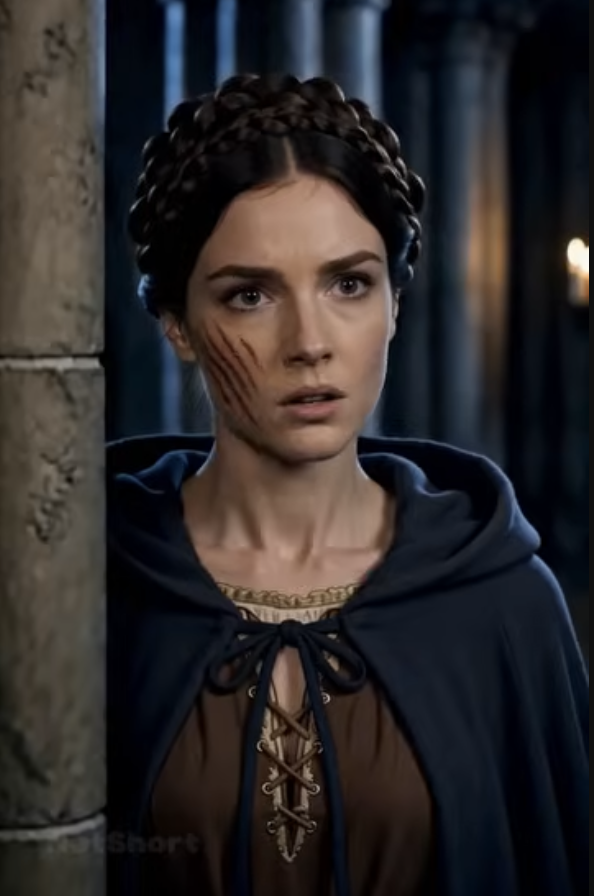
Fraternal jealousy as a dramatic engine is ancient, but the drama sharpens it by starting with the most extreme possible act: murder. Elena's sister didn't underestimate her or maneuver around her or steal her inheritance through clever scheming. She killed her. That is the baseline.
What the rebirth structure does with that fact is refuse to soften it through time. Elena comes back with the full memory of what was done to her, and the drama doesn't offer the audience any narrative path toward reconciliation or complexity on the sister's behalf. The betrayal is total, and the revenge arc is built to match. From cast-off daughter to crowned Elf Queen, Elena's rise isn't incidental to the sister's fall — they are the same event, viewed from opposite sides of a power shift that the sister herself set in motion.
This is the drama's most satisfying formal choice: the villain's worst act is also the mechanism of her undoing. By murdering Elena, the sister created the conditions for Elena's rebirth, the choice of the axe, the marriage to the woodcutter, the crown. The jealousy that drove the murder is ultimately responsible for the throne it was trying to prevent.
Fire, Betrayal, and the Grammar of the Revenge Arc
The drama's description — "rises through fire and betrayal" — gestures at what the middle episodes deliver between the marriage and the crowning: the gauntlet. The path from humiliated daughter to crowned queen is not a straight line. There is, clearly, fire. There are, clearly, people who continue to miscalculate Elena's nature and pay for it at escalating cost to themselves.
What the rebirth premise guarantees — and what makes the fantasy revenge short such a reliable emotional vehicle — is that the audience is watching a story where the protagonist already knows more than her enemies. The question isn't whether Elena survives. She's already survived death. The question is what the world looks like when it finally catches up to understanding her correctly.
The answer, as the crown makes clear, is that it looks like a kingdom.
Who This Is For
Rusty Ring To Royal Crown rewards viewers who want their fantasy heroine driven by perception rather than power — someone who wins not because she was secretly the strongest all along, but because she read the room correctly when nobody else could. If you're drawn to rebirth revenge dramas where the emotional satisfaction comes from the world's slow, humiliating recognition of how wrong it was, this drama delivers that arc with precision and without shortcuts.
recos: