No Love Left: A Deep Dive into the Psychological Warfare

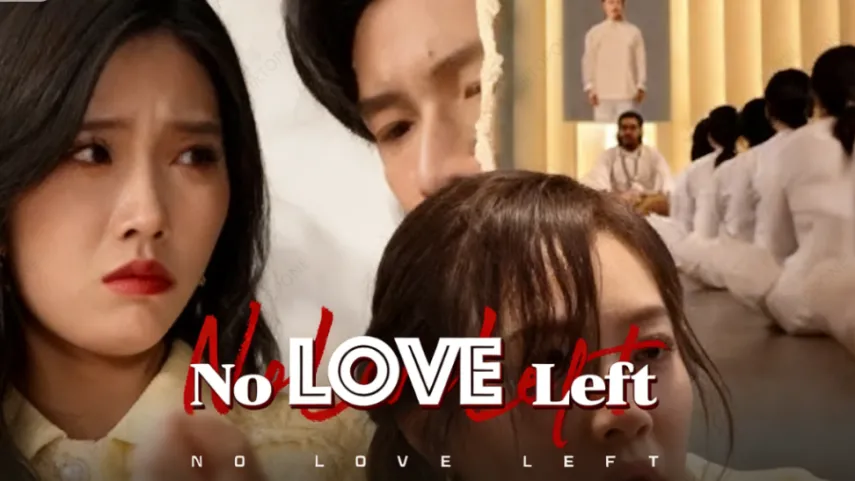
Betrayal is a common catalyst in modern storytelling, but for Zoey Miller, the protagonist of the visceral short dramaNo Love Left, the betrayal is merely the prologue to a much darker odyssey. When her husband, Noah Jones, orchestrates her confinement in an illegal "female virtue" academy to clear a path for his mistress, Eva Smith, the narrative shifts from a standard domestic drama into a gritty exploration of institutional abuse and psychological resilience. This isn't just a story about a woman scorned; it is a clinical look at how the human spirit adapts—or breaks—under the pressure of systematic dehumanization.

The Virtue Academy: A Crucible of Forced Submission
The early segments of the series are set within the harrowing confines of a "female virtue" academy. This setting serves as a stark commentary on the extreme lengths to which patriarchal control can be pushed. Zoey is subjected to "education" that is little more than a thin veil for physical and mental torture.
The brilliance of the writing here lies in the long-term consequences of this trauma. Unlike traditional dramas where a character might simply emerge stronger, Zoey emerges different. The academy triggers a latent psychological condition, effectively splitting her persona. On the surface, she becomes the "virtuous," submissive wife Noah demanded, but beneath that mask lies a high-functioning combat instinct. This "mental illness" becomes her greatest weapon—a survival mechanism that grants her the physical prowess to defend herself when the music stops playing.
Character Archetypes: The Hunter, The Prey, and The Puppet Master
To truly appreciate the depth of No Love Left, one must examine the complex trifecta of its lead characters. These aren't just tropes; they are representations of different facets of power.
Zoey Miller (The Zoey/Zoey Dynamic)
Zoey's character is defined by a singular object: a vintage MP3 player containing her mother’s music. This device acts as a psychological anchor, a "calm in the storm" that keeps her violent survival instincts at bay. Her character arc is a fascinating study of "the sleeper agent" trope—she is a woman trapped within her own mind, forced to play the role of a submissive wife while her internal protector waits for a trigger.
Noah Jones (The Fallacy of Control)
Noah Jones is a character defined by his own insecurity. His need to subject Zoey to "obedience tests" and "submission trials" reveals a man who is terrified of the woman he married. By bringing his mistress, Eva Smith, into their home, he believes he is asserting dominance. In reality, he is inadvertently constructing the very cage that will eventually trap him. His inability to see past Zoey's "perfect wife" act is his fatal flaw.
Eva Smith (The Professional Antagonist)
Eva Smith is the catalyst that moves the plot from tension to explosion. She is the "Green Tea" archetype—sweet and vulnerable in front of Noah, but viciously violent the moment they are alone. Her decision to physically attack Zoey and destroy her mother’s MP3 player is the ultimate narrative turning point. In destroying the music, Eva accidentally releases the "Zoey" that the virtue academy tried so hard to break.
The Aesthetic of Binge-Watching on Melolo
Why does a story this dark resonate so deeply with the Melolo audience? It’s about the "justice high." In a world where chinese tv shows often lean into slow-burn romances, No Love Left provides instant, high-stakes gratification. The vertical format of the short drama allows for intense close-ups that capture every flicker of Zoey’s internal struggle, making the viewer feel like a silent observer in the Jones household.
The pacing is designed to mimic the feeling of a pressure cooker. Every "obedience test" Noah forces upon Zoey adds another layer of steam, and Eva’s cruelty provides the spark for the inevitable explosion. This is the "binge-factor" at its finest: you aren't just watching a show; you are waiting for the moment the victim becomes the victor.
Where to Watch: Navigating the World of Digital Minis
For fans asking where to watch chinese dramas that push these psychological boundaries, Melolo offers a streamlined, accessible experience. The platform has carved out a niche for stories that explore the darker side of human relationships, providing high-quality subtitles that ensure the nuance of Zoey’s "mental break" isn't lost in translation. Unlike traditional chinese streaming sites that require long-term commitments to 40-episode arcs, these mini-dramas offer a complete, emotionally exhausting journey in a single sitting.